Showing posts with label safety. Show all posts

Tuesday, June 18, 2013

Soooooooo..... Are Lubes Safe?

via Positive Lite, by Marc-André LeBlanc
"This situation is unacceptable. We’re in 2013, for the love of all that is wet and wild! How can we not know the answer to such a fundamental question—are lubes safe?" 
 Here I am again, standing in front of a giant wall of lube options at a local store.
  • Water-based, silicone-based, oil-based, hybrid.
  • Bottles, tubs, tubes, vats, vials, sachets, packets, pouches, pillows, mix-it-at-home kits.
  • Pumpable, flippable, squeezable, scoopable, squirtable, spritzable, speadable.
  • Regular, warming, cooling, tingling, numbing.
  • Thick, thin, goopy, watery, greasy, sticky, slippery, silky, slick.
  • Long lists of unpronounceable chemicals, claims of being organic or all-natural.
  • Scents. Flavours. Colours.
  • Formulated to look like cum!
  • And of course, wildly varying prices.

I’m glad I’m not meeting that guy for another three hours. 

So which lube should I get? Which ones are safe? Which ones should I avoid? 

Who knows!

No, seriously. Who knows? If I don’t, I can only assume nobody else does. After all, I coordinate the global Lube Safety Working Group for IRMA—International Rectal microbicide Advocates. 

This is the shocking reality: more than 30 years into the HIV pandemic, we still have no clear answers on whether sexual lubricants (lubes) increase, decrease, or have no impact on the risk of acquiring HIV and other STIs sexually transmitted infections (STIs). 

Many men, women and transgender individuals all across the globe use sexual lubricants for both vaginal and anal intercourse. We have long promoted the use of male or female condoms with condom-compatible water-based or silicone-based lubes to prevent HIV and other STIs. Lubricants help ensure that condoms don’t break, and that condoms stay on during sex. So, it’s pretty critical we understand if any of these condom-compatible lubes could actually be putting people in harm’s way. 

One thing is clear: we will not get an answer to the lube safety question without advocacy.


-------------------

  *Join IRMA's robust, highly-active. moderated, global listserv addressing rectal microbicide research and advocacy as well as other interesting new HIV prevention technologies by contacting us at rectalmicro@gmail.com. Joining our listserv automatically makes you a member of IRMA - a network of more than 1,100 advocates, scientists, policy makers and funders from all over the world.

*Please look for us on Facebook: www.facebook.com/InternationalRectalMicrobicideAdvocates, and you can follow us on Twitter: @rectalmicro.

*Also, please note that shared news items from other sources posted on this blog do not necessarily mean IRMA has taken any position on the article's content.

  -------------------

Tuesday, March 12, 2013

Global Call to Action: Demand Answers on Lubricant Safety (Have You Endorsed Yet?)


Have you or your organization endorsed the Global Call to Action Demanding Answers on Lubricant Safety?

Since Valentine's Day, 140 organizations and 293 individuals in nearly fifty countries have endorsed the call to action - and numbers continue to grow! Please add your name if you haven’t already. Full lists of endorsers is below.

Background:

Recent studies have raised questions about the impact of sexual lubricants on the risk of acquiring HIV and other sexually transmitted infections (STIs).

It is outrageous that more than 30 years into the HIV pandemic, we don’t know whether sexual lubricants increase, decrease or have no impact on the risk of acquiring HIV and other STIs. In fact, it is only recently that most advocates, HIV prevention workers, researchers and regulators have even realised that we don’t yet know the answers to these fundamental questions.

Today, there are only a few disparate studies related to lube safety underway. These studies do not form part of an overarching plan to answer questions about lubricant safety because there isn’t one.

This is unacceptable. We demand answers on lubricant safety.

Click here to endorse the call: https://www.surveymonkey.com/s/CalltoActionLubeSafety

We demand a Lubricant Safety Research Agenda and insist upon its quick implementation. We must know whether or not various types of sexual lubricants are safe for vaginal and rectal use. We must understand fully what impact they have on the risk of acquiring HIV and STIs.

•As advocates, funders, researchers, lubricant manufacturers and regulators, we are committed to come together to develop and implement a Lubricant Safety Research Agenda.

•As advocates, we support more research, funding, and collaboration to determine whether lubricants are safe.

•As funders, we will support the research and collaborative work required to determine whether lubricants are safe. Funding for lubricant safety research will not come out of budgets for microbicide research or other new prevention technologies.

•As researchers, we will conduct the appropriate studies required to determine whether lubricants are safe.

•As lubricant manufacturers, we will list the ingredients used to manufacture lubricants and work with researchers and regulators to ensure that our products are safe.

•As regulators, we will provide guidance into the research data required to ensure that lubricants available on the market are safe.

Endorse the Call to Action on Lubricant Safety

Men, women and transgender people from around the globe who engage in vaginal or anal intercourse deserve access to safe, condom-compatible sexual lubricants.

Please endorse this global Call to Action on Lubricant Safety. You may endorse the Call to Action as an individual or as an organization.

Click here: https://www.surveymonkey.com/s/CalltoActionLubeSafety


Endorsements –  both lists in formation, next page

Friday, February 22, 2013

263 Organizations and Individuals Have Endorsed the Call to Action on Lube Safety - HAVE YOU SIGNED ON?

Since we launched the Call to Action on Lubricant Safety on Valentine's Day, we have collected 84 organizational endorsements and 179 individual endorsements from every corner of the globe.

Thank you to ALL who have endorsed so far. The list of organizational endorsers is provided below. Is your organization on the list?

If you haven’t endorsed yet – now is your chance. Click here to endorse the Call as an organization. You may also endorse the Call to Action as an individual .

Please endorse the Call, and demand answers to our questions on lube safety.

Not knowing whether lubes are safe or not, and not knowing whether lubes potentially enhance HIV or STD acquisition or not, is not acceptable! We have enough lube safety data to be concerned, quite frankly, but we do not have enough data to really understand the implications of lubricant use.

We will continue to be in the dark, and never know if we don’t put pressure on other advocates, on scientists, on funders, on regulators, and on lube manufacturers to do their parts in addressing lube safety. We all have a role to play in ensuring the lubes we put in our bodies are safe.

Endorse the Call now.


LIST OF ORGANIZATIONAL ENDORSERS - IN FORMATIONList updated February 22, 2013
1. Abra Advanced Research International Pte Ltd, Singapore
2. Act for Change, Ghana
3. Act Up/East Bay, USA
4. Adhikaar, India
5. Affirmative Action, Cameroon
6. African Alliance for HIV Prevention, South Africa
7. African Men for Sexual Health and Rights (AMSHeR), South Africa
8. Afrique Arc En Ciel, Togo
9. AIDS Community Research Initiative of America, USA
10. AIDS Foundation of Chicago, USA
11. AIDS United, USA
12. AKPAKA Axel, Benin
13. ALTERNATIVE CÔTE D'IVOIRE, Cote D’Ivoire
14. Anova Health Institute, South Africa
15. AVAC, USA
16. Blue Diamond Society, Nepal
17. Caribbean Association of Midwest America, USA
18. Case/UH Microbicide Clinical Trials Community Advisory Committee, USA
19. Center for Applied Research on Men and Health (CARMAH), Vietnam
20. Centre for Human Rights and Rehabilitation (CHRR), Malawi
21. Chicago Female Condom Campaign, USA
22. COCQ-SIDA, Canada
23. Desmond Tutu HIV Foundation, South Africa
24. DUH Demonstration for Universal Healthcare, USA
25. Epicentro, Peru
26. Equal Opportunities, Tajikistan
27. Family Planning Council, USA
28. Fenway Institute at Fenway Health, USA
29. Freedom and Roam Uganda, Uganda
30. Fundacion Manodiversa Bolivia, Bolivia
31. Gay Men’s Health Crisis, USA
32. Gel Works Pty Ltd, Australia
33. Global Forum on MSM & HIV (MSMGF), USA
34. GrenCHAP Inc., Grenada
35. GWLmuda, Indonesia
36. Health Digest Foundation, Ghana
37. Heroes Project, India
38. HIV Prevention Justice Alliance, USA
39. Hyacinth AIDS Foundation, USA
40. India HIV/AIDS Alliance, India
41. Interagency Coalition on AIDS and Development, Canada
42. International Center for Advocacy on Right to Health, Nigeria
43. International Rectal Microbicide Advocates (IRMA), USA
44. International Rectal Microbicides Advocates – Nigeria, Nigeria
45. Jamaica AIDS Support for Life, Jamaica
46. Joint Adherent Brothers and Sisters Against Aids, Uganda
47. Los Angeles County HIV Drug & Alcohol Task Force, USA
48. MAACA, INC, USA
49. Men For Health and Gender Justice Organisation, Botswana
50. MUSC/Lowcountry AIDS Services Consumer Advisory Board, USA
51. NAM Publications (Aidsmap), UK
52. National Black Gay Men's Advocacy Coalition, USA
53. National Minority AIDS Council, USA
54. New HIV Vaccine and Microbicide Advocacy Society, Nigeria
55. Okaloosa AIDS support & Informational Services, Inc. (OASIS), USA
56. PEMA Kenya, Kenya
57. Penitentiary Initiative, Ukraine
58. PeterCares House, USA
59. POCAAN (People of Color Against AIDS Network), USA
60. Presbyterian AIDS Network, USA
61. Pride Equality, Sierra Leone
62. Pro Health Initiative, Nigeria
63. Professionals in Pride Kenya (PPK), Kenya
64. Project Inform, USA
65. PT Foundation, Malaysia
66. Queer Alliance Nigeria, Nigeria
67. San Francisco AIDS Foundation, USA
68. SIBALT, Russia
69. Society Against Sexual Orientation Discrimination (SASOD), Guyana
70. SOMOSGAY, Paraguay
71. START at Westminster, USA
72. Stichting AidsCare, The Netherlands
73. Tamba Pwani, Kenya
74. Test Positive Aware Network, USA
75. The Initiative for Equal Rights, Nigeria
76. The Mpowerment Project, USA
77. The Yes Yes Company Ltd, UK
78. Treatment Action Group, USA
79. UNITED AND STRONG INC, Saint Lucia
80. Vivir. Participacion, Incidencia y Transparencia, A.C., Mexico
81. We For Civil Equality NGO, Armenia
82. Womenplus Against TB and HIV in Kenya, Kenya
83. World AIDS Forum, Australia
84. Youth Voices Count, Thailand

Endorse the Call now.

-------------------

*Join IRMA's robust, highly-active. moderated, global listserv addressing rectal microbicide research and advocacy as well as other interesting new HIV prevention technologies by contacting us at rectalmicro@gmail.com. Joining our listserv automatically makes you a member of IRMA - a network of more than 1,100 advocates, scientists, policy makers and funders from all over the world.

*Please look for us on Facebook: www.facebook.com/InternationalRectalMicrobicideAdvocates, and you can follow us on Twitter: @rectalmicro.

*Also, please note that shared news items from other sources posted on this blog do not necessarily mean IRMA has taken any position on the article's content.

-------------------

Thursday, February 21, 2013

IRIN PlusNews: Lack of lube hurts HIV prevention

via IRIN PlusNews
“Key populations - such as MSM and sex workers - who need the lubricant the most, often get their health-related services from local NGOs, which are not often included in [HIV/AIDS] policies or broader [health] programmes,” explained Bidia Deperthes, a senior HIV adviser with UNFPA’s Comprehensive Condom Programming division in New York.

KATHMANDU, 21 February 2013 (PlusNews) - Safer-sex messaging on condoms is universal but the generally poor availability of lubricants, and awareness of them, is hindering HIV prevention, health activists warn.

Some personal lubricant - or “lube”- has been shown to lower the risk of HIV transmission by decreasing the risk of condoms breaking.

Despite preliminary proof of lube’s efficacy, far less of the product is procured and distributed than condoms, leading people to use alternative, sometimes harmful, substances during intercourse such as butter or petroleum jelly; oil-based lubricants weaken latex, making the condom more likely to break.

Activists say, however, that a blind spot in research on lubricants as a part of HIV prevention programmes means not enough is known about their impact on HIV risk.

Read the rest.

-------------------

*Join IRMA's robust, highly-active. moderated, global listserv addressing rectal microbicide research and advocacy as well as other interesting new HIV prevention technologies by contacting us at rectalmicro@gmail.com. Joining our listserv automatically makes you a member of IRMA - a network of more than 1,100 advocates, scientists, policy makers and funders from all over the world.

*Please look for us on Facebook: www.facebook.com/InternationalRectalMicrobicideAdvocates, and you can follow us on Twitter: @rectalmicro.

  *Also, please note that shared news items from other sources posted on this blog do not necessarily mean IRMA has taken any position on the article's content.

  -------------------

Thursday, February 14, 2013

IRMA Issues Global Call to Action: We Demand Answers on Lubricant Safety


More than 30 years into the HIV pandemic, we don’t know whether sexual lubricants increase, decrease or have no impact on the risk of acquiring HIV and other STIs.

This is unacceptable. We demand answers on lubricant safety.

We demand a Lubricant Safety Research Agenda.
 

Please join us. Click here to endorse this global Call to Action on Lubricant Safety.


You may endorse the Call to Action as an organization or as an individual. As advocates, funders, researchers, lubricant manufacturers and regulators, we are committed to come together to develop and implement a Lubricant Safety Research Agenda.
Men, women and transgender people from around the globe who engage in vaginal or anal intercourse deserve access to safe, condom-compatible sexual lubricants. Endorse the global Call to Action now.

More info

Recent studies have raised questions about the impact of sexual lubricants on the risk of acquiring HIV and other sexually transmitted infections (STIs).

It is outrageous that more than 30 years into the HIV pandemic, we don’t know whether sexual lubricants increase, decrease or have no impact on the risk of acquiring HIV and other STIs. In fact, it is only recently that most advocates, HIV prevention workers, researchers and regulators have even realised that we don’t yet know the answers to these fundamental questions.

Today, there are only a few disparate studies related to lube safety underway. These studies do not form part of an overarching plan to answer questions about lubricant safety because there isn’t one.

This is unacceptable. We demand answers on lubricant safety.

We demand a Lubricant Safety Research Agenda and insist upon its quick implementation. We must know whether or not various types of sexual lubricants are safe for vaginal and rectal use. We must understand fully what impact they have on the risk of acquiring HIV and STIs.

•As advocates, funders, researchers, lubricant manufacturers and regulators, we are committed to come together to develop and implement a Lubricant Safety Research Agenda.

•As advocates, we support more research, funding, and collaboration to determine whether lubricants are safe.

•As funders, we will support the research and collaborative work required to determine whether lubricants are safe. Funding for lubricant safety research will not come out of budgets for microbicide research or other new prevention technologies.

•As researchers, we will conduct the appropriate studies required to determine whether lubricants are safe.

•As lubricant manufacturers, we will list the ingredients used to manufacture lubricants and work with researchers and regulators to ensure that our products are safe.

•As regulators, we will provide guidance into the research data required to ensure that lubricants available on the market are safe.

Endorse the Call to Action on Lubricant Safety

Men, women and transgender people from around the globe who engage in vaginal or anal intercourse deserve access to safe, condom-compatible sexual lubricants.

Please endorse this global Call to Action on Lubricant Safety. You may endorse the Call to Action as an individual or as an organization.

--------------------------------

Click here for more information about the safety of sexual lubricants. You will find links to factsheets, backgrounders, reports, articles and webinar recordings.

IRMA (International Rectal Microbicide Advocates) is a network of over 1,200 advocates, policymakers and leading scientists from six continents working together to advance a robust rectal microbicide research and development agenda, with the goal of creating safe, effective, acceptable and accessible rectal microbicides for the women, men, and transgender individuals around the world who engage in anal intercourse. Our priorities including pushing for safe, condom-compatible sexual lubricants, and concerted advocacy for adequate access to these important products for people all over the world.


Monday, December 10, 2012

Chemical & Engineering News: Studies Raise Questions About Safety Of Personal Lubricants

via Chemical & Engineering News, by Lauren K. Wolf

Although most people will list only K-Y Jelly when asked to recall the names of personal lubricants, hundreds of the products are being used for sex across the globe. These sex aids are designed to make things easier. So it’s a little unsettling that experiments carried out in recent years have indicated that some of the products might be smoothing the way for disease transmission.
 
Used to reduce friction and increase pleasure during intercourse, lubricants are about a $219 million market in the U.S. alone, according to the Chicago-based market research firm SymphonyIRI Group.

But a handful of studies have called into question the safety of these sex aids, although none have shown cut-and-dried proof of risk. Some of the experiments have shown that personal lubricants can damage cells lining both the vagina and rectum, potentially making the body more vulnerable to sexually transmitted infections (STIs). And one epidemiological investigation, published early this year, reported that participants who consistently used personal lubricants for rectal intercourse had a higher prevalence of STIs, such as chlamydia, than inconsistent users (Sex. Transm. Dis., DOI: 10.1097/olq.0b013e318235502b).

Complicating matters is that these same lubricants are being eyed as components of low-cost microbicide gels that could protect people from HIV. The thinking is that because so many people already use the sex aids, they will go right on using them for pleasure as well as protection once a virus-killing drug is added. But the new safety concerns about lubricants have made researchers consider reformulating the gels.

Still, most of the recent lab-based safety studies conducted on personal lubricants fall short of indicting the products. “We have signals that are concerning,” says Jim Pickett, chair of the International Rectal Microbicide Advocates (IRMA) group, a global network pushing for safe and effective STI-preventing products. “But we don’t know what they mean yet. Just because a lubricant causes cell damage in the lab, we don’t know whether that has anything to do with disease transmission in humans in the real world.”

In response, Johnson & Johnson, which dominates the personal lubricant market with its K-Y brand products, says, “We continually review new research as it evolves. K-Y brand products have provided effective lubrication and moisturization for millions of couples and are safe when used as directed.”

Right now, the Food & Drug Administration doesn’t typically require testing of personal lubricants in humans. The agency classifies them as medical devices, so the sex aids have to be tested on animals such as rabbits and guinea pigs. Rectal use of lubricants is viewed by the agency as an “off-label” application—use at your own risk.

Read the rest.

-------------------

*Join IRMA's robust, highly-active. moderated, global listserv addressing rectal microbicide research and advocacy as well as other interesting new HIV prevention technologies by contacting us at rectalmicro@gmail.com. Joining our listserv automatically makes you a member of IRMA - a network of more than 1,100 advocates, scientists, policy makers and funders from all over the world.

*Please look for us on Facebook: www.facebook.com/InternationalRectalMicrobicideAdvocates, and you can follow us on Twitter: @rectalmicro. *Also, please note that shared news items from other sources posted on this blog do not necessarily mean IRMA has taken any position on the article's content.

-------------------

Wednesday, November 7, 2012

Cell Damage Caused by Application of Certain Personal Lubricants Does Not Increase Risk of HIV Infection in Tissues Exposed to HIV in a Laboratory, According to a New Study

Below is an adapted version of the official MTN press release that went out moments ago on this study and associated PLoS One paper ("Is Wetter Better? An Evaluation of Over-the-Counter Personal Lubricants for Safety and Anti-HIV-1 Activity"). The IRMA modifications to the release - which do not alter any facts - underscore and emphasize that the study involved exposing human tissues to HIV in a laboratory setting. The study was not a clinical trial. It did not test lubricants in humans - an important fact to properly understand the context of the results.  
While IRMA believes this study is very interesting and adds significantly to our understanding of lubricant safety, the study DOES NOT answer the critical question of what actually happens in humans. Testing lubes on vaginal and rectal tissues in lab settings is important work, but the findings from these studies are unable answer the BIG question out there - which lubes are safer than others when applied rectally or vaginally in HUMAN BEINGS?

IRMA has long prioritized the issue of lube safety, and once again we ask: Where is the commitment to fund and conduct lube safety studies that answer the critical question of REAL LIFE CONSEQUENCES?  
When will we get the answers we need regarding the effects of lube in HUMANS when lube is used IN REAL LIFE? 
--Aidsmap's excellent article on this study: Some sexual lubricants damage cells – but may not increase HIV risk. 
--Click here for more IRMA info on lubricant safety, with resources including a fact sheet and an extensive QA document. 

Cell Damage Caused by Application of Certain Personal Lubricants Does Not Increase Risk of HIV Infection in Tissues Exposed to HIV in a Laboratory, According to a New Study

 PITTSBURGH, Nov. 7, 2012 – The use of certain water-based, over-the-counter personal lubricants can dry out and irritate vaginal and rectal tissue, but does not appear to increase susceptibility to HIV in vaginal tissues exposed to HIV in a laboratory setting, according to a study published today in PLoS ONE. Even so, say study authors affiliated with the National Institutes of Health (NIH)-funded Microbicide Trials Network (MTN), more research is needed to fully understand the safety of personal lubricants and their effect on epithelial tissue, the layer of mucosal cells that acts as the body’s first line of defense against sexually transmitted HIV.

“We tested several kinds of personal lubricants [IN THE LABORATORY] and those that did the most damage to cell tissue were hyperosmolar,” said lead study author Charlene S. Dezzutti, Ph.D., associate professor of obstetrics, gynecology and reproductive sciences at the University of Pittsburgh School of Medicine and principal investigator of the MTN Network Laboratory.

“While we know there is cellular toxicity associated with hyperosmolar lubes, the damage did not appear to make cells more vulnerable to HIV infection,” Dr. Dezzutti explained.

Hyperosmolar lubricants contain more salts, carbohydrates and proteins than are typically found inside cells of the vagina or rectum. This imbalance causes epithelial cells to lose water and, as a result, dry out. They are different from iso-osmolar lubricants, which contain the same amount of salts and other ingredients as do the cells.

Study investigators tested 14 brand-name over-the-counter and mail-order water-, lipid- and silicon-based lubricants. Lubricants selected were identified as those most commonly used during anal sex in a survey, conducted by IRMA, of more than 6,300 respondents. Results indicated that hyperosmolar water-based lubricants caused the most damage to the epithelium taken from the vagina and rectum compared to iso-osmolar water- and silicon-based lubricants.

When the researchers applied the lubricants to tissue taken from the vagina and then exposed the tissue to HIV, they found that the lubricants did not increase the tissue's susceptibility to HIV infection.

Other studies are seeking to address HIV susceptibility with rectal tissue.

Of the lubricants tested in the lab, Good Clean Love and PRÉ, both water-based iso-osmolar lubricants, were shown to be least harmful to epithelial tissue, along with two silicon-based lubricants, Female Condom 2 and Wet Platinum. Lubricants that were most toxic to the epithelial tissue (Gynol II, KY Jelly and Replens) also tended to damage “good” bacteria called lactobacillus, which is needed to maintain a healthy genital tract.

“Much more work needs to be done to explore the safety of lubes,” said Dr. Dezzutti. “This was an early study and the jury is still out as to whether hyperosmolar lubes cause damage to the epithelium that in conjunction with other processes, like inflammation, could increase susceptibility to HIV.”

“The most important point for people to take away from this study is that condoms are still the best way to protect against HIV and that lubes should always be used with compatible condoms.”

In addition to Dr. Dezzutti, authors include Elizabeth R. Brown, Ph.D., Statistical Center for HIV/AIDS Research and Prevention, Fred Hutchinson Cancer Research Center, Seattle; Bernard Moncla, Ph.D., Julie Russo, Marilyn Cost, Lin Wang, Kevin Uranker, Ratiya Kunjara Na Ayudhya, Kara Pryke, Lisa C. Rohan, Ph.D., with the MTN and the University of Pittsburgh; and Jim Pickett and Marc-André LeBlanc, with International Rectal Microbicide Advocates, Chicago.

The study was funded by the National Institute of Allergy and Infectious Diseases (NIAID), the National Institute of Mental Health and the Eunice Kennedy Shriver National Institute of Child Health and Human Development, all components of the NIH. 


Click here for more info on lubricant safety from IRMA, with resources including a fact sheet and an extensive QA document.

-------------------

*Join IRMA's robust, highly-active. moderated, global listserv addressing rectal microbicide research and advocacy as well as other interesting new HIV prevention technologies by contacting us at rectalmicro@gmail.com. Joining our listserv automatically makes you a member of IRMA - a network of more than 1,100 advocates, scientists, policy makers and funders from all over the world.

*Please look for us on Facebook: www.facebook.com/InternationalRectalMicrobicideAdvocates, and you can follow us on Twitter: @rectalmicro.

*Also, please note that shared news items from other sources posted on this blog do not necessarily mean IRMA has taken any position on the article's content.

  -------------------

Tuesday, April 17, 2012

Sydney Microbicides 2012 Media Coverage : New Information on Lubricants and Anal Health

via Citizen News, by Bobby Ramakant

For how long will anal health and hygiene be neglected?


“It is high time that anal health [and hygiene] comes out of the closet” said Dr Ross Cranston, Assistant Professor, University of Pittsburgh, USA. Dr Cranston was referring to the multitude of anal health complications people practicing receptive anal intercourse are likely to be dealing with in their lives and very little quality care and products that exist to relieve them. Dr Cranston was speaking at the International Microbicides Conference (M2012) in Sydney, Australia. According to the UNAIDS, United Nations joint programme on HIV/AIDS, men-who-have-sex-with-men (MSM) are at a high risk of HIV around the world.
Many countries such as those in Africa who had earlier reported no significant HIV rates in people with same sex behaviour, have reported alarming HIV rates in recent past.

Although ‘anal’ and ‘rectal’ words are used as synonyms, but they aren’t same – and rather refer to different parts biologically. Anal canal is distinct from rectal canal with a unique set of diagnosis. Rectal canal is made up of columnar epithelial cells and anal canal is made up of stratified epithelial cells. Anal canal is also a high pressure environment with about 77 mmHg pressure when sphincters are resting and 180 mmHg pressure when sphincters constrict. In contrast, pressure in human vagina is 0 mmHg in resting phase.

Anal canal is very sensitive to hot, cold, wet, dry, light touch, pin prick, distension, pleasure or pain, however rectal canal is only sensitive to distension, pleasure or pain.
The incidence of adverse events in rectal microbicides studies is quite high with 11% symptoms and signs of anal adverse events in anal canal and 13% in rectal canal. These adverse events include prolapsing haemorrhoids (piles), anal fissure, anal fistula, anal abscess, anal warts, anal or rectal canal cancers, fungal infections, herpes simplex virus (HSV) infection, or sexually transmitted infections (STIs).

The need for right awareness in healthcare providers and their appropriate training is acute as often anal adverse events are misdiagnosed or ill-treated.

The awareness level in people (men and women) who reported to practice receptive anal intercourse was abysmally low. Zero per cent of such respondents had knowledge related to their anal cancer risk, and just half of them knew about HSV. Awareness certainly needs to be upped in people practicing receptive anal sex.

Read the Rest.

More safety data needed on lubricants used in anal sex


There is a growing realization that there is a significant issue of HIV acquisition through anal intercourse not only for men who have sex with men (MSM) who are clearly very visible HIV high risk group but increasingly for women who may be exposed to the virus through anal intercourse with their male partners. Also in recent studies, most people (men and women) who practice anal intercourse reported using some kind of a lubricant (such as gel, cream, or saliva among others).
So when the ongoing rectal microbicides research yields a safe and effective rectal microbicide towards later half of this decade, then rectal microbicide could be added to these lubricants as most people practicing anal intercourse are already comfortable with using lubricants, said Professor (Dr) Ian McGowan, Co-Chair of International Microbicides Conference (M2012) in Sydney, Australia; Professor, University of Pittsburgh School of Medicine, and co-principal investigator, Microbicide Trials Network (MTN).

Rectal microbicides are products that could take the form of gels or lubricants – being developed to reduce a person’s risk of HIV or other sexually transmitted infections (STIs) through anal receptive sex.

"What we have seen at this conference is that there is a growing evidence of MSM populations in African nations and HIV rates are alarmingly high in them" said Dr McGowan.
As per published data, not only MSM, there are number of women as well who reported to have anal sex. According to the data from a study in San Francisco, US, very high lubricant use was reported (89%) among those MSM who were practicing anal intercourse, said Dr Shauna Stahlman from Department of Epidemiology, University of California, Los Angeles (UCLA).

Read the Rest.


[If an item is not written by an IRMA member, it should not be construed that IRMA has taken a position on the article's content, whether in support or in opposition.]

Monday, August 1, 2011

Washington D.C.: Public Meeting on Safety Issues in PrEP

An invitation from the Forum for Collaborative HIV Research:


Safety Issues in Pre-exposure Prophylaxis for HIV negative individuals, proposals for management of safety concerns, and pending plans for scale-up

Forum for Collaborative HIV Research
1608 Rhode Island Avenue, NW
Washington, DC 20036

August 19, 2011
8:30am - 4:00pm

The Forum for Collaborative HIV Research has been tasked by our collaborators in the public health community, including the US Food and Drug Administration, to convene an open public meeting to address safety issues that may surround the introduction of biomedical approaches to prevent HIV infection. Recent data from the iPrEx, Partners PrEP and CDC’s TDF2 studies support a conclusion that pre-exposure prophylaxis (PrEP) with antiretrovirals may be effective at preventing transmission of infection in otherwise healthy, vulnerable individuals upon exposure to HIV. This important finding may lead to scale-up, broad use of PrEP and, potentially, approval of a PrEP indication.

Recently, the drug development paradigm has also shifted with more focus on safeguarding individuals on medications. Premarket studies can miss important safety signals, either because the patient population is different and limited by enrollment criteria, too small to see low incidence events, or exposure is not long enough to identify latent effects. Compensatory behavioral issues may also be a concern upon scale-up. Appropriate communication strategies to reach the intended healthcare provider and the intended vulnerable populations must be identified and formulated. Mechanisms to anticipate and/or control the development of resistant HIV are also important. Finally, public focus as a result of our meeting may identify additional public health issues that should be addressed as well.

The Forum meeting will follow our usual format of panel discussions featuring stakeholders, including academics, trialists, clinicians, community advocates, public health professionals, and others. Each will be asked by a moderator to address a set of pre-prepared questions. Four panels are planned: (1) What are the safety issues of concern with pre-exposure prophylaxis?; (2) what are potential remedies to control safety risks and their pros and cons?; (3) what are the public health implications?; and (4) finally, a panel will summarize and identify next step.

Because of limited space, public participation in the meeting room will be limited to one participant per organization. An overflow room will be available for attendees on an as-needed basis. The meeting will be webcast to enhance national dissemination. Written supplementary questions can be directed to the panels. Webcast attendees can also submit written questions via instant messaging.

Registration: Register online at http://prep-reg.com/ to attend the public meeting or to view the live webcast.
Location: 1608 Rhode Island Avenue NW, Washington, DC 20036
Date and Time: August 19, 2011 8:30 AM-4:00 PM

________________________________________
Forum Announcements

Studies show new progress in HIV testing in emergency departments
July 29
A CDC sponsored supplement released in the Annals of Emergency Medicine details new HIV testing efforts in Emergency Departments. "Emergency departments play a critical role in helping people learn their HIV status, connecting them to life-prolonging care, and helping them avoid transmitting the virus to others"said Jonathan Mermin, MD, Director of CDC's Division of HIV/AIDS Prevention. Click here to read more

Controlling the HIV Epidemic - The Promise of ARV-Based Prevention: Presentations now available
July 28
Presentations made at the Forum co-sponsored IAS Satellite Symposium "Controlling the HIV Epidemic - The Promise of ARV-Based Prevention" are now available. Click here to read more

Statistical Methods for Causal Inference in Observational and Randomized Studies: Course fees increase on August 1
7/26/11 This course concerns statistical methods for causal inference using observational and experimental longitudinal data. The course will focus on the application of methodological advances in statistical and causal research to improve the design and interpretation of safety analyses. These analyses will become increasingly important in the post-marketing safety environment for new drugs.

Dates: September 26-28, 2011.
Location: UC Washington Center, Washington, DC.
To register, please use the following link: www.hivforum.org/stats2011

[If an item is not written by an IRMA member, it should not be construed that IRMA has taken a position on the article's content, whether in support or in opposition.]

Tuesday, June 21, 2011

HIV Risk of Anal Sex Misunderstood Among Heterosexuals

This news article features our very own Zoe Duby, an IRMA advocate and valued member of our community! Congratulations to Zoe, and thank you for working so hard as an advocate for rectal microbicides and HIV prevention in South Africa and worldwide.

Via PlusNews.

Vaginal sex, thigh sex, even armpit sex - people have sex in lots of ways, but in heterosexual anal sex, HIV prevention programming is silent about the high risk of infection that goes with it, and people may have mistaken this silence for safety.

The risk of contracting HIV through unprotected receptive anal sex is almost 20 times greater than the HIV risk associated with vaginal intercourse.

While this fact is often a focus in HIV prevention programming aimed at men-who-have-sex-with-men (MSM), it has been largely left out of programmes for heterosexuals, according to Zoe Duby of the University of Cape Town, South Africa, and the Desmond Tutu HIV Foundation.

Duby presented the findings of her study, which interviewed almost 400 people in Tanzania, Uganda and Kenya, at the 1st HIV Social Sciences and Humanities Conference held recently in Durban, South Africa.

“Safer sex programming has, in my opinion, failed to take into account varying definitions of sex. The omission of anal sex in safe sex messaging has been interpreted as meaning that anal sex is safe,” she told IRIN/PlusNews.

“What people preach out there, it’s just vaginal sex - not information on anal [sex],” said a young woman from Salgaa, Kenya, who was quoted in the research. “So somebody thinks, ‘if I do [sex] this other way, then I will not get HIV.’”

Even more worrying was that research showed healthcare workers often held similar views, and some incorrectly believed HIV was only present in vaginal fluid. The virus is, in fact, also present in male sperm and blood.

“Me, I do not want to practice vaginal sex because that is the highest [risk] sex that transmits HIV, so it is a belief… that non-vaginal sex does not transmit HIV,” one Kenyan healthcare worker reported.

A nurse in Malaba, Uganda, said: “As you go and have sex vaginally you can get HIV, but these other methods, they do not expose you [to HIV].”

Read the rest here.

[If an item is not written by an IRMA member, it should not be construed that IRMA has taken a position on the article's content, whether in support or in opposition.]

Wednesday, October 27, 2010

Cheeky! IRMA Chair Chats Up Microbicides, Lube Safety, and No Promo Homo

Rapid HIV testing: Australia's 'big embarrassment'
via SX and CityVoice (Sydney), by Brendan Bolger
...Anal sex could be playing an important role in (heterosexual) HIV transmission. Vulnerable women have unprotected anal sex. Anal sex is used as contraception...
Read the rest.

Thursday, October 14, 2010

NEW: Lube Safety Fact Sheet and QA for Advocates

IRMA urges more research on lube safety


After an extraordinary amount of work with IRMA's Lube Safety Working Group and members of the IRMA Steering Committee - led by IRMA Secretary Marc-André LeBlanc over the course of four months and many, many drafts - we are delighted to release two important documents to help you gain a better understanding of the safety issues around lubricants used for anal intercourse.

Many men, women and transgender people use lubricants (lubes) during sexual intercourse. Yet we know very little about their safety when used during anal intercourse (AI).

Very few studies have examined the effect of lubes on human rectal tissue, but those that did showed mixed results. Most water-based lubes tested in these studies were shown to be damaging to rectal tissue. However, some lubes were more damaging than others. Furthermore, in one study the use of lube for AI was associated with the presence of rectal sexually transmitted infection (STI).

Based on current evidence:
  • More research is urgently needed to explore if there is a link between lube use and acquiring HIV and/or rectal STIs.
  • It is unclear whether any particular type or brand of lube might increase, decrease or have no effect on acquiring HIV and/or rectal STIs.
  • Using male or female condoms is still considered the best way to prevent acquiring HIV and STIs during AI. In addition, the use of condom-compatible lubes has been associated with a decreased risk of condoms breaking or slipping.
  • It is not possible at this time to recommend for or against using lubes if having AI without condoms.
  • Lube use on its own is not a proven method of HIV or STI prevention.
For more detailed information:

Tuesday, October 5, 2010

Dapivirine in Development as Microbicide to Protect Women from HIV

From the Journal of Acquired Immune Deficiency Syndromes, by Nel AM, Smythe SC, Habibi S, Kaptur PE, et al.

Dapivirine, a nonnucleoside reverse transcriptase inhibitor, is in development as a microbicide for the protection of women against HIV infection. A randomized, double-blind, phase 1 trial was conductied in 36 health HV-negative women to compare the pharmacokinetics of 2 dapivirine vaginal gel formulations (0.05% each) and their safety with the hydroxyethyl cellulose-based universal placebo gel. Gel was self-administered once daily for a total of 11 days. Blood and vaginal fluid samples were collected sequentially over 24 days for pharmacokinetic analysis. Safety was evaluated by pelvic examination, colposcopy, adverse events, and clinical laboratory assessments.

Adverse event profiles were similar for the the 3 gels. Most events were mild and not related to study gel. Headache and vaginal hemorrhage (any vaginal bleeding) were most common. Plasm a concentrations of dapivirine did not exceed 1.1 ng/mL. Steady-state conditions were reached within approximately 10 days. Dapivirine concentrations concentrations in vaginal fluids were slightly higher for Gel 4789, but Cmax values on days 1 and 14 were not significantly different. Terminal half-life was 72-73 hours in plasma and 15-17 hours in vaginal fluids. Both formulations of dapivirine gel were safe and well tolerated. Dapivirine was delivered to the lower genital tract at concentrations at least 5 logs greater than in vitro inhibitory concentrations.

Thursday, May 27, 2010

The whirlwind of anal lubricant news - let's get a grip!

There has been a TON of press in the last day stemming from the Microbicides 2010 conference regarding two new studies on the safety of lubricants used for anal sex.

Below is IRMA's press release, an audio recording of the press conference where this information was presented to the media, and a number of good, non-hyperbolic stories.

Following that is a note from Marc-André LeBlanc:
IRMA Steering Committee Member and Chief Lubricant Safety Expert

Next is a synopsis from our new report regarding IRMA priorities and activities regarding lube safety, and finally, a selection of the media coverage on this topic.


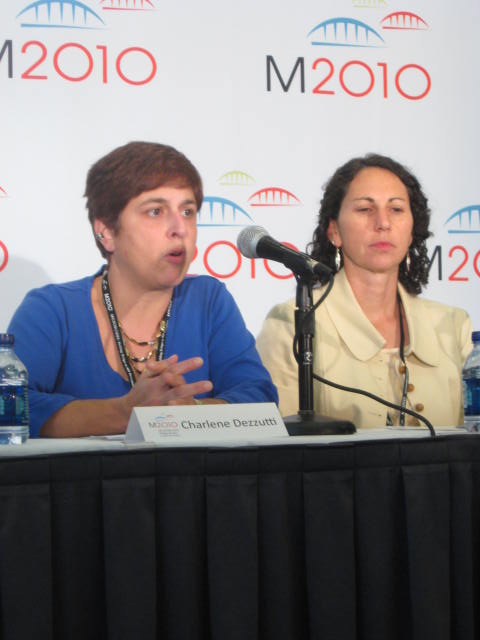
Researchers Charlene Dezzutti and Pamina Gorbach at M2010 the press conference


IRMA Press Release - Research on lubricant safety very past due

M2010 press conference on lubricants and rectal sex - audio recording courtesy of Bobby Ramakant

  1. Rectal lubricants may enhance the risk of STIs - Aidsmap,by Gus Cairns
  2. Some Sexual Lubricants Linked to Increased Risk for Chlamydia, Gonorrhea, by Bob Roehr on Medscape  
  3. Lubricants' use may put individuals at higher risk of HIV - by Bobby Ramakant for Citizen News Service 
  4. Understanding New Research on Lubricant Use During Anal Intercourse, by Cory Silverberg for About.com

Dear IRMA members,

Imagine our excitement to see such an explosion of interest in lube safety!

As many of you know, this has been a core objective of IRMA's work for 5 years, and one of the reasons we formed at all. The whole idea behind the huge survey we launched in 2007 was to obtain data that would allow the field of lube safety research to move forward. We published the results of the survey -- to our knowledge the world's largest survey on anal sex and lubes with nearly 9,000 partiicpants in over 100 countries -- in our 2008 report Less Silence, More Science. And we are thrilled to report that the results have just been accepted for publication in a peer reviewed journal and should be available very soon. Watch this space!

We will send out a notice for an IRMA call very soon, where we will provide an overview of the studies announced at M2010 this week, provide background on research done so far, and discuss plan for future research. This will also provide all of us with an opportunity to discuss messaging in relation to rectal safety of lubes.

In the meantime, we will continue to share information as it becomes available. For instance, you can check IRMA's lovely new report From Promise to Product for some background information -- including section 2.11 for some background information on testing of lubes, and section 4.4 for a description of IRMA's work in this area. The two sections are copied below for your reference.

It is truly wonderful to be poised for true progress on this critical issue and we welcome everyone's thoughts and efforts!

Sincerely,

Marc-André LeBlanc
IRMA Steering Committee Member and Chief Lubricant Safety Expert


Excerpts from report

What do we know about the rectal safety of sexual lubricants?


In addition to the studies released at M2010, a few others have assessed the relative safety of sexual lubricants, though not always looking at rectal safety specifically. These studies looked at:

    * Using in vitro and mouse assays to determine cellular toxicity, increased risk of HSV-2 infection, and epithelial sloughing caused by lubricants
    * Testing the osmolarity of lubricants
    * Using slug mucosal irritation assays to evaluate mucosal irritation caused by lubricants

The question remains: what do all of these studies tell us? We’re not sure. We still don’t know what assays should be used to determine the rectal safety of lubricants. Furthermore, even when studies find a wide range of values for their safety markers, we still don’t know to what extent—if any—some of these markers might indicate a higher risk of HIV transmission.

Relatively high levels of cellular toxicity, mucosal irritation, cell damage caused by hyperosmolar or hypo-osmolar products, inflammation, or epithelial sloughing could in theory increase the risk of HIV infection. However, this remains to be proven.


It is important to keep in mind that:

    * Some level of inflammation and irritation occurs naturally in rectal mucosa, even among healthy individuals;
    * Anal intercourse itself, as well as enemas and douching, causes some transient damage; and
    * Rectal epithelium regenerates quickly after minor damage or sloughing.

We must be able to compare normal levels of inflammation, irritation, cell damage and epithelial sloughing that occur among healthy individuals and those that are a result of AI. The question then becomes: does AI with lubes cause increased levels, similar levels, or lower levels of these markers compared to AI without lubes? Even if we were to find that some lubes cause higher levels of disruption, we would still need to investigate whether this translates into a higher risk for HIV transmission.

These questions remain to be answered, and we are still left with little data that can be translated into useful information that the public can use to make choices about lubricants. One thing to consider: if lubricants increase the use of condoms, that is probably a more important factor in preventing HIV transmission than any potential risk from lubes. For the moment, the use of lubes compatible with condoms is still considered to be an important risk-reduction tool for rectal transmission of HIV, and is likely to remain so. One day we may have valuable information on the relative safety of different lubricants, allowing users to make better informed decisions about which products they use.

IRMA’s advocacy on the safety of lubricants used for anal sex

Many men and women use sexual lubricants during AI, yet we know very little about the relative safety of these lubes. Obtaining safety data on products used as sexual lubricants for anal sex would be valuable for public health reasons.

Accordingly, IRMA prioritises advocacy for data collection on the rectal safety of lubricants. Wholly absent in current HIV prevention activities, a translation of this type of data into useful information for users, funders, programme directors, and policy makers would be of significant benefit to the field. Lessons learned in this undertaking will also provide valuable insights into message development on the safety and efficacy of vaginal and rectal microbicides, when these products become available.

Due to the paucity of this type of information, IRMA launched a global web-based survey in 2007 (see an overview of the results from this survey in IRMA’s previous report: Less Silence, More Science: Advocacy to Make Rectal Microbicides a Reality). The survey provided valuable information on lube use, preferences, and acceptability among nearly 9,000 men and women from over 100 countries, establishing a prioritised list of the most widely-used lubes to test for rectal safety.

A working group comprised of advocates and researchers was convened by IRMA to discuss the feasibility of testing sexual lubricants for rectal safety. While the working group identified significant scientific challenges that remain unaddressed to this day, there has been some progress.

IRMA’s action on lubricant safety includes the following activities:

    * Encouraging researchers to test lubes for rectal safety and to share their findings;
    * Facilitating dialogue among leading researchers and advocates within the working group on rectal safety of lubricants;
    * Compiling articles and studies related to lube safety, particularly for rectal use, and maintaining an updated background document on this issue;
    * Making IRMA’s list of most widely-used lubes available to anyone interested in testing lubes; and
    * Keeping IRMA membership updated on developments in this area.


Here is just a SAMPLE of some of the news stories 
generated on this issue -last updated July 5, 2010. Most recent coverage is at the bottom of the list.

  1. Use of lubricants with anal sex could increase risk of HIV - Physorg.com
  2. Lubricant Use May Raise HIV Infection Risk During Anal Sex - MSN
  3. Risk of sexually transmitted disease three times higher when lubricant used with anal sex - Times LIVe Blog (South Africa)
  4. Use of lubricants with anal sex could increase risk of HIV - Armenian Medical Network
  5. Use of lubricants with anal sex could increase risk of HIV - Science Blog
  6. Unprotected anal sex ups HIV risk 20-fold - Thaindian News
  7. So Now Anal Lube Increases Your Risk of Getting HIV? - Queerty
  8. Lubricants for Anal Sex May Increase Risk of HIV, STIs - POZ
  9. Lubricant Use May Raise HIV Infection Risk During Anal Sex - U.S. News and World Report
  10. Lubricant Use May Raise HIV Infection Risk During Anal Sex - Bloomberg Business Week
  11. Unprotected anal sex ups HIV risk 20-fold - Sify News
  12. Currently Available Lubricants Used For Anal Sex May Actually Make It Easier For HIV To Be Transmitted - Medical News Today
  13. Lubricants may increase disease risk of anal sex, studies show - Los Angeles Times
  14. Lube May Make Anal Sex More Risky - Gawker
  15. Use of lubricants with anal sex could increase risk of HIV - HIV Atlas
  16. Use of Lubricants With Anal Sex Could Increase Risk of HIV - Science Daily
  17. IRMA: Research on lubricant safety very past due - Physorg.com
  18. Lubricant Use May Raise HIV Infection Risk During Anal Sex - Yahoo News
  19. Use of lubricants with anal sex could increase risk of HIV - e!Science News
  20. Lubricant Use May Raise HIV Infection Risk During Anal Sex - MedicineNet.com
  21. Why it is important to give that lubricant a second look - Africa Science News Service
  22. Anal sex studies from Microbicides conference show increased HIV transmission risk with some lubes  - Examiner.com
  23. Lubricant use with anal sex may raise HIV risk - DNA India
  24. Some Lubricants May Increase Risk for HIV Infection - Bilerico Project 
  25. Pelumas Berpotensi Tularkan HIV (Indonesia) - Media Indonesia.com (link is translated into English) - And here it is in Indonesian.
  26. Lubricants' use may put individuals at higher risk of HIV - Modern Ghana
  27. New Research Finds Using Lube During Anal Sex Can Increase HIV, STD Transmission - QueerSighted
  28. Some Lube Safer For Anal Play - Center for Sexual Pleasure and Health
  29. Unprotected anal sex ups HIV risk 20-fold - Mangalorean.com (India)
  30. International Rectal Microbicide Advocates tries to clear the air on Microbicides studies - GLBTQ Jamaica Blog Watch
  31. AstroGlide - Found to be the Most Toxic Personal Lubricant Tested - Condom Depot
  32. The Slippery Slope of Reporting Sex Research: Anal Sex & Lubricants - Good Vibrations Magazine
  33. Research into lubes has worrisome findings - Bay Area Reporter 
  34. Facts, HIV, STI and Lube - La Porte Des Etoiles (Melbourne, Australia)
  35. Lube Alarm - Metro Weekly 
  36. Study: 4 of the 6 most widely used lubes are toxic - 365 Gay


      Thursday, April 29, 2010

      What gay men can teach straights about safe sex

      via Salon.com, by Tracy Clark-Flory


      Women are skipping the condoms when it comes to, well, the backdoor.


      It seems women have a safe sex blind spot when it comes to anal sex, according to a new report by the New York City Health Department. Far fewer women consistently use condoms during anal sex than men who sleep with men; 23 percent and 61 percent, respectively.

      It's easy to understand how some women might rationalize condomless anal sex, much like virginity pledges who, conveniently enough, don't count oral or anal sex as sex. If it doesn't "count" as sex sex, and there is no risk of pregnancy, why use protection? But, boy, does it ever count: As the report's press release explains, "past studies suggest that anal exposure to HIV poses 30 times more risk than vaginal exposure." Sadly, the new study finds that women who have anal sex without condoms are less likely to get regular STD tests than women who consistently use protection.
      Read the rest.
      Related Posts Plugin for WordPress, Blogger...