Showing posts with label Nigeria. Show all posts

Thursday, May 31, 2012

PrEP Provides New Hope for HIV Prevention in Nigeria

via Leadership, by Winifred Ogbebo
*Mentions IRMA advocate Morenike Ukpong!*

Like a breath of fresh air, the news that a combination prevention drug would soon hit the Nigerian market is definitely something to cheer about, given Nigeria’s high prevalence of HIV rate, which is said to be second only to South Africa in the African continent. WINIFRED OGBEBO reports.

It is like Sunday-Sunday malaria drugs. But in this case, you take HIV drug to prevent HIV and HIV negative people, says the Director-General, National Agency for the Control of AIDS (NACA), Prof John Idoko, explaining the new prevention treatment drug, pre- exposure Prophylaxis.

“From what we learnt from malaria for example, he explains further, “if we give the drugs to somebody who doesn’t have HIV, and the person has sexual relationship with an HIV positive partner, it can prevent transmission from the positive person to the person. That is why it’s called a pre- exposure prophylaxis because before exposure, the person has taken the drugs and because he has the drugs in him, the virus cannot infect him or her.”

Also, Idoko says, “ If you take this sero-discordant couples; one is positive and the other is negative, instead of giving the drug to the negative person before the sexual relationship, just put the positive one on drug as soon as you know. It doesn’t matter what his CD-4 count is even if it’s 500, just give him the drugs. It has shown clearly one of the best study results that we have seen, as 96 per cent chance of the person transmitting HIV is blocked. So we call that treatment as prevention. So you can now imagine that if you go to a community, and they are using this method, your chances of blocking transmission are very high. We believe that these are the two things we need to put together as part of our combination prevention method.”

The pre-exposure prophylaxis is the newest HIV prevention tool that has been developed. It involves the use of Truvada, an antiretroviral to prevent HIV infection. A few studies have shown the ability of this drug to prevent HIV infection in sero-discordant couples, MSMs, transgenders and in men and women.

Read the Rest.


------------------- *Join IRMA's robust, highly-active. moderated, global listserv addressing rectal microbicide research and advocacy as well as other interesting new HIV prevention technologies by contacting us at rectalmicro@gmail.com. Joining our listserv automatically makes you a member of IRMA - a network of more than 1,100 advocates, scientists, policy makers and funders from all over the world. *Please look for us on Facebook: www.facebook.com/InternationalRectalMicrobicideAdvocates, and you can follow us on Twitter: @rectalmicro. *Also, please note that shared news items from other sources posted on this blog do not necessarily mean IRMA has taken any position on the article's content. -------------------

Friday, May 11, 2012

Rosie the Riveter Can No Longer Represent the Face of Microbicide Research: Lessons from M2012

by IRMA member Morenike Ukpong
Rosie the Riveter is a cultural icon of the United States, representing the American women who worked in factories during World War II, many of whom produced munitions and war supplies. These women sometimes took entirely new jobs replacing the male workers who were in the military. Rosie the Riveter is commonly used as a symbol of feminism and women’s empowerment. Rosie’s picture came to represent the objective of microbicide research – an empowering tool that will enable women to have a HIV prevention option they could control, in their hand.

The microbicide research movement was actually initiated as a women empowerment movement. Women asked for a tool that they can control independently to help reduce their own risk of HIV infection. Women activists led by Lori Heise, started making a case for a women controlled option for HIV prevention. This movement was in response to a call made by an African woman on the need to have something to protect herself, Lori Heise often recalls. The earliest movement was focused on the development of a vagina application that could ensure women can use the product discretely if and when they choose too.

Trials in many African countries continue to suggest that discrete use of a microbicide may not be feasible – male involvement in the implementation of microbicide trials and its use by women engaged in the trials is important so as to ensure participant retention and prevent other potential social harm. However, Mitzy Gafos in her presentation titled ‘What have men got to do with it: the role of men in reproductive and sexual health in a predominantly rural are of KwaZulu-Natal, South Africa’ showed that women in South African can actually take decision about the use of the microbicide independent of their male partners. I would want to assume that this is the same in South West Nigeria where women are quite independent and are better able to negotiate the use of condom with their male sex partners.

With increasing discussion on anal sex and rectal microbicide, the objective of developing a microbicide seems to have shifted. It is less so about developing a tool that will empower women to have control over her sexual and reproductive health in a way that will enable her protect herself from HIV infection. More and more attention is being paid to public health needs that are larger than women focused issue.

Rosie the Riveter can no longer represent the face of microbicide research. Current research is looking at bioavailability of microbicide gel in the rectum and vagina and its efficacy in preventing HIV infection in both the vagina and the rectum at the best. This means a microbicide product can be used by men, women and transgenders.

The message about microbicide is no longer one of empowering women in Africa. The message is now about health and access to health product in African. Structural issues that will facilitate the uptake and use of microbicides are being discussed everyday. This includes the need to strengthen health systems so as to ensure product access, human right issues so as to ensure access by MSMs. The peculiar issues related to women, women access, women empowerment, has quietly fallen off the table. The events at the M2012 make this very clear.

-------------------

*Join IRMA's robust, highly-active. moderated, global listserv addressing rectal microbicide research and advocacy as well as other interesting new HIV prevention technologies by contacting us at rectalmicro@gmail.com. Joining our listserv automatically makes you a member of IRMA - a network of more than 1,100 advocates, scientists, policy makers and funders from all over the world.

*Also, please note that shared news items from other sources posted on this blog do not necessarily mean IRMA has taken any position on the article's content.

-------------------

Monday, February 13, 2012

Meet our Newest Friendly Rectal Microbicide Advocate: Abimbola Onigbango Williams!

“Rectal microbicides are an important priority that need to be fully explored to provide males and females who engage in anal sex a way to protect themselves from HIV and perhaps other sexually related infections.”

Abimbola is an IRMA advocate from Lagos, Nigeria. There she is a public health researcher and advocate. She has a Master’s Degree in Public Health from the University of Ibadan in Nigeria, and is currently a Fulbright Scholar/ Hubert Humphrey Fellow at the Johns Hopkins Bloomberg School of Public Health. At Johns Hopkins her fellowship is focused on Public Health and Policy Management with an emphasis on Health Systems Strengthening.

Abimbola first became involved with IRMA when she attended the Project ARM meeting in Addis in December. The meeting gave her the opportunity to understand new ideas and perspectives on how to integrate anal health and rectal microbicides into her work as a researcher and advocate. It was also a great place to find common ground with meeting participants from all over the world on issues related to rectal microbicides. She thought the meeting was a huge success and left feeling inspired!

She believes rectal microbicides are a top priority, and we need to dedicate more time and resources to their development. She is already creating a greater awareness of rectal microbicides by educating individuals and key stakeholders through advocacy visits, information sharing, and helping them disseminate research materials.

Her advice to other IRMA advocates is to keep up the robust discussion on the listserv and continue advocating for healthy anal intercourse regardless of peoples’ sexual orientations. She also has a great tactic for combating stigma she faces for standing up for rectal microbicides. She first tries to educate people about health and anal health to create a safe space for a healthy discussion. Then, she brings up the idea of rectal microbicides. She finds this is especially helpful if someone isn’t very familiar with anal intercourse.

In her free time she loves travelling, playing badminton, and knitting.

Thanks Abimbola for all that you do!


[If an item is not written by an IRMA member, it should not be construed that IRMA has taken a position on the article's content, whether in support or in opposition.]

Tuesday, February 7, 2012

Meet Olumide Makanjuola: Our Newest Friendly Rectal Microbicide Advocate!

“Rectal microbicides are a very important new prevention technology. They bring attention to anal intercourse and provide protection for those who practice it, regardless of their sexual identities.”

Olumide is an IRMA advocate from Lagos, Nigeria. He works at TIERs (The Initiative for Equal Rights) for the rights of LGBT people and sexual health rights. He loves his job and the inspiring people he works with.

Olumide first became involved with IRMA when he visited the AIDS Foundation of Chicago (AFC) for a week and worked with the IRMA crew (IRMA is housed at AFC.). He joined the IRMA listserv and has since been following the conversations and information shared by members every day. At first he was not sure how this would be helpful to the people he serves in Nigeria, but now he says he sees how valuable rectal mircobicides can be for the gay/MSM community and others who practice anal intercourse.

Olumide was excited to participate in the Project ARM - Africa for Rectal Microbicides meeting held in Addis Ababa this past December, in conjunction with ICASA, which brought together so much expertise and many different community perspectives to help design a road map for rectal microbicides in Africa. He says that it is a long road ahead and implementation of the agenda will be difficult, but he is confident and knows Project ARM’s goals are “surely achievable.”

Throughout his career as an advocate he has faced much stigma and discrimination; anyone standing up for the MSM or LGBT communities in Nigeria does. Sometimes in Nigeria, people think IRMA is promoting homosexuality. Olumide has to fight this stigma as well.

His advice for IRMA is to continue promoting and educating people about rectal microbicides in Africa at the grassroots level, as the Project ARM meeting concluded.

Thanks Olumide, for all that you do!


[If an item is not written by an IRMA member, it should not be construed that IRMA has taken a position on the article's content, whether in support or in opposition.]

Friday, December 9, 2011

Anal Intercourse in Nigeria

via Nigerian Tribune, by Muda Oyeniran

Not less than 12 percent of public secondary school students in Nigeria practise anal sex while 12.1 per cent of university students and 15.2 per cent adolescents in northern Nigeria engage in the act.
Morenike Ukpong, the coordinator of the New Vaccine and Microbicide Advocacy Society, a Lagos-based non-governmental organisation, who disclosed this to the Nigerian Tribune said the role of anal sex in driving the HIV epidemic away from Nigeria could no longer be ignored.

She further said there were evidences to show that about 10 per cent of women and 14 per cent of men in the general populace practised anal sex, adding that the use of condom during this sexual act was low because of the erroneous belief that anal sex was safer than vagina sex.

“Request for anal sex by clients of female sex workers is high with men paying higher to have anal sex for many reasons,” she stated.

According to Ukpong, anal sex is known to be the highest risk form of sexual transmission of HIV infection with approximately 14 times higher risk of HIV transmission when compared to penile-vagina sex.

Read the rest.


[If an item is not written by an IRMA member, it should not be construed that IRMA has taken a position on the article's content, whether in support or in opposition.]

Wednesday, December 7, 2011

Obama and Clinton Pledge to Protect Gay Rights Throughout the World

via The New York Times, by Stephen Lee Myers

The Obama administration announced on Tuesday that the United States would use all the tools of American diplomacy, including the potent enticement of foreign aid, to promote gay rights around the world.

In a memorandum issued by President Obama in Washington and in a speech by Secretary of State Hillary Rodham Clinton here, the administration vowed to actively combat efforts by other nations that criminalize homosexual conduct, abuse gay men, lesbians, bisexuals or transgendered people, or ignore abuse against them.

“Some have suggested that gay rights and human rights are separate and distinct,” Mrs. Clinton said at the United Nations Human Rights Council in Geneva, “but in fact they are one and the same.”

Neither Mr. Obama nor Mrs. Clinton specified how to give the initiative teeth. Caitlin Hayden, the National Security Council’s deputy spokeswoman, said the administration was “not cutting or tying” foreign aid to changes in other nation’s practices.

Still, raising the issue to such prominence on the administration’s foreign policy agenda is important, symbolically, much like President Jimmy Carter’s emphasis on human rights.

With campaigning already under way in the 2012 presidential contest, Mr. Obama’s announcement could bolster support among gay voters and donors, who have questioned the depth of his commitment. He chose the Rev. Rick Warren, a pastor who opposes same-sex marriage, to deliver the invocation at his inauguration. Mr. Obama himself has not come out officially in favor of same-sex marriage. But he successfully pushed for repeal of the “don’t ask, don’t tell” policy that prevented gays from serving openly in the military. And the Justice Department has said it will no longer defend in court the Defense of Marriage Act, which defines marriage as between a man and a woman.

The initiative also invites attacks from Republicans trying to appeal to a conservative base in the primary and caucus states.
One Republican candidate, Gov. Rick Perry of Texas, said: “President Obama has again mistaken America’s tolerance for different lifestyles with an endorsement of those lifestyles. I will not make that mistake.”
It could also irritate some American allies, including countries like Turkey, where there have been reports of harassment, and Saudi Arabia, where homosexuality is banned and sex between people of the same sex is punishable by death or flogging.

Read the rest.


[If an item is not written by an IRMA member, it should not be construed that IRMA has taken a position on the article's content, whether in support or in opposition.]

Monday, November 21, 2011

Nigeria Stifling Gay Rights

via IRIN Africa

Rights groups in Nigeria fear a same-sex marriage bill being discussed in parliament could boost already prevalent discrimination against homosexuals. The bill goes much further than banning same-sex marriage; it threatens to ban the formation of groups supporting homosexuality, with imprisonment for anyone who “witnesses, abet[s] or aids” same-gender relationships, and could lead to any discussion or activities related to gay rights being banned.

Under a colonial-era law, sodomy is punishable by a 14-year jail sentence; and in the country’s mainly Muslim northern states, where a version of Shar’ia law applies, the penalty is death by stoning, although this has never officially been carried out.

The National Assembly began debating the latest version of the Same Sex Marriage (Prohibition) Bill in November. Most high-ranking officials have voiced their approval of the bill, signalling it is likely to pass.

Intolerance prevails

Analysts see the bill, which has been shelved twice in five years, as a potential boost to the popularity of a government whose approval ratings have stalled since elections in April this year. Most Nigerians strongly disapprove of homosexuality, with many seeing it as a foreign import at odds with a deeply religious society.

A 2008 survey by non-profit, Nigeria’s Information for Sexual and Reproductive Rights, of 6,000 Nigerians on their attitudes to homosexuality, found that only 1.4 percent of respondents said they felt “tolerant” towards sexual minorities.

A university student in the northern state of Jigawa was killed in 2002 when classmates set upon him after rumours that he was gay.

In September 2008, several national newspapers published the names, addresses and photographs of the pastor and congregation of a church in the port city of Lagos that ministered to sexual minorities. A few days later a mob that included policemen attacked the church. Members of the congregation lost jobs and homes and had to go into hiding; others are still harassed and threatened with physical harm, Human Rights Watch said in a statement.

“Homosexual and lesbian practices are considered offensive to public morality in Nigeria. The… bill is crucial to our national development because it seeks to protect the traditional family, which is the fundamental unit of society, especially in our country,” said the influential newspaper, This Day, in its editorial on 10 November. “It will be difficult to import practices and lifestyles which are alien to our country and the majority of our people.”
Homosexual rights are narrowing across Africa. In Uganda, gay rights activist David Kato was killed in January 2011 after opposing the Anti-Homosexuality Bill in 2009.

In Malawi a gay couple was imprisoned for “gross indecency”. The United States and British governments have threatened to cut off aid money to African countries seeking to curb gay rights.

Read the rest.


[If an item is not written by an IRMA member, it should not be construed that IRMA has taken a position on the article's content, whether in support or in opposition.]

Friday, October 7, 2011

Announcing the 2012 Omololu Falobi Award for Excellence in HIV Prevention Research Community Advocacy

Five years ago on October 5 2006, we lost our brother and colleague Omololu Falobi. Those who knew Omololu professionally will remember him, among many other things - as a talented journalist on HIV, as an activist for social justice, as an advocate for prevention research and as a son of Africa in his zeal to ensure Africans were taking ownership of their own HIV care and prevention.

Omololu founded the Journalists Against AIDS in Nigeria (JAAIDS), was an instrumental pioneer member of the Nigerian Treatment Access Movement (TAM), and co-founded the New HIV Vaccine & Microbicide Advocacy Society (NHMAS). He was tragically killed in 2006 in Lagos, Nigeria.

In 2008, in honour of Omololu’s memory and commitment to the field, The Omololu Falobi Award for Excellence in HIV Prevention Research Community Advocacy was established by the African Microbicides Advocacy Group (AMAG) and partners. The Award is presented to an individual nominated by their peers at the biennial International Microbicides Conferences. Lori Heise (USA) and Aylur Srikrishnan (India) were the 2008 recipients and Charles Shagi (Tanzania) the recipient in 2010.

In continuation of this tradition and to mark the fifth anniversary of Omololu’s death, we proudly announce the call for nominations of The Omololu Falobi Award for Excellence in HIV Prevention Research Community Advocacy 2012 to be awarded to a community advocate in recognition of their contribution to the HIV prevention research field through community advocacy.

The 2012 Award Planning Committee includes representatives from the African AIDS Vaccine Program (AAVP), AMAG, AVAC: Global Advocacy for HIV Prevention, the Global Campaign for Microbicides (GCM), International Rectal Microbicides Advocates (IRMA), JAAIDS, NHVMAS and TAM, with acknowledgment from the Omololu Falobi Foundation.

Nominations will be reviewed by a committee of stakeholders in the prevention research field and the selected individual will then be recognized and awarded at the Closing Ceremony of the International Microbicides 2012 Conference in Sydney, Australia in April 2012. We are pleased to work with the Microbicides 2012 Conference Planning Committee to present the Award next year.
A call for nominations and information on the selection process will be circulated later this month.

On behalf of the planning committee:
AAVP, AMAG, AVAC, GCM, IRMA, JAAIDS, NHVMAS, TAM

For more information:
Website: http://www.avac.org/ht/d/sp/i/4345/pid/4345
Email: amag_info@yahoo.com


[If an item is not written by an IRMA member, it should not be construed that IRMA has taken a position on the article's content, whether in support or in opposition.]

Wednesday, September 14, 2011

Persecuted for Being Gay

via The Guardian, stories compiled by Gay Middle East

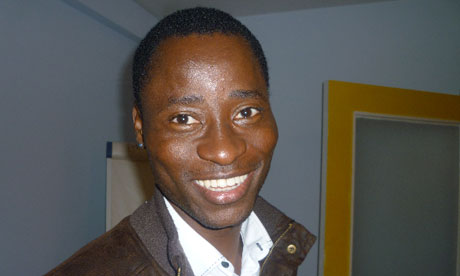
Bisi Alimi, from NigeriaBisi Alimi, from Nigeria (an IRMA member!)

In 2002, I was at university in Nigeria and standing for election. A magazine wrote about me and exposed me as being gay. This led the university to set up a disciplinary committee. I was very nearly dismissed. When I did graduate, people wanted to refuse me my certificate on the grounds that I did not have good enough morals to be an alumnus of the university. While this was going on, the then-president, Olusegun Obasanjo, declared that there were no homosexuals in Nigeria, and that such a thing would not be allowed in the country.

I talked with a friend of mine, who is a famous Nigerian talkshow host, about challenging this opinion. Nobody had come out publicly before. So, in October 2004, I appeared on her breakfast show, New Dawn with Funmi Iyanda". I talked about my sexuality, the burden of the HIV epidemic in the gay community.

The reaction was immediate and violent. I was subjected to brutality from the police and the community. I was disowned by my family and lost many friends, including in the gay community. They were afraid to know me. I was isolated, with no support and no job. The TV show was taken off the air by the government. It led to the introduction of the Same Sex Prohibition bill of 2006. All I had done was say who I was. Three years later I appeared on the BBC World Service. I repeated what I had said on television in Nigeria and suggested my government was using attacks on homosexuality to help cover up its own corruption.

On my arrival back to Nigeria, I was arrested, detained and beaten by the police. For a month, until I fled back to the UK in April 2007, my life was in constant danger.

Read the rest.


 [If an item is not written by an IRMA member, it should not be construed that IRMA has taken a position on the article's content, whether in support or in opposition.]

Saturday, August 6, 2011

Why the CIA's Vaccine Ruse Is A Setback for Global Health


Last week, the Guardian broke the news that in the run-up to the raid on Osama bin Laden's compound, the CIA used a vaccination campaign as a ruse to get DNA evidence from the al-Qaeda leader's kids. With help from a Pakistani doctor, Shakil Afridi, they set up clinics in two neighborhoods, delivering doses of the Hepatitis B vaccine to local children. The revelation drew a quick and angry response from health experts. Medecins Sans Frontieres called the operation "a dangerous abuse of medical care." In the Washington Post, Orin Levine and Laurie Garrett warned that the CIA's "reckless tactics could have catastrophic consequences."

Indeed, they may. Here are three reasons why this is bad news for public health:

1. Broken Trust
When people don't trust medical personnel, they're less likely to participate in legitimate public health campaigns. Eight years ago, rumors spread that an anti-polio campaign in Nigeria was an American plot to sterilize Muslim girls, causing many families to refuse the vaccine. The subsequent outbreak spread to eight countries.

Read the rest here.

[If an item is not written by an IRMA member, it should not be construed that IRMA has taken a position on the article's content, whether in support or in opposition.]

Friday, August 5, 2011

The Lagos HIV Stigma

Via Next, by Gbenro Adeoye.

The first case of HIV/AIDS in Lagos was reported in 1986, unlike the global stage, where it was first reported 30 years ago by the Centres for Disease Control and Prevention (CDC) in the United States among gay men. Since the discovery in Lagos which was also the first in Nigeria, HIV has steadily grown to a status of silent foreboding among the general public. According to the Lagos State AIDS Control Agency (LSACA), the current HIV prevalence rate in the state is 5.1 percent, ahead of the country's 4.1 percent prevalence rate recently announced by the Health Minister, Onyebuchi Chukwu.

But in the 25 year period, the state has seen significant progress in the level of public awareness, testing, treatment and care for persons living with HIV. In his assessment, the Head of Lagos office, United Nations Population Fund, Omolaso Omosehin, described the achievements made so far in the state as remarkable, highlighting improvements in the prevention and treatment of the disease. He said, "The situation is better than what it used to be; many people are now aware of how to prevent HIV/AIDS and there is hardly any health centre where you are not required to the test. Many more people are able to access antiretroviral (ARV) drugs which were not so available some years ago."

Yetunde Ababi, a health educator, who tested positive for HIV in 1991, also acknowledged the improvements made in the treatment and care for persons living with HIV. Mrs. Ababi said "the epidemic was so much in the 90s and the drugs were so expensive that people were being screened into the mortuary. Then, we were spending about N90, 000 monthly on ARVs, but the drugs and treatment are now free in government hospitals in Lagos."

Unfortunately, the stigma associated with HIV still denies infected persons job appointments and prevents many others from openly declaring their status. Patrick Akpan, the deputy coordinator of Plan Foundation for Health and Development, formerly called Positive Living Organisation of Nigeria (PLON), a nongovernmental organisation aimed at supporting persons living with HIV/aids, said the stigma against persons living with HIV in Lagos has been ‘modernised.' According to him, people have invented new ways of discriminating against persons living with HIV. He said, "People won't tell you that they are not relating with you because of your HIV status; they will rather find another excuse for avoiding you. They would rather say ‘you are not qualified for the job', rather than say it's because you are HIV positive."

Read the rest here.

[If an item is not written by an IRMA member, it should not be construed that IRMA has taken a position on the article's content, whether in support or in opposition.]

Thursday, June 2, 2011

Meet Margaret Onah - a Friendly Rectal Microbicide Advocate

via IRMA
 Margaret Onah believes that rectal microbicides are an important priority among new HIV prevention technologies because so many people, both males and females, engage in anal sex and the society pretends that it is not real, and so do not want to be associated with it.
An advocate from Calabar, Nigeria, Margaret is the Director for Safe Havens International and is a member of IRMA and IRMA Nigeria. She provides support services to vulnerable women and girls (female sex workers, teenage mothers and widows) and communities by educating and informing them on issues of sexual & reproductive health rights. Her mission as an advocate for human rights and health issues is to enhance the well-being of her community and its most vulnerable members with a participatory approach.


Margaret was introduced to IRMA when she became a member of the Global Campaign for Microbicides and the New HIV Vaccine and Microbicides Advocacy Society (NHVMAS), the "steering wheel" for microbicide advocacy in Nigeria. She began her advocacy with IRMA because she is concerned about the stigma and discrimination associated with anal sex, which she knows prevent people from seeking diagnosis and treatment, further compounding the problem. "If we are soliciting for vaginal microbicides, we should do the same for rectal microbicides because sex is sex no matter what form."

When she's not working Margaret enjoys reading biographies, dancing, and Christian books and music.
Read about other friendly rectal microbicides advocates.
Newly featured advocates include Brian Kanyemba, Paul Semugoma, and Ian Lemieux.
Want to join the best e-mail discussion list on new prevention technologies on the planet? Send a note to IRMA here - rectalmicro@gmail.com - and we will get you signed up. Joining the list makes you an automatic IRMA member too!
[If an item is not written by an IRMA member, it should not be construed that IRMA has taken a position on the article's content, whether in support or in opposition.]

Tuesday, February 15, 2011

LGBT Africans Face Blackmail and Extortion on a Regular Basis

via International Gay and Lesbian Human Rights Commission

Antiquated laws against same-sex sexual activity as well as deeply ingrained social stigma result in the all-too-frequent targeting of lesbian, gay, bisexual and transgender (LGBT) people in Africa for blackmail and extortion, said the International Gay and Lesbian Human Rights Commission (IGLHRC) in a report launched today.

The report, Nowhere to Turn: Blackmail and Extortion of LGBT People in Sub-Saharan Africa, illustrates how LGBT Africans are made doubly vulnerable by the criminalization of homosexuality and the often-violent stigmatization they face if their sexuality is revealed. Based onresearch from 2007 to the present, the volume features articles and research by leading African activists and academics on the prevalence, severity and impact of these human rights violations on LGBT people in Cameroon, Ghana, Malawi, Nigeria, and Zimbabwe.

"The tragic reality is that blackmail and extortion are part of the daily lives of many LGBT Africans who are isolated and made vulnerable by homophobic laws and social stigma," says IGLHRC's Executive Director, Cary Alan Johnson. "The responsibility clearly lies with governments to address these crimes and the underlying social and legal vulnerability of LGBT people."

The report's authors vividly depict the isolation, humiliation and manipulation to which LGBT people are subjected by blackmailers and extortionists and describe the threats of exposure, theft, assault, and rape, that can damage and even destroy the lives of victims. Vulnerability to these crimes is faced on a regular basis and families and communities are not safe havens. For example, according to research conducted in Cameroon and featured in the report, "the bulk of blackmail and extortion attempts were committed by other members of the community - 33.9% by neighbors, 11.8% by family members, 11.5% by classmates, and 14.1% by homosexual friends. Police were often complicit in this - either by ignoring or dismissing it or, in 11.5% of cases, directly perpetrating it."

Nowhere to Turn explores the role the State plays in these crimes by ignoring blackmail and extortion carried out by police and other officials by failing to prosecute blackmailers, and by charging LGBT victims under sodomy laws when they do find the courage to report blackmail to the authorities.

IGLHRC urges States to take concrete steps to reduce the incidence of these crimes by decriminalizing same-sex sexual activity, educating officials and communities about blackmail laws, and ensuring that all people are able to access judicial mechanisms without prejudice.

A PDF version of Nowhere to Turn is available here. To obtain a hard copy of the volume, email iglhrc@iglhrc.org

[If an item is not written by an IRMA member, it should not be construed that IRMA has taken a position on the article's content, whether in support or in opposition.]

Monday, February 14, 2011

It's not if, it's when: IRMA's Jim Pickett on Rectal Microbicides in Africa

Writing for  the September - December 2010 issue of Echoes, a publication of the Nigerian HIV Vaccine and Microbicide Advocacy Society, IRMA chair Jim Pickett discusses the need for rectal microbicides in Africa.

Excerpt:

Until recently, rectal microbicides have simply not been part of the HIV prevention agenda in Africa, due in part to the denial of anal sex among heterosexuals and pervasive homophobia and criminalization that has denied and vilified the existence of gay men/MSM.

IRMA diligently addresses these issues, leading efforts to put rectal microbicides on the African map. These efforts are now bearing fruit - due in no small part to the significant engagement of hundreds of African advocates across the continent and extraordinary leadership by IRMA Nigeria with Kadiri Audu, IRMA Community Vice Chair, at the helm.

Read the whole thing.

While you are there, be sure to also check out the report on a rectal microbicide training for MSMs in Abuja!

[If an item is not written by an IRMA member, it should not be construed that IRMA has taken a position on the article's content, whether in support or in opposition.]

Wednesday, November 3, 2010

IRMA Nigeria: Report on MSM Training in Abuja

via IRMA Nigeria
Prepared by Kadiri Audu
IRMA Community Vice Chair, IRMA Nigeria Coordinator


Report:
NEW PREVENTION TECHNOLOGY TRAINING FOR MSM IN ABUJA
22 OCTOBER 2010


Introduction

International Rectal Microbicides Advocates (IRMA) Nigeria held one day training on New Prevention Technology (NPT) – Rectal Microbicides- The Basics, the training was facilitated by the Steering Committee Community vice Chairman and the leader of the Nigerian Chapter of the International Rectal Microbicides Advocates (IRMA) – Mr. Kadiri Audu, with support from IRMA International office in Chicago. The training was attended by twenty (23) peer educators, six (6) outreach coordinators, and four (4) program staff, making a total of thirty (33) participants. All participants are volunteers and staff in the Integrated Men’s HIV Prevention Project (IMHIPP), a project funded by Heartland Alliance for Human Needs and Human Rights (HA) with support from USAID.

Objectives

1)    To increase the awareness of the MSM community in Abuja on New Prevention Technologies
2)    To mobilize the MSM and Peer Educators in the IMHIPP project in FCT Abuja on the need for Rectal Microbicides
3)    To build a team of MSM advocacy group for rectal Microbicides in Nigeria
4)    To update the community members on the development and progress made on new prevention technologies and research to reduce the spread of the virus.
5)    To provide participants with information for personal and professional growth.

Presentations

a)    Who is IRMA,
b)    Overview of the HIV epidemic,
c)    New Prevention Technologies (NPTs),
d)    What are Microbicides,
e)    The basics of Rectal Microbicides research,
f)    IRMA goals and Objectives and
g)    Rectal Microbicides advocacy & you.

Methodology

a)    Facilitation
b)    Presentations
c)    Story telling

Questions Raised

a)    Can rectal Microbicides be used to prevent re-infection among two infected sexual partners?
b)    Can Rectal Microbicides be applied on the penis for oral sex? And how safe is it for human consumption
c)    Can two sexual partners use Rectal Microbicides as a double protection?
d)    Can ARV based Microbicides be used by a people not infected with HIV?
e)    How effective will microbicides be in controlling the virus in a plenty cum situation?
f)    Will microbicides push away condoms?
g)    Can microbicides be used as a lubricant?
h)    When will an effective microbicides be available?
i)    I will like to participate in the rectalmicrobicides (RM) trials, how can I participate?

Key Achievements

a)    Participants now have enhance knowledge on the need for rectal Microbicides for the MSM community
b)    This training has helped the participants to improve their knowledge on the use of Microbicides as a new HIV prevention technology
c)    Participants are determined to disseminate the information about Microbicides to other members

Lesson Learned

•    Most of the participants were just hearing about the word Microbicides for the first time
•    The participants now know the reasons why the MSM community is 19 times more vulnerable to HIV infection than the heterosexual population
•    Community Literacy program on Rectal Microbicides for the MSM Community should be encouraged and sustained.

Challenges

•    Most of the participants do not have email addresses that can ensure their mobilization to the IRMA link serve.
•    The training seems to be too technical to some of the participants who were hearing about Microbicides for the first time
•    Some of the participants are not educated

Conclusion

The participants want such a training to be a continuous training so that more community members can be informed about the existence and progress made globally on Rectal Microbicides and other New Prevention Technologies. The participants also want to see posters and IEC materials on rectal Microbicides.


[If an item is not written by an IRMA member, it should not be construed that IRMA has taken a position on the article's content, whether in support or in opposition.]

Monday, October 11, 2010

Meet Kami, the HIV-positive Muppet

From CNN

Big Bird and the Cookie Monster have som new friends, but they're a long way from "Sesame Street."

One of America's best-loved children's shows, which began life on a fictional New York street over 40 years ago, is about to land in Nigeria under the title of "Sesame Square" --bringing with it some distinctly West African twists.

The show stars Kami, a girl muppet whi is HIV-positive, has golden hair and a zest for adventure; and Kobi, an energetic, furry, blue muppet whose troublesome escapades help others learn from his mistakes.

Thursday, August 12, 2010

IRMA Member! Gay Nigerian activist Bisi Alimi shares his compelling story

via San Diego Gay and Lesbian News

Bisi Alimi was born in Nigeria in 1975, grew up and went on to attend the University of Lagos (Nigeria) pursuing a degree in theater. While as a student in 2003, he was outed by the university's student newspaper during student government elections.

Homosexual activity is illegal in Nigeria, the conservative influences of the Muslim faith in the north and a large Christian presence in the south. It is punishable by death by stoning in all 12 states, or being sentenced up to 14 years of imprisonment. There is no legal protection against discrimination for LGBT Nigerians. Very few are out, and violence against those in the LGBT community is frequent. Legislation is pending to criminalize same-sex marriage throughout Nigeria.

Alimi was expelled from university in 2004, before he was able to receive his degree.

Later that year, he was selected to be the Nigerian face of homosexuality at the fourth National Conference on HIV/AIDS in Abuja. Also that year, he was brought onto Funmi Iyanda's New Dawn talk show on the Nigerian Television Authority and it was here that he publicly came out before the nation and asked for acceptance from the public.

Almost immediately, there were repercussions for both Alimi and the interviewer. Almini received both love letters and death threats, and lost his home and his job. The New Dawn talk show's Friday edition was canceled and further interviewees on the show were were screened by the NTA in a country where censorship against homosexuality is already tight.

Read the rest.

Wednesday, May 26, 2010

Nigeria: HIV - Stakeholders Want Prevention to Take Centre Stage

via VANGUARD, by Chinyere Amalu

"If we don't have correct information to prevent the spread of the virus, there is no way the nation could move forward in tackling the scourge. If we do not do something urgent about taking messages of prevention to the rural communities, we are wasting our time", -Prof. John Idoko

The 4-day conference, which was organized by Network for HIV & AIDS Research in Nigeria (NARN) in partnership with the National Agency for the Control of AIDS (NACA), with support from the United Nations system, the US Government, other developmental partners and civil society organisations believed that if prevention is prioritised, the spread of HIV would be controlled to the barest minimum.

According to Prof. Dennis Ityavyar, "Cultural practices have a fundamental role to play in HIV prevention, Prevention of Mother-to-Child Transmission (PMTCT) and male involvement in reproductive health services. A number of commonly observed traditional practices are now recognized as being directly responsible for the spread of HIV & AIDS".
 

Tuesday, May 25, 2010

Initial surveys of MSM in Nigeria show high levels of bisexual behaviour and low condom and lube use

via Aidsmap, by Gus Cairns 

Two surveys of men who have sex with men in Nigeria who are attending local HIV support organisations show that between a third and half of men who are attracted to other men define as bisexual and as many have had vaginal sex with a women as anal sex with a man.

The ‘snapshot’ survey adds another country to the list of African countries that have documented a hitherto invisible MSM culture – see recent report - and adds to evidence presented elsewhere at the Microbicides Conference that even in supposedly heterosexually-driven epidemics, anal sex may play a much larger role than previously thought. 

Read the rest.

Monday, April 19, 2010

New HIV Vaccine and Microbicide Advocacy Society releases new report on MSMs

The New HIV Vaccine and Microbicide Advocacy Society (NHVMAS) released its "Report on the 5 days training on HIV Prevention,Treatment, Research Literacy for MSMs" on March 29, 2010.


Read the whole report here.

Executive summary

A five days training for MSMs in Lagos on HIV prevention, treatment and research literacy was organised for 25 participants. The training ran for 5 days with 28 participants participating in the five days training.

Prior the training, a one day planning meeting was held between NHVMAS and IRMA on the 19th of March 2010. The meeting addressed selection of participants, venue of the training, timing of the training and facilitators. Email and telephone communications between NHVMAS, NARN, NACA and Population Council had also gone on for one week prior to the planning meeting date.

The NACA draft MSM training manual was used for the training. The training served as a pilot for the training manual. Lessons from the training would feed into the review process. At the end of the training, the pre and post test analysis showed that there was a significant improvement in knowledge and understanding about HIV as a whole. Most importantly, people did come to better understand the need to use condom consistently and correctly. The exercise of having trainees share information with peers and bring feedback on their peer outreach to the meeting also helped practically feed into the last session of the training meeting.

Lessons learnt include:

1. Focus of MSM training should emphasis on correct and consistent use of condoms. MSMs will always have multiple sexual partners for multiple identified reasons.

2. The use of peers as trainers also makes a lot of difference. Peers are able to identify with and share their own life experiences with the trainees. This helps to create an interactive environment and much more learning for the participants.

3. This training had VERY little didatic sessions. Having peers share made a significant difference to as everyone of them learnt from each other thereby enabling them see themselves as possible peer leaders.

4. Collaboration is possible and enriches programmes. NHVMAS collaboration with IRMA helped with reaching out to persons NHVMAS will not have hitherto being able to reach out too. Collaboration with NARN and Population Council also ensured that the training did not lead to a dead end – trainees will be absorbed into the Pop Council and NARN MSM peer education training programme in the Near future.

Related Posts Plugin for WordPress, Blogger...