Showing posts with label Peru. Show all posts

Monday, July 16, 2012

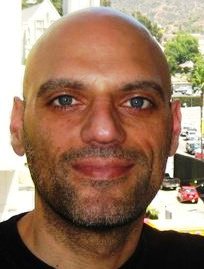
Meet Pedro - A Friendly Rectal Microbicide Advocate

Check out this interesting mini-bio of Pedro Goicochea, the latest in IRMA's "Meet a Friendly Rectal Microbicide Advocate" series on the IRMA website here.  Pedro is one of six new bios just posted today, including individuals from Kenya,Thailand and the US.  Each will be featured on the blog, and you can read all of them here right now.


Pedro Goicochea
San Francisco, California

"It took us more than 30 years to realize that there is not one unique strategy to prevent HIV acquisition, and that combination prevention is key, and rectal microbicides must be part of the prevention toolbox."

Originally from Lima, Peru, Pedro is in charge of communications and community relations for the iPrEx OLE study, the open-label continuation of the iPrEx trial. iPrEx is the study that showed daily oral use of the ARV drug Truvada among gay men, other men who have sex with men (MSM), and transgender women worked to prevent HIV.

He enjoys his work because of the invaluable opportunities it provides for him to meet interesting people who are working really hard on finding ways to stop this epidemic. He takes pride in the sensitivity his team shows to community members and for highlighting their needs with scientists and stakeholders. Besides iPrEx OLE, Pedro also just finished a couple of other projects related to the feasibility of voluntary circumcision for HIV prevention in gay men and other MSM, and neonatal male circumcision for HIV prevention, in the jungles of Peru.

In his spare time Pedro loves to ride his bike. He enjoys "having destinations that I reach through the effort of pedaling." Pedro's biggest life influence was his mother, but he is also blessed to be surrounded by excellent people that have been an inspiration. In addition, he has lost several friends to HIV and this motivated him to do something about it.

He was introduced to rectal microbicides and IRMA when he met IRMA chair Jim Pickett through IRMA steering committee member and IRMA-ALC co-founder Jerome Galea. He believes that any strategy to help end the epidemic is useful and thinks that rectal microbicides are an important prevention technology because anal sex is the primary mode of HIV transmission among gay men and other MSM, and that women practice anal sex more than is reported or fully understood.

Pedro has played an important role on the soon-to-be-released IRMA video ("The Rectal Revolution is Here: An Introduction to Rectal Microbicide Clinical Trials") being developed in partnership with the Microbicide Trials Network and Population Council. He is part of the team's Video Advisory Committee and has provided invaluable feedback on content and messaging. He also worked closely on the focus groups (especially those conducted in Lima, Peru) which were designed and implemented to test the "rough cut" of the video with different populations to help ensure the proper messages are coming through. He says it has been a very inspirational expereince and he is really looking forward to see the final release. IRMA plans to release the final version of the video in early September, 2012.

Thanks Pedro, for all that you do!


-------------------
*Join IRMA's robust, highly-active. moderated, global listserv addressing rectal microbicide research and advocacy as well as other interesting new HIV prevention technologies by contacting us at rectalmicro@gmail.com. Joining our listserv automatically makes you a member of IRMA - a network of more than 1,100 advocates, scientists, policy makers and funders from all over the world.

*Please look for us on Facebook: www.facebook.com/InternationalRectalMicrobicideAdvocates, and you can follow us on Twitter: @rectalmicro.

*Also, please note that shared news items from other sources posted on this blog do not necessarily mean IRMA has taken any position on the article's content.
-------------------

Wednesday, March 7, 2012

Tia IRMA is BACK with her Second Video on Rectal Microbicide Awareness

You met Tia IRMA (Auntie IRMA), a character created by IRMA's South American chapter IRMA-ALC (housed at Epicentro) to create awareness about rectal microbicides in a fun way, in this post from March 2012.

This is the second in a series of videos that will try to explain, in a very colloquial and humorous way, everything you might want to know about rectal microbicides, PrEP and many other subjects.

In this chapter of Tia IRMA's soap opera, she explains to us (in a funny way as always) the basic information about the development of a rectal microbicides.

Tia IRMA sees herself as an activist (and her nephew as a pasivist) and gives us a simple example of why we should advocate for a rectal microbicide. You see,  her neighbor Betty (a transgender woman) always depends on her lover (Tia IRMA calls him a dog) since he doesn't always use condoms with Betty. With a rectal microbicide, Betty can take care of herself to prevent HIV infection.

Tia Irma can't wait for a rectal microbicide to be developed and try it, she wants to have the security and happiness when se gets wild on the back…

Besos Negros from Tia IRMA!


[If an item is not written by an IRMA member, it should not be construed that IRMA has taken a position on the article's content, whether in support or in opposition.]

Wednesday, February 1, 2012

Tia IRMA Launches Her First Video with Besos Negros and Love

Hola! Soy la Tia IRMA!

Introducing Tia IRMA (Auntie IRMA), a character created by IRMA's South American chapter IRMA-ALC (housed at Epicentro) to create awareness about rectal microbicides in a fun way.

This is the first of a group of videos that will try to explain, in a very colloquial way, everything you might want to know about rectal microbicides, PrEP and many other subjects.

In this episode, Tia IRMA and Tony (her nephew) promote her blog Canal Anal , where visitors will find useful information, tips and other relevant news on sex and HIV written by Tia IRMA and her friends. A group that includes a transgendered neighbor, a gay nephew and a very straight husband, since the idea is clear: Everybody is having anal sex, so don´t be shy!

A real, live, in-the-flesh Tia IRMA is going to participate in most of the LGBT community events this year in Peru (where she was born) and she expects to become more popular than Kim Kardashian, with a bigger and wiser butt ;)

Besos negros!


[If an item is not written by an IRMA member, it should not be construed that IRMA has taken a position on the article's content, whether in support or in opposition.]

Friday, November 11, 2011

IRMA-ALC Promotes Rectal Microbicides in Lima with Humor and Tia Irma

Report from IRMA-ALC - our South American chapter. Don't you just love Tia Irma??? Check out the cute video below...


The Sexual Diversity Festival took place on Miraflores, a district of Lima on  Saturday, Cctober 8th. Epicentro was one of the hosting organizations

IRMA ALC participated with Epicentro in our stand.. We had a roulette wheel with sexual health questions and categories, and one of the categories was "Pregúntale a la tia Irma" or ask aunt Irma… And basically it was 5 simple questions about rectal microbicides to better understand what people know about them.

Also we had the video promoting Tia Irma (the idea is to promote IRMA as a character), and to inform people about rectal microbicides but in an informal and funny way.


[If an item is not written by an IRMA member, it should not be construed that IRMA has taken a position on the article's content, whether in support or in opposition.]

Wednesday, October 5, 2011

Using Conjoint Analysis to Measure the Acceptability of Rectal Microbicides Among Men Who Have Sex with Men in Four South American Cities

via Pubmed.gov, by Kinsler JJ, Cunningham WE, Nureña CR, Nadjat-Haiem C, Grinsztejn B, Casapia M, Montoya-Herrera O, Sánchez J, Galea JT.

Abstract

Conjoint Analysis (CJA), a statistical market-based technique that assesses the value consumers place on product characteristics, may be used to predict acceptability of hypothetical products. Rectal Microbicides (RM)-substances that would prevent HIV infection during receptive anal intercourse-will require acceptability data from potential users in multiple settings to inform the development process by providing valuable information on desirable product characteristics and issues surrounding potential barriers to product use. This study applied CJA to explore the acceptability of eight different hypothetical RM among 128 MSM in Lima and Iquitos, Peru; Guayaquil, Ecuador; and Rio de Janeiro, Brazil. Overall RM acceptability was highest in Guayaquil and lowest in Rio. Product effectiveness had the greatest impact on acceptability in all four cities, but the impact of other product characteristics varied by city. This study demonstrates that MSM from the same region but from different cities place different values on RM characteristics that could impact uptake of an actual RM. Understanding specific consumer preferences is crucial during RM product development, clinical trials and eventual product dissemination.


[If an item is not written by an IRMA member, it should not be construed that IRMA has taken a position on the article's content, whether in support or in opposition.]

Friday, August 12, 2011

Meet Daniel Julio Eduardo Nuñez - A Friendly Rectal Microbicide Advocate

"If we create a circle of people around you that at least know a word or two about rectal microbicides I believe the work is done, because everyone has his own circle, so the knowledge in one way or another will flow." - Daniel Julio Eduardo Nuñez, Lima, Peru
Daniel Nuñez is studying law. While working towards his law degree he began working at Epicentro with his local gay community. It is at Epicentro that Daniel met an IRMA member (Epicentro is the headquarters for IRMA-ALC, IRMA's South American sister) and, anxious to find out more about rectal microbicides, immediately sought more information. He was quickly inspired to spread the word about IRMA and its goals.

Daniel realizes that rectal microbicides are important "because we are humans and not robots, we don't necessarily act following a program and sometimes we do things that don't correspond to safe sexual behavior". Because of this he works to make many prevention options available to everyone.

He urges every IRMA advocate and anyone interested in microbicides or HIV prevention at all to discuss options and knowledge with family and friends. With each person able to talk openly and knowledgeably about AIDS and HIV prevention, Daniel hopes that the topic will become less taboo and more can be done in the fight against AIDS.

In his free time Daniel provides freelance tech support, but he enjoys it so it doesn't feel like work. He also enjoys watching TV programs from the United States such as A Game of Thrones, his current favorite show.

Read about other friendly rectal microbicides advocates. Newly featured advocates include Luis Fernando Galarza, Amy Stapleford Jackson, Maheswar Satpathy, Vanessa Marquez, and Mark Hubbard.
Want to join the best e-mail discussion list on new prevention technologies on the planet? Send a note to IRMA here - rectalmicro@gmail.com - and we will get you signed up.Joining the list makes you an automatic IRMA member too!
[If an item is not written by an IRMA member, it should not be construed that IRMA has taken a position on the article's content, whether in support or in opposition.]

Friday, June 3, 2011

IRMA ALC Presents on PrEP and Rectal Microbicides for Lima's Gay Community

by Steve Miralles


On May 11th, IRMA ALC (América Latina y el Caribe), based at Epicentro Gay Men’s Community Center in Lima, Peru, hosted a presentation on PrEP and rectal microbicides.

More than 15 men attended the presentation that was facilitated by IRMA-ALC leaders Steve Miralles and Jerome Galea.

The 15 community members included doctors, lawyers, psychologists and others participated in an open discussion/dialogue about these HIV prevention interventions under investigation and information was shared on the current state of the field of rectal microbicides and the inclusion of Lima in a RM study hopefully in 2012. 

Also, the results of the PrEP study (iPrEx) which took place in Lima was discussed along with the study’s results and how PrEP could change the HIV panorama.

Participants received IRMA's Spanish edition of the report “From Promise to Product” (De la Promesa al Producto: Avanzando en la Investigación y Promoción de los Microbicidas Rectales) AVAC fact sheets on iPrEx and other information and resources available in Spanish thanks to the IRMA-ALC team.

Now underway is the preparation of a radio program about rectal microbicides and iPrex to be aired in July on Epicentro's weekly program Espacio Común and an article for the next edition of Epicentro's magazine La Antena.

Visit IRMA ALC on Facebook. And check out the IRMA ALC page on the IRMA website to see some of those Spanish resources.
Also available in Spanish are IRMA's documents on lube safety:
Safety of lubricants for rectal use: A fact sheet for HIV educators and advocates

Safety of lubricants for rectal use: Questions & Answers for HIV educators and advocates

[If an item is not written by an IRMA member, it should not be construed that IRMA has taken a position on the article's content, whether in support or in opposition.]

Wednesday, May 18, 2011

Acceptability of pre-exposure prophylaxis as an HIV prevention strategy: barriers and facilitators to pre-exposure prophylaxis uptake among at-risk Peruvian populations

IRMA Steering Committee member Jerome T. Galea is lead author of this fascinating paper. Here he provides an overview of the study.

Click here to access the full paper.

"The study examined pre-exposure prophylaxis acceptability (PrEP) among female sex workers, male-to-female transgendered persons and men who have sex with men in Lima, Peru.  Focus groups explored social issues associated with PrEP acceptability and Conjoint Analysis – a consumer research market technique – assessed the preferences participants had with regards to eight hypothetical PrEP “scenarios”.  This was the first study of it's kind to apply this technique.

"Each scenario was made up of the same characteristics but differed slightly (for example, higher cost versus lower cost; daily dosing versus non-daily dosing; some side effects versus no side effects, and so on).  Participants had to rank the scenarios in order of preference taking into account all of the product’s chacteristics, and in doing so expressed the value they placed on the various characteristics.  Focus groups helped to explain the reasons behind the preferences made.

"There were some unexpected findings. For example, cost trumped effectiveness; a low-out-of pocket cost had the single greatest impact on PrEP acceptability. While we expected cost to be an important factor we were surprised that it was more important than the ability of the product to actually prevent HIV infection. 

"Another surprise was that in the focus groups we learned that participants preferred that PrEP be dispensed in health centers as opposed to pharmacies. This surprised us as we hypothesized that pharmacies would provide faster, easier and more widespread access, but participants cited privacy concerns with PrEP being dispensed by pharmacies.

"The next step is to replicate this sort of research to more populations at risk in different settings. We have learned that the existence of an effective product does not guarantee its use (recent studies on the female condom, for example, highlight the challenges of understanding the needs and perceptions of the target user and also the necessity of dispelling myths that often arise when new products are introduced). 

"We cannot generalize our findings to all persons at risk for HIV, in Peru or elsewhere, but do propose it as a model for future exploration of the topic now that oral PrEP has been shown to work but has not yet been scaled up for widespread use."

*Read AIDSmeds coverage of this study here.


[If an item is not written by an IRMA member, it should not be construed that IRMA has taken a position on the article's content, whether in support or in opposition.]

Tuesday, March 22, 2011

Circumcision Does Not Protect MSM of Peru and US From HIV

via International AIDS Society, by Mark Mascolini

Circumcision did not protect men who have sex with men (MSM) from acquiring HIV infection, according to an analysis of more than 1800 men in Peru and the United States. The findings confirm results of earlier studies. Three randomized trials in Africa showed that circumcision does lower the risk of HIV infection in heterosexual men.

This analysis involved 1824 MSM, 1362 (75%) of them from Peru and 462 (25%) from the United States. All men were negative for HIV and positive for herpes simplex virus type 2 (HSV-2). They were enrolled in a randomized placebo-controlled trial of HSV-2 suppression to prevent HIV infection. That study found treating HSV-2 did not lower the risk of HSV-2 acquisition.

All study participants were assessed for circumcision status at enrollment and were tested for HIV every 3 months for up to 18 months. Researchers determined partner-specific sexual behavior for up to the last 3 partners during the previous 3 months.

Univariate analysis revealed no significant association between circumcision and HIV acquisition (relative risk [RR] 0.84, 95% confidence interval [CI] 0.50 to 1.42). Multivariate analysis that assumed a linear relationship between the proportion of insertive sex acts and effect of circumcision on HIV acquisition found that the interaction between circumcision and the proportion of insertive acts was not significant in lowering HIV risk (P = 0.11).

A third analysis that divided men into those who had fewer than 60 insertive acts with recent partners and those who had 60 or more partners determined that circumcision reduced the risk of HIV acquisition 69% (RR 0.31), but that association was not statistically significant (95% CI 0.06 to 1.51) among men who repeated at least 60% of insertive acts with recent male partners.

The researchers conclude that “circumcision does not have a significant protective effect against HIV acquisition among MSM from Peru and US.” However, they suggest “there may be reduced risk for men who are primarily insertive with their male partners” and they call for further investigation of this association.

Source: Jorge Sánchez, Victor G. Sal y Rosas, James P. Hughes, Jared M. Baeten, Jonathan Fuchs, Susan P. Buchbinder, Beryl A. Koblin, Martín Casapia, Abner Ortiz, Connie Celum. Male circumcision and risk of HIV acquisition among MSM. AIDS. 2011; 25: 519-529.

Click here for the study abstract.


[If an item is not written by an IRMA member, it should not be construed that IRMA has taken a position on the article's content, whether in support or in opposition.]

Thursday, November 18, 2010

Meet a Friendly Rectal Microbicide Advocate: Gerald Díaz Panduro

via IRMA

Panduro is a psychologist from Huánuco, Perú that focuses on HIV/AIDS and people living with HIV/AIDS.

While recruiting participants for a UCLA rectal microbicide study in Lima, Panduro stumbled upon IRMA-ALC, which had also been involved with the study. Since then, Panduro has been spreading the word about rectal microbicides and raising interest in the hopes that a rectal microbicide study might take place in Perú.

Panduro believes that once there is an effective microbicide available, when it's combined with condoms it will be the best tool to fight HIV/AIDS.

Panduro also enjoys going to the movies and photography.

Read about other friendly rectal microbicides advocates

Learn more about IRMA membership

[If an item is not written by an IRMA member, it should not be construed that IRMA has taken a position on the article's content, whether in support or in opposition.]

Wednesday, September 29, 2010

IRMA's South American Chapter Celebrates Our New Report


by Steve Miralles of IRMA-ALC

Last Friday September 24 the Spanish version of IRMA's latest report - From Promise to Product: Advancing Rectal Microbicide Research and Advocacy - was officially presented in Lima, Peru at Epicentro - a social organization that provides information about sexual and holistic health, as well as cultural activities, to the gay community in Lima. Epicentro is also the home of IRMA-ALC (América Latina y El Caribe.)

In this event we had the participation of doctors, psychologists, persons from trans groups, representatives of PLWHA groups, researchers, activists, IRMA members and general public interested in learning about rectal microbicides and its perspectives in Latin America.

For those wishing to obtain a printed copy of the report in Spanish (De la Promesa al Producto: Avanzando en la Investigación y Promoción de los Microbicidas Rectales) can communicate by mail irma-alc@epicentro.org.pe , or you can download it in Spanish on the IRMA-ALC page of the IRMA website.

Visit IRMA-ALC on Facebook.


Este viernes 24 de septiembre fue presentado en Lima, Perú en Epicentro (un espacio de socialización en Lima, donde se brindaran servicios e información sobre salud sexual y mental, además de fomentar actividades culturales) el informe realizado por IRMA e IRMA-LAC (América Latina y El Caribe), De la Promesa al Producto: Avanzando en la Investigación y Promoción de los Microbicidas Rectales.

En este evento contamos con la participación de médicos, psicólogos, representantes de grupos trans, representantes de grupos de PVVS, investigadores, activistas, representantes de IRMA y público en general, interesados en conocer el panorama en Latinoamérica de microbicidas rectales.

Para quien desee obtener una copia de dicho informe en español puede comunicarse al correo irma-alc@epicentro.org.pe , o si desea, puede obtener el informe en pdf aqui.

IRMA-LAC en Facebook.

Friday, August 27, 2010

Closeted Calamity: The Hidden HIV Epidemic of Men Who Have Sex with Men

via Scientific American, by Bob Roehr

Excerpt:
Even in Africa, at the heart of the pandemic, in Malawi, 21 percent of MSM are infected with the virus compared with 11 percent of the general population, whereas Zambia's rates are 33 percent versus 15 percent, respectively, says Chris Beyrer, director of the Johns Hopkins Center of Public Health and Human Rights.

"The argument that gay and bisexual men are a trivial sideshow in the global fight against AIDS is wrong," he told the Global Forum on MSM and HIV, an advocacy network that met this summer prior to the International AIDS Conference in Vienna, Austria.
Read the rest.

Friday, February 26, 2010

Today in Lima - Rectal Microbicide Advocacy in Action at Epicentro

IRMA-ALC (América Latina y El Caribe)  has teamed up with Epicentro Gay men's community center in Lima, Peru to provide information on Rectal Microbicides at the  "International Course on HIV Pathogenesis, Prevention and Treatment."


This two day course, happening even as this blog is typed, was organized by IRMA-ALC co-founding organization Impacta,  has drawn experts from throughout the America's including IRMA Steering Committee members Jorge Sánchez, Ian McGowan and Jerome Galea.

Read Menos Silencio, Más Ciencia (IRMA's 2008 report - translated from the English version.)

Tuesday, June 23, 2009

IRMA ALC announces "Acceptability of Rectal Microbicides (RM): Barriers and facilitators of RM use among MSM in 4 South American Cities"


English:

IRMA-ALC (America Latina y el Caribe) founding members Jerome Galea (UCLA Program in Public Health, Latin America); Jórge Sánchez (INMENSA - Peru), Orlando Montoya (Equidad – Ecuador) and Beatriz Grinsztejn (Fiocruz – Brazil) are excited to announce funding received from the UCLA AIDS Institute and the UCLA Center for AIDS Research for a new project entitled, “Acceptability of Rectal Microbicides (RM): Barriers and facilitators of RM use among men who have sex with men in 4 South American Cities.”

This study will be the first of its kind to systematically explore RM in the region among diverse populations including both gay and non-gay identified men who have sex with men, sex workers and transgendered persons. The study will take place in Lima and Iquitos Peru; Guayaquil, Ecuador; and Rio de Janeiro, Brazil and will involve key-informant interviews, one-on-one in depth interviews, focus groups and conjoint analysis (a quantitative method that helps to understand consumer preferences) to assess the acceptability of using RM and willingness to participate in and feasibility of future RM clinical trials.

The project will also examine culture-specific customs, beliefs, and stigma related to anal sex. In all up to 256 people will participate.

Galea said, “We hope that the data collected in this study will provide the foundation for a future, larger research agenda leading to the development of RM clinical trials in the region, as well as expanded acceptability studies, specifically with respect to RM delivery devices which will be critical in preparing for adequate roll-out and dissemination of RM.

en español:

Los miembros fundadores de IRMA-LAC, Jerome Galea (Programa de Salud Pública de la UCLA en América Latina), Jorge Sánchez (INMENSA – Perú), Orlando Montoya (Equidad - Ecuador) y Beatriz Grinsztejn (Fiocruz - Brasil) se complacen en anunciar el financiamiento recibido del Instituto
de Sida de la UCLA y el Centro para la Investigación en Sida de la UCLA para un nuevo proyecto titulado “Aceptabilidad de los Microbicidas Rectales (MR): Barreras y Facilitadores para el Uso de MR entre Hombres que Tienen Sexo con Hombres en 4 Ciudades de Sudamérica”.

Este estudio será el primero en su tipo en explorar sistemáticamente el uso de MR en la Región en diversas poblaciones, incluyendo a hombres que tienen sexo con hombres con y sin identidad gay, trabajadores sexuales y personas transgénero. El estudio será realizado en Lima e Iquitos, Perú; Guayaquil, Ecuador; y Río de Janeiro, Brasil, e incluirá entrevistas con informantes clave, entrevistas en profundidad, grupos focales y un análisis conjunto (que involucra el empleo de un método cuantitativo que ayudará a entender las preferencias de los usuarios), para evaluar la aceptabilidad del uso de MR, la viabilidad de futuros ensayos clínicos de MR, y la voluntad de las personas para participar en ellos.


El proyecto examinará también las costumbres específicas a la cultura, creencias y estigma relacionado con el sexo anal. En total, participarán hasta 256 personas.


Al respecto, Galea señaló: “Esperamos que los datos recolectados en este estudio sienten las bases para una agenda de investigación posterior de mayor envergadura, que conduzca al desarrollo de ensayos clínicos de MR en la Región, así como a estudios de aceptabilidad mayores, específicamente sobre los dispositivos de aplicación de MR, estudios que serán cruciales en la preparación de la implementación y diseminación de los MR.

Friday, September 19, 2008

Lima's Epicentro - right in the heart of the gay community

The new Gay Men’s Community Center in Lima, PeruEpicentro – is proud to announce that it has signed a lease for its own space, right in the heart of Lima’s growing gay community. Formed just this year, the center has moved rapidly to gain formal legal status and begin hosting twice-monthly community events and received start-up funding from the San Francisco AIDS Foundation and Pangaea Global AIDS Foundation. With their own space, they will continue to work towards the full realization of their vision and mission, and begin to provide HIV/STI testing and prevention services severely lacking in the community.

Visit their “pre-web” at www.epicentro.org.pe

VISION

To be a Peruvian community center that is the primary promoter for the development of a healthy and representative gay community within society.


MISSION


To empower gay community through a socialization space in Lima, Peru where sexual and mental health services and information will be provided along with promotion of cultural activities.

Thursday, August 7, 2008

Commercial lubricant use for anal sex among men who have sex with men in Lima, Peru


IRMA steering committee member Jerry Galea (above, IRMA-ALC dynamo, and the driving force behind the Spanish translation of "Less Silence, More Science") presented the above poster on behalf of himself and his colleagues. Check out the abstract here.

As luck would have it, his poster was right next to the IRMA poster.

Here are a few more pics from the poster exhbition yesterday.


Friday, August 1, 2008

IRMA Releases New Publication - "Menos Silencio, Más Ciencia"

Translated Document to
Enhance Rectal Microbicide Advocacy
in the
Spanish-Speaking World

Friday, August 1, 2008

Mexico City, Mexico – International Rectal Microbicide Advocates (IRMA) released "Menos Silencio, Más Ciencia" in Mexico City today at a presentation preceding the 17th International AIDS Conference.

This Spanish language version of IRMA’s February 2008 publication "Less Silence, More Science" serves as an authoritative reference on recent developments and current efforts in rectal microbicide research. The groundbreaking report describes global challenges, advocacy goals, and key strategies to advance scientific discovery on topical rectal products which confer protection against HIV transmission. As HIV incidence and prevalence increase globally, this document aims to promote the research and development of rectal microbicides among the more than 300 million native Spanish speakers worldwide.

As indicated by the publication’s title, anal intercourse remains largely stigmatized, even in medical and scientific research surrounding HIV prevention and care. This silence results in the reduction of critical discussion and study on the topic. Socio-cultural taboos surrounding anal sex restrict scientific advancements in many places, and Latin America the Caribbean and South America are no exception.

Read the full release in the News section of the IRMA website.

Tuesday, May 13, 2008

News of IRMA-ALC Spreads Around the Globe!


da la bienvenida a


In its latest issue of GC News, which reaches an audience of nearly 1,000 people from around the world, the Global Campaign for Microbicides spreads the good news about the creation of IRMA-ALC (América latina y El Caribe).

Check the GCM web site to read the latest issue of GC News and to get microbicides resources in Spanish.

Visiten la página web de GCM para leer la última edición de GC News y para obtener algunos recursos en español sobre los microbicidas.

From GC News:

Advocacy in Action: New Rectal Microbicides Network in Latin America and the Caribbean

International Rectal Microbicide Advocates (IRMA) is very excited to share an important development for global rectal microbicides advocacy efforts. A new sister network has been created - IRMA-ALC (América Latina y El Caribe) - which will focus on rectal microbicide advocacy and research efforts in Latin America and the Caribbean.

IRMA-ALC has been formed by members in Peru, Ecuador and Brazil, who are co-chairs of the new network, including:

- Jerome Galea from the UCLA Program in Global Health in Peru and IRMA Steering Committee member
- Dr. Javier and Dr. Jorge Sánchez from Investigaciones médicas en salud (INMENSA), a health research institute in Peru
- Beatrice Grinsztejn, Valdilea Veloso and José Henrique Pilotto from FIOCRUZ, a public health institute in Brazil
- Orlando Monotya from EQUIDAD, a gay, lesbian, bisexual organization in Ecuador

"Although there is evidence of high frequency of anal sex among both men and women in Latin America, there is little interest in implementing clinical trials for rectal microbicides in the region", according to IRMA-ALC co-chair Dr. Jorge Sánchez. "The Latin American chapter of IRMA will advocate for a critical look at various opportunities for rectal microbicides research and push for its development in the region. We also want to facilitate the process for integrating these HIV prevention research efforts at a regional level, while instigating South-South collaboration." (original quote in Spanish can be accessed here.)

IRMA-ALC has a logo and new page on the IRMA web site. They will disseminate information in Spanish, and perhaps eventually in Portuguese. There is now a Spanish-language listserv that members can join from the web site.

"In all of Latin America and the Caribbean, there are only two microbicide clinical trials underway, one in the Dominican Republic and the other in Puerto Rico; both are for vaginal products. These studies represent important steps in the advancement of microbicide research", said Jerome Galea. "Together with IRMA, IRMA-ALC provides a framework for citizens, advocates and scientists from countries throughout Latin America and the Caribbean to put rectal microbicides on the regional map by disseminating information in local languages and promoting their culturally competent research and development."

"This wonderful development is another indication of the success IRMA is having collaborating with researchers and advocates around the world to spur global advocacy for rectal microbicide research and development. I am delighted that IRMA has a new sister, and love watching our family grow," said Jim Pickett, IRMA Chair.

Friday, April 4, 2008

Live from Lima


You are cordially invited to participate in IRMA's
first global teleconference of 2008

Successful Implementation
of HIV Prevention Trials in Peru

Thursday, April 24, 2008

Dr. Jorge Sanchez and Dr. Javier Lama will talk about clinical trials, including PrEP studies, taking place in Lima, Peru. The call will last about an hour, including time for questions. A PowerPoint presentation will be made available in advance of the call so that participants may follow along. Check the IRMA website.

Visit www.inmensa.org and www.impactaperu.org for some background.

Call times:

Lima - 9am
Los Angeles - 7am
UTC - 2pm
Cape Town - 4pm
New Delhi - 7:30p

The call is graciously hosted by the AIDS Foundation of Chicago. Please dial the appropriate number from the list below to be connected.

In the US, dial 1-866-206-0240
Participant pin - 783468#

If you don't see your country below, you will need to dial (country code) 646-216-7111.


Participant pin - 783468#

You may also want to try dialing through your computer via Skype.


COUNTRY

TOLL-FREE ACCESS NUMBER

TOLL ACCESS NUMBER

Argentina

08003330545


Australia

1800148117


Austria

0800281670


Belgium

080073414

027897418

Brazil

08008911814


Bulgaria

008001100143


Czech Republic

800143101


Chile

12300203500


China (North)

108007121267


China (South)

108001201267


Columbia

018009156076


Costa Rica

8000150566


Croatia

0800223023


Denmark

80883553

032714202

Ecuador

1800010602


El Salvador

8006223


Finland

0800114394


France

0800902227

0359814012

Germany

08001016809

030726167358

Greece

00800127218


Guatemala

18006240016


Hong Kong

800903159


Hungary

0680018028


India

0008001006228


Indonesia

0018030175241


Ireland

1800355610

014367756

Israel

1809214948


Italy

800787281

0645217154

Japan

00531121598


Latvia

8002554


Luxembourg

80027412


Malaysia

1800812613


Mexico

0018008996923


The Netherlands

08000225186

0207948418

New Zealand

0800440702


Norway

80010179


Panama

8002260613


Peru

80053197


Poland

08001114946


Portugal

800812157

0211209506

Russia

81080029943011


Saudi Arabia

8008656023

(PIN 9274 must be entered first, then Moderator or Participant PIN)


Singapore

8001204222


Slovakia

800042096


Slovenia

080080107


South Africa

0800998660


South Korea

00798148006940


Spain

900951479

0917889870

Sweden

020796824

0850520218

Switzerland

0800562431

0225927500

Taiwan

00801137631


Thailand

001800120665263


UK

08000323502

02071539960

Venezuela

08001002883


Participant pin - 783468#


Related Posts Plugin for WordPress, Blogger...