Do you use rectal douches? Or don't you?

Do you use rectal douches? Or don't you?
Take it whether you douche, or not! Click for survey in English, Español, French, Portuguese, Thai, Chinese or Russian.

Friday, December 30, 2011

Gratitude, Love, and XOXO from IRMA

Dearest IRMA members -

Just a quick note to say THANK YOU for everything you have done this year to advance the research and development of safe, effective, acceptable, and accessible rectal microbicides for the human beings who need them.

I think IRMA has had a banner year - and the reason it was so incredible is YOU.

Here are some highlights. Feel free to chime in with your own - this list is by no means exhaustive of all the fabulous things IRMA, and the field as a whole, have been up to...

- With thanks to AVAC, in 2011 IRMA greatly expanded our advocacy footprint in South America with a strengthened IRMA-ALC (America Latina y el Caribe). Based at the gay men's health organization Epicentro in Lima, Peru, IRMA ALC has been invigorating rectal microbicide and PrEP advocacy throughout the region, and is now perfectly poised to engage with the upcoming Phase II rectal microbicide trial MTN 017 that will include a site in Lima.  Pictured above is Tia IRMA (Auntie IRMA) - a character created by IRMA-ALC to help share information on rectal microbicides, anal sex, lubricants, etc  - and make it fun/funny :)

- In 2011, IRMA secured funding from MAC AIDS Foundation, the Microbicide Trials Network, and the Population Council to develop a short, fun video about rectal microbicide science and clinical trial involvement. We actually JUST HIRED a production company (based in Cape Town, South Africa), and will begin work on the project in earnest as soon as the clock switches to 2012. The video will be something that all our advocates can use, and will be especially helpful for folks in cities where advanced rectal microbicide trials are planned as the video will be designed to support site recruitment activities. We plan to have this baby ready to go by the time MTN 017 launches in mid-year.

- IRMA successfully launched a new initiative called Project ARM - Africa for Rectal Microbicides. With support from the National Institutes of Health Office of AIDS Research, the New Venture Fund, and AVAC - we held a fantastic kick-off meeting with 40 individuals in Addis Ababa in early December, and came up with a whole set of advocacy and scientific activities designed to fully engage Africa in rectal microbicide research and advocacy. A report from the meeting - a road map of sorts - will be released at Microbicides 2012. But not content to wait, the group that met in Addis is already busy getting started on Project ARM goals and objectives - and will be reaching out to our broader IRMA membership in 2012 to help move us all forward.

None of this would have happened without our amazing membership - so much love and gratitude to you all. You make me so happy and proud :)

I am excited to say that I am headed to Thailand tomorrow. IRMA is helping conduct civil society consultations in Bangkok and Chiang Mai in conjunction with MTN 017 - similar to the ones that were held in Cape Town and Pittsburgh already (and are being planned for Boston and Lima.) This will be a great opportunity for IRMA to expand it's membership in Thailand. And I must say, my slides that have been translated into the Thai language look STUNNING - the Thai script is so lovely.

Actually, the announcement of MTN 017 was another HUGE highlight in 2011. It will be the field's very first Phase II rectal microbicide trial - how cool is that?! We will be sure to tell you more about it once the protocol is finalized in the new year - including a global teleconference which will explain all the details.

If you have other highlights to share regarding our field - please feel free.

In the meantime, best wishes to each of you, and happy, happy, happy New Year.

Jim Pickett
IRMA Chair


[If an item is not written by an IRMA member, it should not be construed that IRMA has taken a position on the article's content, whether in support or in opposition.]

Thursday, December 29, 2011

Anal sex increasingly popular among heterosexuals

 via NY Mag, by Em and Lo

Every couple of years, another once-scandalous sex taboo starts making its way toward the commonplace. A decade ago, blow jobs were what people whispered about; then three-ways became the naughty bedroom act. Now, it’s anal sex—but according to the Centers for Disease Control’s National Survey of Family Growth, it’s rapidly becoming a regular feature of hetero couples’ horizontal activities.

The survey, released last year, showed that 38.2 percent of men between 20 and 39 and 32.6 percent of women ages 18 to 44 engage in heterosexual anal sex. Compare that with the CDC’s 1992 National Health and Social Life survey, which found that only 25.6 percent of men 18 to 59 and 20.4 percent of women 18 to 59 indulged in it.

Anecdotal research also demonstrates curiosity is on the rise. Babeland’s anal-sex workshops are now held three or four times a year, instead of once, and they’re filled with straight couples. “More and more, people are devoting themselves to learning about anal pleasure,” says Carolyn Riccardi, education coordinator for Babeland’s New York retail stores. “Male-to-female anal sex has been happening since the dawn of time,” she says. “What’s different now is that women are actively learning how to enjoy it and have fun with it.”

Read the rest.


[If an item is not written by an IRMA member, it should not be construed that IRMA has taken a position on the article's content, whether in support or in opposition.]

Wednesday, December 21, 2011

Ongoing risk behaviour likely cause of high HIV incidence rate among gay men treated with PEP

via Aidsmap, by Michael Carter

HIV incidence is high among gay men who use post-exposure prophylaxis (PEP), investigators from Amsterdam report in the online edition of AIDS.

Overall, users of PEP were almost four times more likely to become infected with HIV than gay men who did not use the therapy.

There was no evidence that PEP failure was the cause. The investigators believe this is because PEP users continued to put themselves risk of HIV after completing their treatment.

“Our study showed a high incidence of HIV among MSM [men who have sex with men] who used PEP, an indication of ongoing risk behaviour,” write the investigators. “This implies that PEP alone for this group is not sufficient to prevent HIV infection, and a combination of other more comprehensive preventative strategies is needed.”

HIV post-exposure prophylaxis is a four-week course of combination antiretroviral therapy, prescribed after an encounter with body fluids possibly infected with HIV.

It is estimated that the treatment can reduce the risk of infection by up to 81%.

Gay men are the group most likely to request PEP after a possible sexual exposure to HIV. Australian research has shown that gay men who used PEP continued to be at risk of HIV after completing their treatment.

Therefore, Dutch investigators compared HIV incidence among gay men prescribed PEP in Amsterdam between 2000 and 2009, and compared this to the rate of new infections seen over the same period among gay men enrolled in the Amsterdam Cohort Study.

A total of 355 men who received 395 PEP prescriptions were included in study. The majority of individuals took one course of PEP, but approximately 10% of men were provided with multiple prescriptions (two to four).

Adherence rates were high, with 94% of men completing their therapy. HIV status was monitored three and six months after baseline.

Eleven PEP users seroconverted. Two men tested HIV-positive at their three-month follow-up appointment; one individual who did not attend for his three month appointment was diagnosed at month six; and the remaining eight men were HIV-negative at month three, but were HIV-positive at month six.

This provided an HIV incidence of 6.4 per 100 person years among the individuals treatment with PEP.

Read the rest.


[If an item is not written by an IRMA member, it should not be construed that IRMA has taken a position on the article's content, whether in support or in opposition.]

Tuesday, December 20, 2011

Beliefs associated with unprotected sex are changing among gay men in Australia

via Aidsmap, by Roger Pebody

A study of Australian gay men examining unprotected sex and the beliefs that are associated with it has found that the concept of ‘treatments optimism’ needs to be unpacked. While some men do think that having HIV is less serious than it used to be, there is more of an association between unprotected sex and men believing that treatments have made HIV-positive people less infectious.

But writing in the journal Sexually Transmitted Diseases, the researchers warn that the relationships between information, beliefs and behaviour are not straightforward, with individuals managing risk, desire and pleasure in complex ways.

Soon after the advent of combination therapy, commentators began to explain unprotected sex in gay and bisexual men in terms of ‘treatments optimism’ – the theory that reductions in illness and death had caused men to be less concerned about HIV infection, and so more willing to have unprotected sex. While a number of studies have confirmed an association between beliefs characteristic of treatments optimism and risk behaviour, it is unlikely that such beliefs – held by a minority of men – are sufficient to explain rising infection rates in gay men.

Moreover, there has always been controversy over whether treatment optimism leads to unprotected anal sex, or whether it is a way in which men rationalise their sexual behaviour, after the event.

Read the rest.


[If an item is not written by an IRMA member, it should not be construed that IRMA has taken a position on the article's content, whether in support or in opposition.]

Monday, December 19, 2011

HIV Among MSM in China

via China Daily, by Xu Lin

**IRMA's Rectal Hygiene Survey is now available in Chinese (as well as English, Thai, Russian, Spanish, French and Portuguese). Click here to take the brief, anonymous survey.

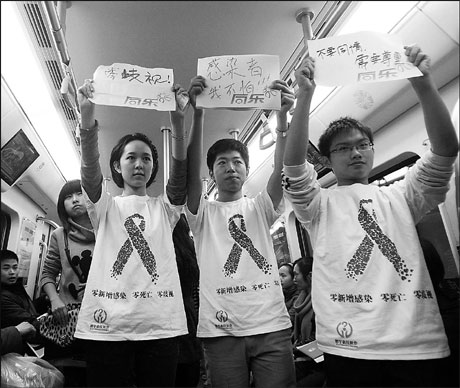
Beijinger Zhang Lei was surprised to see posters in her neighborhood that showed two shirtless men each holding a condom.

She snapped three photos of the posters in her community in Beijing's Xicheng district and posted them on her Sina Weibo micro blog on Nov 29. Her post stirred fierce debate.

Some doubt the government approved the posters. Others believe it shows progress in China's HIV/AIDS prevention and mindset.

"I never thought government offices would print such posters, as homosexuality seems taboo in China," Zhang, who works in a real estate finance company, says.

"I think the posters are good but wonder if the elderly can understand them."

The posters were created in 2009 by the Chinese Center for Disease Control and Prevention (CDC) and Chengdu Tongle Health Consulting Center, a Chengdu, Sichuan province-based NGO that promotes homosexual culture, HIV/AIDS prevention and treatment.

In December 2010, the CDC printed the posters and mailed them to its branches throughout the country.

The center also posted the downloadable electronic versions on its website.

"The posters have been used for some time, but the public didn't know that until recently, because the posters are mostly displayed in gay bars and public bathhouses that are frequented by homosexuals," Xu Jie, of the CDC's National Center for AIDS/STD Control and Prevention, says.
"Conventional AIDS posters can't capture the attention of special groups, such as intravenous drug users and homosexuals. It's necessary to design different posters for them, to better promote HIV/AIDS prevention and treatment."

He says the center has also designed posters for drug users and sex workers.

There are about 780,000 people living with HIV/AIDS in China. About 48,000 people were diagnosed as HIV-positive in 2011. Among them, 29.4 percent are men who have sex with men (MSM).

Read the rest.


[If an item is not written by an IRMA member, it should not be construed that IRMA has taken a position on the article's content, whether in support or in opposition.]
Friday, December 16, 2011

Electrocautery ablation safe and effective to treat anal lesions

via aidsmap, by Michael Carter

A clinic-based intervention offers safe and effective treatment for high-grade pre-cancerous anal lesions, US investigators report in the online edition of the Journal of Acquired Immune Deficiency Syndromes.

Doctors at the Mount Sinai School of Medicine, New York, used a technique called electrocautery ablation to treat pre-cancerous anal lesions in 232 gay men, 132 of whom were HIV-positive.

Eighteen months after treatment, 83% of HIV-negative men and 69% of those with HIV were free of high-grade pre-cancerous anal lesions.

“Electrocautery ablation of high-grade anal squamous intraepithelial lesions is a safe and effective office-based procedure comparable to other available treatments,” comment the investigators.

Incidence of anal cancer has increased dramatically among gay men in recent years. HIV-positive gay men appear to be especially vulnerable to the disease, and its incidence is five-times higher in these patients compared to HIV-negative men.

Infection with high certain high-risk strains of human papillomavirus can cause cell changes in the anus, resulting in the formation of lesions. The severity of these changes is graded, and between 9% and 13% of high-grade lesions progress to anal cancer.

There are a number of treatments for these pre-cancerous lesions including infrared coagulation and topical creams such as imiquimod.

Another therapy is electrocautery ablation. The investigators described the procedure thus: “Using a gentle brushing technique the lesion was ablated [worn down] by moving [a] blade lightly across the surface like a paint-brush.” The therapy has a number of advantages and can be performed in clinics without the need for anaesthetic or sedation.

Investigators wished to assess the safety and effectiveness of this procedure. They therefore retrospectively analysed the notes of gay men who had the treatment between 2006 and 2010. The patients received an initial treatment and were then followed at intervals of three to six months and were provided with additional treatment if necessary.

Read the rest.


[If an item is not written by an IRMA member, it should not be construed that IRMA has taken a position on the article's content, whether in support or in opposition.]

Dr. Robert Grant "Person of the Year"

via Time, by Alice Park

People Who MatteredDr. Robert Grant has been a quietly powerful force in HIV research for years. In the early 2000s it was Grant, a professor of medicine at University of California, San Francisco, and Gladstone Institute of Virology and Immunology, who pushed to test the potential of antiviral drugs — normally used to treat people who already have HIV — as a way to protect healthy, uninfected people from acquiring the virus. His first study of the medications in gay men wasn't popular — why test the drugs in healthy people when millions of HIV-positive patients didn't even have access to the medications? — but proved successful, lowering new infection rates among men taking the antivirals prophylactically.

But it wasn't until 2011 that Grant's true influence on the battle against AIDS finally emerged. His initial research set the stage for further studies of the treatment-as-prevention strategy in other populations. This year a groundbreaking study found that treating the uninfected partner in heterosexual couples — in which one person had HIV and the other did not — dramatically reduced the risk of transmission. Another study found that giving antiviral drugs to heterosexual men and women also cut their risk of infection. The findings are crucial, since it is the heterosexual population that currently bear the heaviest burden of new HIV infections around the world. With hopes for a vaccine continually receding and safe-sex campaigns of limited value, Grant's idea (along with other emerging prevention strategies, like male circumcision) has the potential to halt the AIDS epidemic by stopping infections from occurring in the first place.
 
 
[If an item is not written by an IRMA member, it should not be construed that IRMA has taken a position on the article's content, whether in support or in opposition.]

Thursday, December 15, 2011

LGBTQ Discrimination Undermining HIV Prevention in Guatemala

via IPS News, by Danilo Valladares

Lesbian, gay, bisexual, and transgender people "face discrimination in health centres due to homophobia and transphobia, and do not receive treatment tailored to our needs. That's why we still represent the largest number of cases of HIV," Valdez told IPS.

Among men who have sex with men in the country, 7.6 percent were HIV-positive in 2010, according to the study "Intensificación de las acciones de prevención y atención integral en VIH y sida en grupos vulnerables y áreas prioritarias de Guatemala" (The Intensification of Preventive Actions and Integral Attention to HIV/AIDS in Vulnerable Groups and Priority Areas of Guatemala), carried out by World Vision.

However, other organisations put the prevalence of HIV/AIDS among sexual minorities much higher.

A total of 22,647 cases of HIV/AIDS were officially reported in Guatemala between 1984 and 2010, according to the ministry of health and social assistance, although NGOs say that figure would grow considerably if it included the unregistered cases.

Meanwhile, the Pan-American Health Organisation (PAHO) estimates that more than 65,000 people in this Central American country of 14 million people are living with the disease, many of them without even knowing it.

Valdez said the country has taken "few steps" for preventing the spread of HIV among vulnerable groups.

But one of the advances made was the opening of five clinics catering to members of sexual minorities.

"This kind of service should be available in all hospitals, in order to eliminate homophobia, which is the biggest hurdle we face," he said.

Read the rest here.


[If an item is not written by an IRMA member, it should not be construed that IRMA has taken a position on the article's content, whether in support or in opposition.]

The Effects of Criminalizing Same Sex Practices in Senegal

via PLoS ONE, by Tonia Poteat, Daouda Diouf, Fatou Maria Drame, Marieme Ndaw, Cheikh Traore, Mandeep Dhaliwal, Chris Beyrer, Stefan Baral

Abstract
 
Men who have sex with men (MSM) are at high risk for HIV in Senegal, with a prevalence of 21.5%. In December 2008, nine male HIV prevention workers were imprisoned for “acts against nature” prohibited by Senegalese law. This qualitative study assessed the impact of these arrests on HIV prevention efforts. A purposive sample of MSM in six regions of Senegal was recruited by network referral. 26 in-depth interviews (IDIs) and 6 focus group discussions (FGDs) were conducted in July–August 2009. 14 key informants were also interviewed. All participants reported pervasive fear and hiding among MSM as a result of the December 2008 arrests and publicity. Service providers suspended HIV prevention work with MSM out of fear for their own safety. Those who continued to provide services noticed a sharp decline in MSM participation. An effective response to the HIV epidemic in Senegal should include active work to decrease enforcement of this law.

Read the full study here.


[If an item is not written by an IRMA member, it should not be construed that IRMA has taken a position on the article's content, whether in support or in opposition.]

Wednesday, December 14, 2011

Project ARM - Africa for Rectal Microbicides - Strategy Meeting a Success!

Originally published by IRMA colleagues at Mapping Pathways here.

“It was an amazing group, and one that moved me to near tears on a number of occasions”

IRMA chairman Jim Pickett just returned from an inspiring week in Addis Ababa, Ethiopia, where he led a strategy meeting for the  IRMA's Project ARM - Africa for Rectal Microbicides - and then attended the ICASA 2011 conference (read more about both here and here). We checked in with Jim for an update on IRMA's Project on the meeting held December 2nd and 3rd.

The meeting, which was the result of 18 months of planning and coordination, convened about 40 individuals - both invited speakers and guests, including 16 individuals who secured scholarships to attend (out of 145 applicants.) The meeting participants represented countries including Ethiopia, Rwanda, Cameroon, Kenya, Nigeria, Zambia, Malawi, Zimbabwe, South Africa, Uganda, Canada, United Kingdom, and the United States -researchers, advocates, LGBT people, heterosexual people, and those representing sex workers, prison populations and more.

“It was an amazing group, and one that moved me to near tears on a number of occasions,” says Pickett, who explained that the aim of this meeting was for people to come together and create a strategy, a road map, around rectal microbicide research and advocacy specific to the African context. “I've been to many, many meetings – too many – in my day and I think the Project ARM meeting was, by far, one of the most productive, inspiring, exciting, energizing, and emotionally moving ones I've ever had the privilege to attend. Yes, I am obviously biased - but it isn't often that events like these make me misty-eyed and put a lump in my throat – repeatedly.”

The journey to getting all these people together for this meeting was not easy, as many faced multiple challenges securing the required visas for travel to Ethiopia. Says Pickett, “There was this incredible energy in the room. We’d been planning this meeting for the past 18 months, and it has been a long journey for all of us to make this happen. A number of the people attending went to extraordinary lengths to get to Addis Ababa. They had to make so many trips to embassies and consulates for visas, so many obstacles were placed in their way to dissuade them from attending, but none of them took no for an answer. The incredible perseverance they exhibited simply to show up was extremely moving.”

The participants spent the two days together getting informed – including sharing the latest updates on rectal microbicide science, rectal microbicide advocacy, issues around LGBT crimininalization, anal sex prevalence, the gay/MSM epidemic, and more. “But we didn't just passively listen to others speak - we broke out into small groups a number of times to unpack what we learned and to come up with priorities and plans for moving forward,” says Pickett.

Four advocacy-focused items and four research-focused items were prioritized, and action steps were developed for each. These included expanded rectal microbicide scientific research activities in Africa, expanded research into anal sex behaviors among African straight and gay/MSM populations, communication/education efforts, and the birth of the Global Lube Access Mobilization (GLAM) campaign called "And Lube" to support increased access and availability of condom-compatible lubes throughout Africa. Current lubricant access across the continent is absolutely abysmal.

What especially surprised and moved Pickett was the level of enthusiasm and positivity in the room. “A lot of these people come from countries that have seriously troubling environments and where advancing HIV prevention and advocacy is met with extreme homophobia. So I thought that a lot of the discussion would be on the challenges and obstacles-- I mean, so many of the countries we were focusing on are settings where you can’t even think of doing a microbicide trial, let alone discussing sexuality openly without worrying for your safety – yet the participants didn’t get stuck on these negatives. These are men and women who are brave and strong and are committed to fighting for better health and civil rights for the people in their country. It was extraordinarily fulfilling to witness their passion and energy first hand; to see them standing up and doing this work despite the numerous challenges and obstacles in their way.”

Dr. Ian McGowan, co-principal investigator of the Microbicide Trials Network (MTN) attended the meeting, presenting the latest in rectal microbicide science. He also addressed some of the questions regarding the recent closure of the VOICE trial’s study arm testing tenofovir gel. The decision was made due to futility – while tenofovir gel was found to be safe, the trial was not able to prove the gel worked to prevent HIV. See the statement from the MTN for more information. Previously the trial had to drop its tenofovir tablet arm due to futility as well. The Truvada tablet arm in the trial is continuing. “There was a lot of speculation in the room about why it was closed,” said Pickett. Many of the people present speculated that a lack of adherence might have been a factor, said Pickett. “But of course, it’s all speculation at this point, we don’t know what happened, and we won’t till the end of next year likely.” He added that McGowan confirmed that it is still important to move forward on both vaginal and rectal microbicide research and to keep exploring ways to create a more diversified microbicide pipeline (learn more about the microbicide pipeline here and here).

For Pickett, another big highlight was McGowan’s strong validation for Project ARM’s objectives. McGowan, a highly respected veteran in microbicides research, publicly offered MTN support for future Project ARM activities and commended the participants for their collective intellect and passion. Said Pickett, “Ian participated in many of the small break-out groups, and I think he was impressed by the high quality of thought, curiosity, and energy in the room. And to have that kind of validation from someone who is one of the key rectal microbicide researchers on the planet… it was a really big moment for us. There isn’t a doubt in my mind now that Africa is squarely on the rectal microbicide map.”

Pickett also felt that an interesting backdrop to the IRMA meeting was Hillary Clinton’s speech that formalized the Obama administration’s prioritization of LGBT rights globally, helping to bolster rights’ groups on the ground in their fight against discrimination. “At the end of the day,” said Pickett, “if people aren’t free to be who they are, wherever they are, they won’t be able to make use of any prevention technology, let alone rectal microbicides. There’s no point in having a really great microbicide on the shelf if people are not safe, and therefore unable, to access it.”

Jim Pickett is the Director of Prevention Advocacy and Gay Men's Health at the AIDS Foundation of Chicago. He is chair of IRMA (International Rectal Microbicide Advocates), and a member of the Mapping Pathways team. A full report from the Project ARM meeting in Addis, laying out a rectal microbicide research and advocacy strategy for Africa will be released at the Microbicides 2012 conference in Sydney in April 2012. Until then, find updates here.

We are so proud of you Jim!!

[If an item is not written by an IRMA member, it should not be construed that IRMA has taken a position on the article's content, whether in support or in opposition.]

Monday, December 12, 2011

Differing Truvada Drug Levels in Vaginal and Rectal Tissue Offer Clues to HIV PrEP Puzzle

via HIVandHepatitis.com, by Liz Highleyman

The 2 drugs in the Truvada pill -- tenofovir and emtricitabine -- reach different concentrations in human cervical, vaginal, and rectal mucosa tissues and fluids, according to new research published in the December 7, 2011, issue of Science Translational Medicine. Lower drug levels in the female genital tract suggest that women may need higher doses to achieve a prophylactic effect, which may help explain conflicting results from some recent biomedical HIV prevention trials.

A series of large trials over the past 2 years have produced mixed findings about the benefits and risks of pre-exposure prophylaxis (PrEP), or use of antiretroviral drugs by HIV negative people in an effort to prevent infection.

The iPrEx study of gay and bisexual men in several countries and the TDF2 trial of heterosexual women and men in Botswana both showed that daily oral tenofovir/emtricitabine dramatically reduced the risk of HIV infection when given along with risk-reduction counseling, free condoms, and other prevention services.

The Partners PrEP trial of serodiscordant heterosexual couples found that both daily tenofovir/emtricitabine and oral tenofovir alone reduced the risk of infection, by 73% and 62%, respectively.

In contrast, the FEM-PrEP trial did not find a prevention benefit of daily oral tenofovir/emtricitabine for heterosexual women in Kenya, South Africa, and Tanzania; that trial was halted this past April after an interim review showed a similar number of new HIV infections in the tenofovir/emtricitabine and placebo arms.

Most recently, the VOICE trial, looking at women in South Africa, Uganda, and Zimbabwe, halted its oral tenofovir monotherapy arm in September after an interim analysis found that the study could not demonstrate that it was more effective than placebo. But another study arm testing tenofovir/emtricitabine was  allowed to continue, suggesting the combination performed better in the interim analysis.

The reasons for these conflicting results are not clear, but researchers have noted that, overall, tenofovir-based PrEP appears to work somewhat better for men than for women, leading some to speculate that the drugs may not behave the same at different anatomical sites.

Kristine Patterson and Myron Cohen from the University of North Carolina Chapel Hill and colleagues designed a study to look at pharmacological properties of tenofovir and emtricitabine in genital and colon-rectal mucosal tissue from 15 healthy HIV negative volunteers, 8 men and 7 women.

Cohen was the principle investigator of the HPTN 052 study -- presented to much fanfare at the International AIDS Society conference this summer in Rome -- which showed that if the HIV positive partner in a serodiscordant couple started immediate ART upon diagnosis regardless of CD4 cell count, the risk of HIV transmission was reduced by 96%; HPTN was mostly conducted in low- and middle-income countries, however, and use of tenofovir/emtricitabine was uncommon (10% overall, but zero at several sites).

Read the rest.


[If an item is not written by an IRMA member, it should not be construed that IRMA has taken a position on the article's content, whether in support or in opposition.]

Friday, December 9, 2011

Anal Intercourse in Nigeria

via Nigerian Tribune, by Muda Oyeniran

Not less than 12 percent of public secondary school students in Nigeria practise anal sex while 12.1 per cent of university students and 15.2 per cent adolescents in northern Nigeria engage in the act.
Morenike Ukpong, the coordinator of the New Vaccine and Microbicide Advocacy Society, a Lagos-based non-governmental organisation, who disclosed this to the Nigerian Tribune said the role of anal sex in driving the HIV epidemic away from Nigeria could no longer be ignored.

She further said there were evidences to show that about 10 per cent of women and 14 per cent of men in the general populace practised anal sex, adding that the use of condom during this sexual act was low because of the erroneous belief that anal sex was safer than vagina sex.

“Request for anal sex by clients of female sex workers is high with men paying higher to have anal sex for many reasons,” she stated.

According to Ukpong, anal sex is known to be the highest risk form of sexual transmission of HIV infection with approximately 14 times higher risk of HIV transmission when compared to penile-vagina sex.

Read the rest.


[If an item is not written by an IRMA member, it should not be construed that IRMA has taken a position on the article's content, whether in support or in opposition.]

Wednesday, December 7, 2011

Obama and Clinton Pledge to Protect Gay Rights Throughout the World

via The New York Times, by Stephen Lee Myers

The Obama administration announced on Tuesday that the United States would use all the tools of American diplomacy, including the potent enticement of foreign aid, to promote gay rights around the world.

In a memorandum issued by President Obama in Washington and in a speech by Secretary of State Hillary Rodham Clinton here, the administration vowed to actively combat efforts by other nations that criminalize homosexual conduct, abuse gay men, lesbians, bisexuals or transgendered people, or ignore abuse against them.

“Some have suggested that gay rights and human rights are separate and distinct,” Mrs. Clinton said at the United Nations Human Rights Council in Geneva, “but in fact they are one and the same.”

Neither Mr. Obama nor Mrs. Clinton specified how to give the initiative teeth. Caitlin Hayden, the National Security Council’s deputy spokeswoman, said the administration was “not cutting or tying” foreign aid to changes in other nation’s practices.

Still, raising the issue to such prominence on the administration’s foreign policy agenda is important, symbolically, much like President Jimmy Carter’s emphasis on human rights.

With campaigning already under way in the 2012 presidential contest, Mr. Obama’s announcement could bolster support among gay voters and donors, who have questioned the depth of his commitment. He chose the Rev. Rick Warren, a pastor who opposes same-sex marriage, to deliver the invocation at his inauguration. Mr. Obama himself has not come out officially in favor of same-sex marriage. But he successfully pushed for repeal of the “don’t ask, don’t tell” policy that prevented gays from serving openly in the military. And the Justice Department has said it will no longer defend in court the Defense of Marriage Act, which defines marriage as between a man and a woman.

The initiative also invites attacks from Republicans trying to appeal to a conservative base in the primary and caucus states.
One Republican candidate, Gov. Rick Perry of Texas, said: “President Obama has again mistaken America’s tolerance for different lifestyles with an endorsement of those lifestyles. I will not make that mistake.”
It could also irritate some American allies, including countries like Turkey, where there have been reports of harassment, and Saudi Arabia, where homosexuality is banned and sex between people of the same sex is punishable by death or flogging.

Read the rest.


[If an item is not written by an IRMA member, it should not be construed that IRMA has taken a position on the article's content, whether in support or in opposition.]

Monday, December 5, 2011

Off-Label Use of the Female Condom for Anal Intercourse Among Men in NYC

via American Journal of Public Health, by Kelvin EA, Mantell JE, Candelario N, Hoffman S, Exner TM, Stackhouse W, Stein ZA

Abstract

We surveyed 111 male clients of an HIV/AIDS service organization in New York City in 2008 and 2009. Seventeen percent had used the female condom for anal intercourse; of these, 89.3% had used the female condom with male partners, 21.4% with female partners, and 10.7% with both. Users of the female condom for vaginal intercourse were more likely to use it for anal intercourse (odds ratio = 12.7; 95% confidence interval = 2.5, 64.9; P = .002). The safety and efficacy of the female condom for anal intercourse are unknown and should be evaluated.

Read the full study here.


[If an item is not written by an IRMA member, it should not be construed that IRMA has taken a position on the article's content, whether in support or in opposition.]

Friday, December 2, 2011

Call for Nominations for the 2012 Omolulu Falobi Award! Deadline Extended to December 19!

Has an advocate for HIV prevention really inspired you to work harder, achieve more, and be less afraid to challenge change in your country?

Outstanding work deserves recognition!!

 
The Omololu Falobi Award for Excellence in HIV Prevention Research Community Advocacy was established by the African Microbicides Advocacy Group (AMAG) and partners in 2008 in honor of Omololu Falobi’s memory and commitment to the field. The Award is presented to a community advocate in recognition of his/her contribution to the HIV prevention research field through community advocacy. The deadline for nominations is December 19, 2011!

Contact: omololufalobiaward@yahoo.com

Nomination forms available at: www.avac.org/omololufalobi
 

[If an item is not written by an IRMA member, it should not be construed that IRMA has taken a position on the article's content, whether in support or in opposition.]

Thursday, December 1, 2011

MSMGF Provides New Online Resources Detailing the Law's Effect on MSM Health and Human Rights


Global MSM network calls on policy makers, parliamentarians and advocates to address legal and policy barriers undermining Universal Access to HIV services

This World AIDS Day, as the United Nations Global Commission on HIV and the Law draws up its final recommendations, the Global Forum on MSM & HIV (MSMGF) urges national legislators around the world to review and repeal laws that undermine access to HIV services for gay men and other men who have sex with men (MSM). To help illustrate the connection between HIV and the law for this key population, the MSMGF has launched a new collection of resources that features case studies, toolkits and never-before-seen video testimonials from grassroots MSM advocates in Uganda, Zimbabwe and Cameroon.

“From laws criminalizing homosexuality in more than 70 countries to laws punishing non-disclosure of one’s HIV status, punitive legal environments around the world prevent MSM from accessing life-saving services,” said Dr. George Ayala, Executive Officer of the MSMGF. “This is a major problem for the HIV response among MSM around the world, in countries rich and poor alike.”

The content of the archive was selected to make clear the connection between HIV and the law for this highly-impacted population, as well as provide grassroots organizations with tools to aid in legal advocacy for the health and human rights of MSM.

“Civil society has formed the backbone of the response to the HIV epidemic among MSM around the world, with local men rising up to care for their own communities where support from government and society is lacking or absent,” said Krista Lauer, Policy Associate at the MSMGF. “This archive is part of a larger effort to equip grassroots organizations with the information and resources they need to hold governments and multilateral institutions accountable for doing quality HIV work, including addressing harmful laws.”

The website features the MSMGF's Specialist Submission to the Global Commission on HIV and the Law, made public for the first time. Drawing upon focus group interviews, published research and other sources, the report makes five recommendations for law-based action that would have a game-changing impact on the HIV response for MSM:
1. Review and repeal laws that undermine the HIV response among MSM

2. Address the inappropriate enforcement of laws that hinder access to HIV services for MSM, through coordination, education and training with the judiciary and law enforcement officials

3. Establish laws that protect the health and rights of MSM, and bring perpetrators of violence and other human rights abuses against MSM to justice

4. Implement know-your-rights campaigns, and create enabling environments in which individuals can lay claim to their rights

5. Integrate the law as a core pillar in all National AIDS Reponses, and adopt a rights-based approach to the HIV response

“We know that laws and policies that uphold the human rights of gay men and facilitate their access to services are absolutely essential for an effective HIV response,” said Dr. Ayala. “But real action to transform legal environments has been bogged down by fear, stigma, and a lack of political will to take on the tough issues. Courageous activists have continued to raise their voices in this struggle, often at great personal expense to themselves and their families. We call on all Member States of the United Nations to heed the call of civil society, and recognize that the human rights movement is the HIV movement.”

The online archive can be accessed on the MSMGF’s website at http://www.msmgf.org/law.


[If an item is not written by an IRMA member, it should not be construed that IRMA has taken a position on the article's content, whether in support or in opposition.]
Related Posts Plugin for WordPress, Blogger...