Do you use rectal douches? Or don't you?

Do you use rectal douches? Or don't you?
Take it whether you douche, or not! Click for survey in English, Español, French, Portuguese, Thai, Chinese or Russian.

Friday, September 30, 2011

CDC awards $55 million for HIV prevention among gay, bisexual and transgender youth of color

via NCHHSTP Newsroom

The Centers for Disease Control and Prevention today awarded $55 million over five years to 34 community-based organizations (CBOs) to expand HIV prevention services for young gay and bisexual men of color, transgender youth of color, and their partners. The awards expand upon a previous program to reach these populations with an increase of $10 million to fund a larger number of community organizations. The average award for each organization is approximately $300,000 per year.

“On this National Gay Men’s HIV/AIDS Awareness Day, we are reminded of the urgency of the HIV epidemic in the United States and the dramatic impact among gay and bisexual men, who account for more than 60 percent of new infections,” said Dr. Jonathan Mermin, director of CDC’s Division of HIV/AIDS Prevention. “We must also recognize that the epidemic cannot be overcome without effectively addressing the severe and rising toll of HIV infections among gay and bisexual men of color, who continue to be hardest hit by this disease.”

Recent data show that young men who have sex with men (MSM) of color are at particularly high and increasing risk of HIV infection. According to CDC estimates released in August, between 2006 and 2009, the annual number of new HIV infections increased 48 percent among young black MSM. Among Latinos, men who have sex with men are by far the most severely impacted, accounting for nearly two-thirds of all new infections. Nearly half of these infections among Latino MSM occurred in the youngest age group (aged 13-29). Transgender people are also severely affected by HIV. It is estimated that 28 percent of transgender people are HIV-infected.

The new CDC awards are designed to enable CBOs with strong links to these populations to meet their specific HIV prevention needs. As part of these awards, each organization will be required to provide specific prevention services. These include providing HIV testing to a total of more than 90,000 young gay and bisexual men and transgender youth of color, with a goal of identifying more than 3,500 previously unrecognized HIV infections (over the five-year funding period) – and linking those who are HIV-infected to care and prevention services. CBOs will also carry out proven behavioral change HIV prevention programs and distribute condoms to young gay and bisexual men and transgender youth of color who are at high risk for HIV or are HIV-infected.

Read the rest.


[If an item is not written by an IRMA member, it should not be construed that IRMA has taken a position on the article's content, whether in support or in opposition.]

Wednesday, September 28, 2011

Microbicide Trials Network Statement on Decision to Discontinue Use of Oral Tenofovir Tablets in VOICE, a Major HIV Prevention Study in Women

via Microbicide Trials Network

VOICE, an HIV prevention trial evaluating two antiretroviral (ARV)-based approaches for preventing the sexual transmission of HIV in women – daily use of one of two different ARV tablets or of a vaginal gel – will be dropping one of the oral tablets from the study. The decision to discontinue use of tenofovir tablets in VOICE comes after a routine review of study data concluded that the trial will not be able to demonstrate that tenofovir tablets are effective in preventing HIV in the women enrolled in the trial. VOICE will continue to test the safety and effectiveness of the other oral tablet, Truvada®, a combination of tenofovir and emtricitabine, and of the vaginal gel formulation of tenofovir.

Importantly, the review, which was conducted by the National Institute of Allergy and Infectious Diseases (NIAID)’s independent Prevention Trials Data and Safety Monitoring Board (DSMB), identified no safety concerns with any of the products being studied in VOICE.

VOICE – Vaginal and Oral Interventions to Control the Epidemic – involves 5,029 women at 15 trial sites in Uganda, South Africa and Zimbabwe. The trial is being conducted by the Microbicide Trials Network (MTN), an HIV/AIDS clinical trials network funded by the National Institute for Allergy and Infectious Diseases with co-funding from the Eunice Kennedy Shriver Institute for Child Health and Human Development and the National Institute of Mental Health, all components of the U.S. National Institutes of Health.

The study was designed with five study groups: tenofovir gel, an inactive placebo gel, oral tenofovir, oral Truvada and an inactive placebo tablet. The women in each group (about 1,000) are asked to take their assigned study product daily. VOICE is the only trial evaluating the daily use of an ARV tablet – an approach called oral pre-exposure prophylaxis, or PrEP – and a vaginal gel in the same study. This design is important for determining how each product works compared to its control (placebo gel or placebo tablet) and which approach women prefer.

On September 16, 2011, the NIAID Prevention Trials DSMB reviewed VOICE study data for the period between Sept. 9, 2009, when the study began, and July 1, 2011. Based on this interim review, the DSMB determined that it was not possible to show whether oral tenofovir tablets were any better than a placebo for preventing HIV in the women assigned to that study group. The DSMB therefore recommended that the women randomized to the oral tenofovir tablet group discontinue their use of the study product. This recommendation does not apply to the women in the groups using either the tenofovir gel or oral Truvada tablets, or the corresponding placebos; the DSMB recommended that these four study groups continue in VOICE.
 
Read the rest.
 
 
[If an item is not written by an IRMA member, it should not be construed that IRMA has taken a position on the article's content, whether in support or in opposition.]

Monday, September 26, 2011

Study: The feasability of incorporating self-collected rectal swabs to measure the prevalence of HPV infection in MSM

via Journal of the American Sexually Transmitted Diseases Association, by Gilbert, Mark MD*; Kwag, Michael BA*; Mei, Wendy BSc†; Rank, Claudia MPH*‡; Kropp, Rhonda MSc‡; Severini, Alberto MD‡; van Niekerk, Dirk MD§; Zhou, Chen MD§; Press, Natasha MD¶; Ogilvie, Gina MD*; Wong, Tom MD‡; the ManCount Study Team 

Background:

Inclusion of self-collected rectal swabs (SCRS) into existing community venue-based HIV surveillance systems for men who have sex with men (MSM) may provide a feasible method for monitoring human papillomavirus (HPV) vaccine-related outcomes in this population. We measured the prevalence of HPV and anal dysplasia through incorporating SCRS into ManCount, the Vancouver site of the M-Track HIV surveillance system.

Methods:

Participating MSM were provided with a self-collection kit for collection on-site or at a follow-up venue. Swabs were subject to polymerase chain reaction amplification for HPV detection, and cytology slides were reviewed for anal dysplasia. Factors associated with participation were identified through multivariate logistic regression.

Results:

Of 766 men completing ManCount, 268 (35%) agreed to participate, self-collecting 252 specimens (247 on-site). Of 239 complete specimens, 33.5% did not have detectable β-globin; in the remainder (159 specimens) the prevalence of HPV infection was 62.3% (23.3% HPV type 16 or 18; 38.4% HPV type 6, 11, 16, or 18). In the 62.3% (149) of specimens adequate for cytology, the prevalence of anal dysplasia was 42.3% (HSIL 11.4%, LSIL 18.8%, ASC-US 6.7%, ASC-H 5.4%). Participation was associated with venue type, availability of on-site collection, and other characteristics.
Conclusions:

SCRS can be feasibly integrated within existing community venue-based HIV surveillance systems for MSM, and may be a suitable method for monitoring the impact of HPV vaccination in this population. However, participation may be influenced by venue type and availability of on-site collection, and adequacy of SCRS specimens may be lower in community venues as compared with clinical settings.


[If an item is not written by an IRMA member, it should not be construed that IRMA has taken a position on the article's content, whether in support or in opposition.]

New Microbicide May Block Virus From Infecting Cells

via The University of Utah U News Center

Kiser LabUniversity of Utah researchers have discovered a new class of compounds that stick to the sugary coating of the AIDS virus and inhibit it from infecting cells – an early step toward a new treatment to prevent sexual transmission of the virus.

Development and laboratory testing of the potential new microbicide to prevent human immunodeficiency virus infection is outlined in a study set for online publication by Friday in the journal Molecular Pharmaceutics.

Despite years of research, there is only one effective microbicide to prevent sexual transmission of HIV, which causes AIDS, or acquired immune deficiency syndrome. Microbicide development has focused on gels and other treatments that would be applied vaginally by women, particularly in Africa and other developing regions.

To establish infection, HIV must first enter the cells of a host organism and then take control of the cells’ replication machinery to make copies of itself. Those HIV copies in turn infect other cells. These two steps of the HIV life cycle, known as viral entry and viral replication, each provide a potential target for anti-AIDS medicines.

“Most of the anti-HIV drugs in clinical trials target the machinery involved in viral replication,” says the study’s senior author, Patrick F. Kiser, associate professor of bioengineering and adjunct associate professor of pharmaceutics and pharmaceutical chemistry at the University of Utah.

“There is a gap in the HIV treatment pipeline for cost-effective and mass-producible viral entry inhibitors that can inactivate the virus before it has a chance to interact with target cells,” he says.

Read the rest.


[If an item is not written by an IRMA member, it should not be construed that IRMA has taken a position on the article's content, whether in support or in opposition.]

Saturday, September 24, 2011

David Kato Vision and Voice Award

via visionandvoiceaward.com

David Kato - human rights activist, friend, and colleague - was murdered in his home in Kampala, Uganda on 26 January 2011.

In recognition of his life and courage, and the continued struggle of lesbian, gay, bisexual, transgender and intersex (LGBTI) individuals around the world, partners committed to eliminating violence, stigma and discrimination have established the David Kato Vision & Voice Award.
Inspired by his work, the award recognizes the leadership of individuals who strive to uphold the numerous dimensions of sexual rights for LGBTI people. Sexual rights are an evolving set of entitlements related to sexuality that contribute to the freedom, equality and dignity of all people, and are an important aspect of human rights. The realization of these rights is also an integral element to a meaningful HIV response among these marginalized groups.

Click here for more award and nomination information.


[If an item is not written by an IRMA member, it should not be construed that IRMA has taken a position on the article's content, whether in support or in opposition.]

Friday, September 23, 2011

An end to AIDS is within our reach

via The Washington Post, by Desmond Tutu

A study published in the New England Journal of Medicine last month has demonstrated that antiretroviral treatment can prevent the spread of HIV, in addition to saving those infected from sickness and death.
Armed with this new data, President Obama should lead the world in a massive effort to expand access to treatment and rid humanity of AIDS — the most devastating disease of our time.

But just as the end of AIDS has finally come within reach, we are witnessing an unprecedented drop in financial and political support for the cause.

The Joint United Nations Programme on HIV/AIDS and the Kaiser Family Foundation reported in August that donor funding for HIV/AIDS leveled in 2009 and then declined — 10 percent — in 2010 for the first time ever. The United States, which accounts for more than half of global contributions to fight the disease, disbursed $700 million less in 2010 than in 2009. And projected U.S. funding in 2011 is roughly $28 million less than in 2010.

This is a great shame, as millions of people receiving treatment worldwide depend on these funds to stay alive.

Our support should be increasing. AIDS remains the leading cause of orphanhood and of death among women of reproductive age. It is a major driver of opportunistic infections — particularly tuberculosis — and keeps tens of millions of Africans mired in poverty.

Read the rest.


[If an item is not written by an IRMA member, it should not be construed that IRMA has taken a position on the article's content, whether in support or in opposition.]

Non-communicable diseases (NCDs) and HIV fight for resources in Kenya

via PlusNews Global

"NCDs are sexy now, last year it was maternal health; there doesn't seem to be a genuine commitment by government to fully address any of these issues... where are the results? The government must not forget about people living with HIV," said James Kamau, coordinator of the Kenya Treatment Access Movement. "Where is the 15 percent they promised - that way, we could improve treatment of all illnesses."

The crowd of health issues jostling for a share of Kenya's inadequate health budget is expanding, with activists calling for an increase in resources for the management of non-communicable diseases (NCDs), which account for more than 50 percent of hospital deaths and admissions.

"We need to see more commitment in terms of resources; we have policies and guidelines for the management of non-communicable illnesses, but we need strategic focus on operational implementation," said Andrew Suleh, medical superintendent of Mbagathi District Hospital in the Kenyan capital, Nairobi.

According to the NGO, NCD Alliance, NCDs are responsible for more than half of all hospital admissions and deaths; 13 percent of deaths are due to cardiovascular disease, while cancers account for 7 percent and diabetes for 4 percent of deaths, respectively.

Read the rest.


[If an item is not written by an IRMA member, it should not be construed that IRMA has taken a position on the article's content, whether in support or in opposition.]

Thursday, September 22, 2011

2012 International Microbicides Conference (M2012) in Sydney, Australia

ASHM Australasian HIV/AIDS Conference 2011The next International Microbicides Conference will be held in Sydney, Australia from April 15-18th, 2012!

Registration
Registration is not yet open, but to submit an expression of interest, please click here. By submitting this, you will be contacted as soon as official registration opens!

Abstract Submission
The 2012 International Microbicides Conference (M2012) invites papers of high quality in the areas of HIV prevention, with a particular focus on microbicides, oral chemoprophylaxis, and their interface with other prevention strategies. The conference is interdisciplinary, and encourages the full involvement of communities and individuals affected by HIV. Abstract submissions will be reviewed by the Scientific Program Committee for content, presentation, timeliness, and current interest of the topic to M2012 participants. Abstracts are welcomed from researchers, program implementers, policy makers, advocates, and community members, and will be considered for inclusion provided they meet the guidelines below.

Please click here to view the abstract submission guidelines.  Authors should submit abstracts no later than 5pm AEST time on Thursday 17 November 2011. Click here for more information and details about uploading your abstract.

Scholarships
Scholarships are available to attend the 2012 International Microbicides Conference (M2012) in Sydney, Australia.

Scholarships will be offered in four categories that have distinct criteria:
1. Research
2. Community
3. Government Official/Public Health Policy
4. Media (Further details to come - Media scholarships will open 23 September)

Scholarship applications are due 5:00 pm AEST on Thursday 17 November 2011.  Click here for more details about scholarships and to apply.

For any other information about M2012 please go to microbicides2012.org.


[If an item is not written by an IRMA member, it should not be construed that IRMA has taken a position on the article's content, whether in support or in opposition.]

Wednesday, September 21, 2011

'Less education' associated with PrEP and PEP use: only one in five gay men yet aware of PrEP

via aidsmap, by Gus Cairns

A survey (Mansergh) of 454 HIV-negative gay men in four US cities (New York, Los Angeles, Chicago and San Francisco) has found that men with lower educational attainment (high school only) were more likely to use antiretrovirals informally for HIV prevention, either as pre-exposure prophylaxis (PrEP) or post-exposure prophylaxis (PEP), than men who had had further education.
In a parallel survey of 557 HIV-positive gay men, men with lower educational attainment were, similarly, more likely to share their antiretroviral pills with HIV-negative partners to use as PrEP or PEP.

Taken together, 22% of the men in the two surveys were under 30, 35% in their 30s and 43% 40 or over. A third were black, 38% white and the rest Hispanic or of other ethnicity.

Roughly a third each of the sample had education only to high school level, to some college qualification, or to a university degree.

The survey asked both groups if they had used PrEP or PEP or, in the case of the HIV-positive men, provided it to others, in the last six months.

Informal use of PrEP or PEP was still comparatively uncommon; only a few per cent of those surveyed overall had used ARVs as prevention or provided them in the previous six mnoths.

However men with high-school-only education were two to six times more likely to report using one of these strategies.

Read the rest.


[If an item is not written by an IRMA member, it should not be construed that IRMA has taken a position on the article's content, whether in support or in opposition.]

Media campaign on disclosure and stigma changes gay men’s attitudes

via aidsmap, by Roger Pebody

A Canadian campaign which asked gay men “If you were rejected every time you disclosed, would you?” appears to have raised men’s understanding of the dilemmas which men with HIV face. The campaign also succeeded in reducing the number of men who try to avoid infection by relying on men with HIV disclosing their status, researchers report in the October issue of Health Education Research.

The campaign was not intended to broadcast a ‘message’ or give instructions, but to stimulate dialogue within local communities. Moreover the authors suggest that the extensive community consultation which went into its development contributed to the campaign’s success.

Staff from frontline HIV prevention work, public health, government and academia participated in the consultation which identified HIV-related stigma as a priority issue. Moreover they focused on stigma within gay communities as it is manifested in the attitudes of some HIV-negative men towards potential sexual partners who have HIV. The campaign developers believe that there are links between the problems of stigma, disclosure, conflicting assumptions and risk taking.

Read the rest.


[If an item is not written by an IRMA member, it should not be construed that IRMA has taken a position on the article's content, whether in support or in opposition.]

Monday, September 19, 2011

Methamphetamine use drives HIV infections among gay Thais

via BMJ group, by Bob Roehr

Bangkok
One in 10 gay and bisexual men aged 18 to 21 became infected with HIV during their first year of enrollment in a cohort study in Bangkok. The rate of new infections slows down a bit after that, in part because those most likely to become infected already are. Fully 1 in 3 of them carry the virus by the time they reach 30.

“From 18 to 21 it has been a slaughterhouse,” says Frits van Griensven, shaking his head in dismay. “They are getting the best prevention information possible, counselling every four months, condoms and lubricants. They know the facts of incidence of new infections.” And yet the infections continue to occur, “It is something that we cannot control with behavioural interventions.”

Van Griensven runs what is believed to be the only HIV prevention clinic in all of Asia that was created to serve men who have sex with men. This is despite the fact that in Asia, that group is 18.7 times more likely to become infected with HIV than the general population.

“It’s my opinion that the epidemic in young men is driven by methamphetamines – crystal ice. I don’t know what to do about it,” he says.

Read the rest.


[If an item is not written by an IRMA member, it should not be construed that IRMA has taken a position on the article's content, whether in support or in opposition.]

Gay men use many ways to moderate sexual risk

via aidsmap, by Gus Cairns

The vast majority of gay men, HIV-positive and negative, make some effort to moderate their risk of transmitting or acquiring HIV, Dr Limin Mao of the University of New South Wales in Australia told the Tenth AIDS Impact conference.

The results of three annual surveys show that the decisions faced by gay men are much more complex than the decision whether or not to use a condom. Choices range in terms of the likely degree of protection from HIV they offer: from avoiding sex or anal sex altogether to at least avoiding unprotected anal sex with someone known to have the opposite HIV status.

Using condoms 100% of the time for anal sex is still the most popular single strategy, the study found, but only a third of HIV-negative men and a quarter of HIV-positive men now do this. Taken as a whole, strategies involving basing whether to have unprotected anal sex on a partner's HIV status (serosorting) are now at least as popular as consistent condom use.

The study found a clear difference between serosorting practices according to participants' HIV status. The second most popular safer-sex strategy for HIV-negative men was to restrict unprotected sex to an HIV-negative regular partner – a strategy that has been called 'negotiated safety'.

HIV-positive men were less likely to restrict unprotected sex solely to their primary partner; instead the most popular strategies were to limit unprotected anal sex, both with regular and casual partners, to other HIV-positive partners – or at least to try and exclude having it with regular and casual partners not known to be HIV positive.

Read the rest.


[If an item is not written by an IRMA member, it should not be construed that IRMA has taken a position on the article's content, whether in support or in opposition.]

Friday, September 16, 2011

2012 International Microbicides Conference Scholarship Opportunity!

via International Microbicides Conference Secretariat

ASHM Australasian HIV/AIDS Conference 2011Do you need funding to attend M2012?

The M2012 organisers are pleased to announce that scholarships are available to attend the conference in Sydney, Australia. Scholarships will be offered in four categories that each have distinct criteria:

1. Research
2. Community
3. Government Official/ Public Health Policy
4. Media

Click here to find out how to apply for the scholarship.

For more information please visit the conference website http://www.microbicides2012.org/


[If an item is not written by an IRMA member, it should not be construed that IRMA has taken a position on the article's content, whether in support or in opposition.]

Thursday, September 15, 2011

Open Letter from HIV-Positive Prevention Advocates Rejects Misinformation about PrEP

Close to 100 openly HIV-positive gay and bisexual men from across the United States and around the world have signed a new letter (http://tinyurl.com/pozPrEPletter) calling for an open discussion, “based on facts rather than on fear or misinformation,” of the challenges and opportunities presented by pre-exposure prophylaxis (PrEP) for HIV prevention in gay and bisexual men and transgender women. The new open letter is designed in part to urge FDA review of PrEP and to clarify facts about important PrEP research that advocates say have been misrepresented in a paid ad campaign sponsored by the AIDS Healthcare Foundation (AHF).

Pre-exposure prophylaxis, or PrEP, is a new HIV prevention method in which an uninfected person takes a daily HIV medication to reduce HIV infection risk. Data from an international study released in November, 2010 called iPrEx found that men and transgender women who have sex with men who received a daily single-tablet dose of the HIV drugs tenofovir and emtricitabine along with condoms and safe sex counseling had an average of 42% fewer HIV infections than those who received condoms and counseling alone. Much higher rates of protection were achieved among participants who took PrEP consistently.

Most of the HIV prevention community welcomed the news of a new tool that could significantly reduce infections in the populations at highest risk for HIV in many parts of the world. One HIV treatment provider, however, the AIDS Healthcare Foundation, has taken out an extensive series of full-page advertisements in gay papers around the country claiming that gay and bisexual men will act recklessly and will spread HIV if they are allowed to use PrEP. The AHF ad campaign claims that it is supporting gay and bisexual health by urging the U.S. FDA to ignore the PrEP study.

Today’s open letter challenges both the tone and content of the AHF communications and encourages “a full and factual discussion of the pros and cons of PrEP... based on facts, not misinformation.” Reminding the world that “gay and bisexual men invented safer sex…and have worked tirelessly to prevent new HIV infections,” the letter also points out that gay and bisexual men account for more than half of new HIV infections in the United States and are in particular need of new HIV prevention approaches.

"As an HIV positive gay man I signed this letter because I learned from experience we need all credible options to stop this epidemic. I owe my life to the fact that advocates and activists have pushed hard for decades to make effective AIDS drugs available to HIV-positive people,” said Kali Lindsey.  “Now we know that AIDS drugs can also play an important role in the health and well-being of HIV-negative gay men, how could we not move forward to reap the benefits of this research. It is not an option to ignore these findings.”

In July of this year the results of two addition studies, Partners PrEP (led by the University of Washington Department of Global Health) and TDF2 (led by the U.S. Centers for Disease Control and Prevention) demonstrated that PrEP is also safe and effective in heterosexual women and men. The Partners study found that participants who received PrEP experienced an average of 62-73% fewer HIV infections than those who received placebo. The TDF2 trial, conducted by the U.S. Centers for Disease Control found that the risk of HIV infection dropped by an average of 63% among those who received PrEP in addition to condoms and counseling. Data expected from the FEM-PrEP trial, which was stopped in April after it was determined that the trial would not be able to provide an efficacy result, will also provide additional information about PrEP use among women.

The new letter acknowledges that the PrEP, “is no magic solution to the HIV crisis,” and that research, “raises important questions…includ(ing) how to best support regular PrEP use; how to ensure the continued use of condoms and other precautions for those who decide to take PrEP; how to target PrEP to those who will benefit most; and how to pay for this new HIV prevention tool.”  Its signers express their commitment “to promoting safer sex and the open exchange of accurate information on HIV prevention,” and to “clarify the facts about PrEP, open up community discussion and make clear our belief that we are entitled to respect, accurate information and new HIV prevention tools.” The letter concludes by calling on all interested parties to “get the facts about PrEP, seek information, and express opinions…but to do so based on real information, not fear of the scientific process or prejudice against gay/bi men.”

The letter was coordinated by a group of U.S.-based AIDS advocacy organizations, including AIDS Foundation of Chicago, AVAC, International Rectal Microbicide Advocates (IRMA), and Project Inform.

Openly HIV-positive gay and bisexual men who wish to add their name to the letter can do so at: http://tinyurl.com/pozPrEPletter.


[If an item is not written by an IRMA member, it should not be construed that IRMA has taken a position on the article's content, whether in support or in opposition.]

AIDS Health Foundation (AHF) Questions Truvada's Use as PrEP

via Business Wire News Releases, by AIDS Healthcare Foundation

AIDS Healthcare Foundation (AHF) unveiled a new print ad today that lays out data on the use of Gilead's blockbuster HIV treatment drug Truvada as a pre-exposure prophylaxis (PrEP) or HIV prevention pill raising questions about the wisdom of pursuing approval by the U.S. Food & Drug Administration (FDA) for this new use of the drug. The information detailed in the "Gilead's Truvada as Prevention - Just the Facts" ad illuminates the reasons why it is premature for the U.S. Food & Drug Administration to consider approval of Truvada as PrEP. In the ad, AHF also calls on Gilead "to make certain that their drug when used for prevention does no harm to the individual or the overall public health."


The ad is scheduled to begin running this week in eight publications aimed at an LGBT (Lesbian, Gay, Bisexual and Transgender) audience: Bay Area Reporter in San Francisco, California; GA Voice in Atlanta, Georgia: Gay City News in New York, New York; South Florida Gay News in Miami/Ft. Lauderdale, Florida; Washington Blade in Washington, D.C.; and Windy City Times in Chicago, Illinois. It will begin running next week in the following publications: Frontiers Magazine in Los Angeles, California and Out Front in Denver, Colorado.

The push for FDA approval of PrEP has increased since November 2010 when the results of the iPrEx study were released. The study of 2,499 high-risk men who have sex with men (MSM) found that the once-daily pill could decrease the likelihood of HIV infection by 42%. Since then many have raised concerns about the consequences of widespread use of PrEP and its possible affect on behavior. Letters signed by 618 doctors and advocates have been sent to the FDA and to drug-maker Gilead Sciences urging a halt to pursuit of FDA approval for use of Gilead's blockbuster AIDS treatment drug Truvada as PrEP. In the letter sent by doctors--spearheaded by AHF--the doctors expressed concern that widespread use of PrEP, based on the available data, will unwittingly lead to more risky behavior, and more HIV infections. Lack of real-world data has also been cited as a concern.

Read the rest.


[If an item is not written by an IRMA member, it should not be construed that IRMA has taken a position on the article's content, whether in support or in opposition.]
Wednesday, September 14, 2011

Persecuted for Being Gay

via The Guardian, stories compiled by Gay Middle East

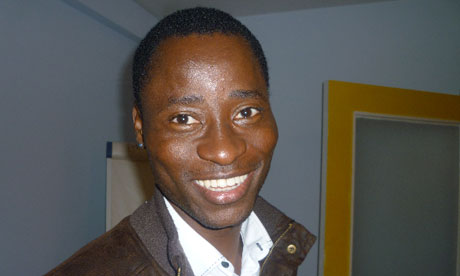
Bisi Alimi, from NigeriaBisi Alimi, from Nigeria (an IRMA member!)

In 2002, I was at university in Nigeria and standing for election. A magazine wrote about me and exposed me as being gay. This led the university to set up a disciplinary committee. I was very nearly dismissed. When I did graduate, people wanted to refuse me my certificate on the grounds that I did not have good enough morals to be an alumnus of the university. While this was going on, the then-president, Olusegun Obasanjo, declared that there were no homosexuals in Nigeria, and that such a thing would not be allowed in the country.

I talked with a friend of mine, who is a famous Nigerian talkshow host, about challenging this opinion. Nobody had come out publicly before. So, in October 2004, I appeared on her breakfast show, New Dawn with Funmi Iyanda". I talked about my sexuality, the burden of the HIV epidemic in the gay community.

The reaction was immediate and violent. I was subjected to brutality from the police and the community. I was disowned by my family and lost many friends, including in the gay community. They were afraid to know me. I was isolated, with no support and no job. The TV show was taken off the air by the government. It led to the introduction of the Same Sex Prohibition bill of 2006. All I had done was say who I was. Three years later I appeared on the BBC World Service. I repeated what I had said on television in Nigeria and suggested my government was using attacks on homosexuality to help cover up its own corruption.

On my arrival back to Nigeria, I was arrested, detained and beaten by the police. For a month, until I fled back to the UK in April 2007, my life was in constant danger.

Read the rest.


 [If an item is not written by an IRMA member, it should not be construed that IRMA has taken a position on the article's content, whether in support or in opposition.]

The Latest Treatment Action Campaign (TAC) Briefing - Antiretrovirals and Prevention

via the Treatment Action Campaign (TAC), by Catherine Tomlinson and Nathan Geffen

Exciting new evidence has demonstrated the potential of antiretroviral medicines (ARVs) to prevent HIV from being sexually transmitted. This TAC briefing explains the evidence and then discusses policy implications.

Our recommendations

1.The WHO must release its guidelines on serodiscordant couples.
2.People living with HIV should be offered highly active antiretroviral treatment (ART) when their CD4 counts fall below 350 cell/mm3, or if they have an AIDS illness or TB.
3.HIV-positive people in serodiscordant couples should be offered ART irrespective of their CD4 count.
4.For serodiscordant couples trying to conceive, both partners should be offered ARVs until conception is confirmed, after which the HIV-positive partner should continue on ART.
5.Pre-exposure prophylaxis (PrEP) should be made available to sex workers.
6.In other cases, pre-exposure prophylaxis should be made available to HIV-negative people who request it or who will --in the opinion of their nurse or doctor-- likely benefit from it.
7.The rollout of ARVs for prevention must not divert funding away from treatment programmes. Achieving universal access for people with HIV must remain the priority for governments, policy makers and funders.
8.Effective prevention interventions such as voluntary medical male circumcision and ensuring availability of male and female condoms continue to be critically important.

Read the rest.

[If an item is not written by an IRMA member, it should not be construed that IRMA has taken a position on the article's content, whether in support or in opposition.]

Pleasure as "Key Motivator" for Safe or Unsafe Sex


via The Pleasure Project, by Revati

I've been at the Asia Pacific AIDS conference for a week and so far, in all the sessions I have attended, only one person has spoken about pleasure and the need to recognise pleasure as a key motivator for safe or unsafe sex and that was a question from the audience.

But hurrah. At last I found someone who confronted the elephant in the room. Dr Malonzo, from Brokenshire College in The Phillipines, please step forward and take a bow.

Dr Malonzo’s study looks at why men having sex with men choose not to us condoms, or have “intentionally condom-less sex” aka “bare-backing”. bare- backing was initially a description used in the 1990′s by HIV positive men who declared their intention to have sex with other HIV positive men without condoms. It has now become the term used to describe condom less sex in a more generic view, regardless of HIV status. So for example, there are pornography studios who specialise in bare back films, sex workers or dating sites who use the term. Dr Malonzo studies the current phenomenon in Davao City in The Philippines in interviews with 40 young gay men.

Read the rest.

[If an item is not written by an IRMA member, it should not be construed that IRMA has taken a position on the article's content, whether in support or in opposition.]

Tuesday, September 13, 2011

Plasma and rectal viral load correlated in HIV-positive gay men: supports use of treatment as prevention

via European AIDS Treatment Group, by Michael Carter

Viral load in the blood and rectal secretions of HIV-positive gay men are highly correlated, according to US research published in the September 1st edition of the Journal of Infectious Diseases. The study also showed that the presence of sexually transmitted infections did not increase rectal viral load.

Individuals with a plasma viral load above 1000 copies/ml were significantly more likely to have detectable virus in the rectum.

“Our data add substantially to the few published studies of HIV shedding in rectal secretions of MSM [men who have sex with men],” comment the investigators, “we were able to quantify HIV RNA in rectal secretions, demonstrate the linear correlation between increasing plasma load and rectal viral load and determine a threshold plasma viral load that distinguished detectable from undetectable rectal viral load.”

They also believe that their findings have important implications for current debates about the use of HIV treatment as prevention, commenting: “Combination antiretroviral therapy will have a similar effect on reducing HIV transmission in MSM, as seen in studies of heterosexual discordant couples.”

Read the rest.


[If an item is not written by an IRMA member, it should not be construed that IRMA has taken a position on the article's content, whether in support or in opposition.]
Monday, September 12, 2011

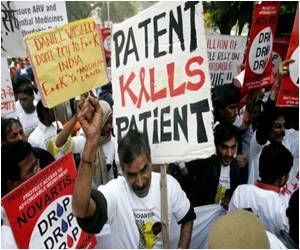
Legal Case in India Threatens HIV Drug Access for Poorest

via The Bureau of Investigative Journalism, by Melanie Newman

"India is literally the lifeline of patients in the developing world, especially in the poorest parts of Africa…If Sec. 3(d) is overturned, it means any meaningful effort to make these vital medicines available will be put in jeopardy."

A technical case going through the Supreme Court in India is being carefully watched by aid agencies and other human rights organisations, who claim it could have severe consequences for the supply of lifesaving drugs to the developing world.

More than 90% of drugs used to treat children with AIDS in Africa come from Indian generic manufacturers, according to the medical NGO Medicins Sans Frontieres. And if the Swiss pharmaceutical giant Novartis wins a case it has brought against the Indian government, MSF fears that supply could dry up.

Novartis is seeking patent protection for its leukaemia drug Glivec, whose patent has expired in India. It is challenging India’s interpretation of a section of the nation’s patent law — Section 3(d) — which prevents ‘evergreening’.

Read the rest.

[If an item is not written by an IRMA member, it should not be construed that IRMA has taken a position on the article's content, whether in support or in opposition.]

How Much Would it Cost to End AIDS?

via Bloomberg, by Simeon Bennet

Michel Kazatchkine and Eric Goosby may be able to halt the spread of HIV. They just need the money.

The two men control the funds that buy drugs for most of the world’s AIDS patients. Studies in July provided the strongest evidence yet that medicines used since 1994 to treat HIV can almost eliminate the chance an infected person will pass the virus to a sex partner. Given to healthy people, the treatments can also protect against infection, offering the potential to end a pandemic that has killed 30 million people in 30 years.

Governments are now planning projects to assess whether those findings can be replicated in the real world, and what that might cost. Getting the drugs just to those patients who should be treated under existing guidelines would cost another $6 billion a year, according to the United Nations. Treating all those infected, in some of the world’s poorest countries, would cost tens of billions more.

Finding more money will be difficult with economic growth stalling and nations including the U.S., the biggest donor to the AIDS fight worldwide, trying to curtail overall spending to rein in debt. Funding for AIDS in poorer nations fell 10 percent to $6.9 billion in 2010 from 2009 levels, according to the UN.

“We may well be able to overcome AIDS,” Kazatchkine, the director of the Geneva-based Global Fund to Fight AIDS, Tuberculosis and Malaria, said in an interview. Still, “the gap between what the science is telling us we can achieve and what we would be able to achieve is at risk of increasing.”

Read the rest.

[If an item is not written by an IRMA member, it should not be construed that IRMA has taken a position on the article's content, whether in support or in opposition.]

Thursday, September 8, 2011

Calling all Women and Spanish Speakers- Please Take our Survey!


Dear Women and Spanish Speakers,

We need your help with our Rectal Douching and Enema Survey! IRMA and researchers at the University of California, Los Angeles (UCLA) School of Public Health are conducting a brief survey to help us better understand the types of products people use rectally for anal sex including lubricants and enemas or douches. We are trying to gain a better understanding of rectal practices and behaviors that may affect the risk for sexually transmitted infections among people who practice anal intercourse. It is a brief survey (takes less than fifteen minutes) and is completely anonymous.

We have been running this survey for about a month now, and the participation level has been high. However, of the hundreds of responses we have received, less than 10% have been from women! We need more feedback on these anal products from women! We are asking you, ladies, to please take our survey or forward it to anyone you know who may be interested. Women’s opinions and experiences matter in all things anal, and we desperately want to take them into consideration so that women can be better protected from sexually transmitted infections.

Also, with many thanks to IRMA's chapter based in Lima, Peru, we now have a Spanish translation of the survey available! So IRMA blog followers, please forward the survey to anyone you may know who needs the Spanish translation. Thanks IRMA-ALC Lima!

You can click here for the survey or on the "Rectal Douching & Enenma Survey" logo at the top of the page. Thanks again for all of your help!


San Francisco First U.S. City to Offer PrEP

via Bay Area Reporter, by Matthew S. Bajko

San Francisco is expected to become the first city in the country to offer gay men an anti-HIV pill that has proven successful in stopping transmission of the virus that causes AIDS.

Officials with the National Institutes of Health and San Francisco public health officials are close to finalizing an agreement to launch in early 2012 a demonstration project for usage of pre-exposure prophylaxis or PrEP. The combination pill contains tenofovir and emtricitabine (Gilead Science's Truvada) and has proven to be highly effective during clinical trials studying its efficacy.

Under the contract, up to 300 men who have sex with men at high risk for contracting HIV would be enrolled in the pilot study. City Clinic would administer the program while Magnet, the gay men's health center in the Castro, would help identify suitable participants for the study.

"We are anticipating we will be the first municipality to implement a PrEP demonstration project and things are moving forward toward that goal," Dr. Grant Colfax, the city's director of HIV prevention, told the Bay Area Reporter this week. "We are hoping the demo project would be implemented in the first quarter of 2012."


Read the rest.


[If an item is not written by an IRMA member, it should not be construed that IRMA has taken a position on the article's content, whether in support or in opposition.]

Wednesday, September 7, 2011

Sexual Pleasure is Key for Successful Microbicides

via WeNews, by Amy Littlefield

Participants in Kate Morrow's [IRMA Steering Committee Member] recent study may not have felt like they were fighting the global HIV epidemic.
In fact, what they were literally feeling were gels of various consistencies inside their vaginas.

The women in Morrow's Project LINK answered questions after handling the gels, inserting them vaginally, walking around and simulating intercourse with a fake phallus. Did the gel leak out? Did it inhibit the experience . . . or did they actually enjoy it?


Morrow has developed a set of scales to show the range of sensations and experiences women reported. Her goal now is to connect those sensations to data about which gels women would use to prevent HIV. Do they prefer gels that are smooth, thin or thick like hair gel? The answers to those questions could help lead to a microbicide that women will tolerate--and perhaps even enjoy.

For decades, women's health advocates have known that women need a way to protect themselves from HIV that is not dependent on a male partner. Vaginal microbicide gels are among an array of options--including pills, rectal microbicides and vaginal rings--that may one day help. Advocates hope microbicides could even be combined with birth control and help prevent other sexually-transmitted illnesses.


[If an item is not written by an IRMA member, it should not be construed that IRMA has taken a position on the article's content, whether in support or in opposition.]

Gay couples in Atlanta back HIV tests together


Some gay male couples, including ones in Atlanta and two other cities, support getting HIV tests with their partner as a way to bolster the relationship, but current testing protocols may not support it, according to a new study from Emory University researchers.

The study, “Attitudes Towards Couples-Based HIV Testing Among MSM in Three U.S. Cities,” was published in the journal AIDS and Behavior. Dr. Rob Stephenson of the Rollins School of Public Health at Emory worked with three colleagues from the school and others in Chicago and Seattle to complete the study. It calls on opening HIV testing to gay couples as a way to fill “a significant gap” in couples-based services for men who have sex with men (MSM) and to help them integrate routine HIV testing into their lives.

“Services remain individually focused,” the researchers say. “[Couples-based voluntary HIV counseling and testing] provides an opportunity for MSM to talk about sex, and to make plans for safer sexual behavior as a couple in the presence of a counselor.”

“The initial results presented here are encouraging. Couples-based voluntary HIV counseling and testing] is an acceptable format for HIV counseling and testing among MSM in this study, and if it is adapted and promoted well, could fill a significant gap in couples-based services for U.S. MSM,” they add.

The researchers launched the study after noting that heterosexual couples in Africa in which one member is HIV-positive and the other is not who receive HIV counseling and testing together helped bring about behavioral changes that reduced HIV transmission. So they examined attitudes toward couples-based testing with four focus groups of gay men in relationships in Atlanta, Chicago and Seattle.


[If an item is not written by an IRMA member, it should not be construed that IRMA has taken a position on the article's content, whether in support or in opposition.]
Related Posts Plugin for WordPress, Blogger...