Do you use rectal douches? Or don't you?

Do you use rectal douches? Or don't you?
Take it whether you douche, or not! Click for survey in English, Español, French, Portuguese, Thai, Chinese or Russian.

Saturday, April 30, 2011

High HIV risk behavior among men who have sex with men in Kigali, Rwanda: making the case for supportive prevention policy

via AIDS Care

Chapman J, Koleros A, Delmont Y, Pegurri E, Gahire R, Binagwaho A. (2011). High HIV risk behavior among men who have sex with men in Kigali, Rwanda: making the case for supportive prevention policy. AIDS Care, 23(4):449-55. DOI: 10.1080/09540121.2010.507758.
 
Abstract:


Rwanda has responded strongly to HIV/AIDS, but prevention among men who have sex with men (MSM) has not yet been addressed due to a strong cultural resistance to homosexuality, and a lack of data showing the public health value of attending to the sexual health needs of this group. We conducted an exploratory study on HIV risk among MSM in Kigali using snowball sampling involving peer leaders. The 99 respondents were demographically, socially, and sexually diverse. Respondents reported relatively high numbers of male and female partners, and considerable HIV risk behaviors including commercial sex with men and women, low condom use during anal and vaginal sex, and high mobility. Many respondents reported verbal and/or physical abuse due to their sexuality. This first study of MSM in Rwanda has brought attention to a previously neglected HIV risk group and their potential driving role in the Rwandan epidemic, demonstrating the need for sensitive and targeted interventions.


[If an item is not written by an IRMA member, it should not be construed that IRMA has taken a position on the article's content, whether in support or in opposition.]

Wednesday, April 27, 2011

NYT: For a Sex Survey, Privacy Goes a Long Way

via New York Times, by Nicholas Bakalar

It is not easy to ask people about their sex lives, and getting honest answers may be even harder. But there are ways to do it. One good method is to have a computer ask the questions, while the interviewee listens through earphones and enters the answers on the screen — without the intervention, or even the presence, of another hum

Last month the Centers for Disease Control and Prevention published a report on sexual behavior that used this technique with laptops to gather data on Americans’ sexual behavior, attraction and identity by age, marital status, education and race. Anjani Chandra, the lead author, said the process was developed to assure total anonymity for the respondents.

Dr. Chandra, a demographer with the agency, explained: “The computer tells the interviewees what key to press to lock away the responses. When they return the laptop to the interviewers, they can’t get in. It’s transmitted to a central place where the data processing happens without names or addresses. We get a file that can’t be linked back to the person.”

The researchers got a 75 percent response rate, very high for a household survey, when they interviewed more than 13,000 people ages 15 to 44 from 2006 to 2008.

Read the rest.

[If an item is not written by an IRMA member, it should not be construed that IRMA has taken a position on the article's content, whether in support or in opposition.]

Tuesday, April 26, 2011

LGBT activist talks challenges in Kenya

via Yale Daily News, by Mohammad Salhut

In Kenya, even some health workers who provide services to men who have sex with men are homophobic, LGBT activist Rachel Mandel said.

Mandel, a former employee for the International Center for Reproductive Health, spoke to 12 professors and graduate students in Luce Hall Wednesday about the difficulties of advocating for gay rights in Kenya through public health organizations.

While employees of these organizations aim to improve health standards for local communities, Mandel said often the employees do not support their patients’ sexual orientations and act in homophobic ways.
 
“The whole gay rights thing has a whole different place there than it does here,” she said.

Part of the problem, Mandel said, is the large chasm between what the administrators of non-profit organizations think is happening on the ground, and what is actually taking place.

Despite the organizations’ policies on equal treatment for patients, many employees at the two organizations Mandel worked for were “incredibly” homophobic, she said.

“The first time that I went I had tour of city of Mombasa by a staff member of ICRH,” she said. “At one point during the car ride he talked about homosexuality and referred to it as a psychological distortion. This same employee later became the head of the [Men who have sex with men] project.”

Read the rest.

[If an item is not written by an IRMA member, it should not be construed that IRMA has taken a position on the article's content, whether in support or in opposition.]

Namibia: HIV Keeps Locals Out of Foreign Universities

Via allAfrica.com, by Jana-Mari Smith

Banning HIV-positive Namibians from obtaining overseas scholarships is discriminatory, unconstitutional and a human rights violation. These, and other concerns, were raised by the AIDS Law Unit at the Legal Assistance Centre (LAC) in a press statement yesterday.

The statement referred to recent newspaper advertisements by the Ministry of Education offering international scholarships, which stipulated that Namibians who are HIV positive do not qualify for the opportunity. The ban on HIV-positive applicants from taking up the education opportunities offered by countries such as China, Cuba and the Slovak Republic, among others, goes against the grain of Namibia's purported stance on equal opportunities for all.

One of the advertisements offers a Cuban medical scholarship to young Namibians from low-income families. The notice specifically requires a health certificate "acknowledging HIV-negative tests". A medical scholarship offered by China asks applicants to "undergo a thorough medical check-up, including HIV-AIDS tests". An official at the Namibia Student Financial Assistance Fund (NSFAF) yesterday told a prospective applicant that neither China nor Cuba will accept HIV-positive applicants.

"These are their policies," he said, adding that these countries do not want foreigners to "go and multiply your HIV there". An official at the Directorate of Scholarships and Awards within the Ministry confirmed that an HIV-positive applicant does not stand a chance. "That is their requirement. You cannot go there if you are HIV positive". The press release from the LAC yesterday condemned the condition attached to the scholarship offers. The ostracising of HIV-positive individuals is "discriminatory and unconstitutional".

The LAC argues that the exclusion of HIV-positive students from educational opportunities "unreasonably discriminates against young people living with HIV-AIDS and excludes them from having the same kind of opportunities".

Read the rest

[If an item is not written by an IRMA member, it should not be construed that IRMA has taken a position on the article's content, whether in support or in opposition.]

AIDS.gov: Highlights from the U.S. National Transgender Health Summit

"Transgender people experience significant health disparities in this country. In fact, regardless of socioeconomic status, transgender people are the most medically underserved population in the U.S."
- JoAnne Keatley, Director of the CoE for Transgender Health and the lead conference organizer (pictured)


via AIDS.gov, by Jennie Anderson and Mindy Nichamin

What do empowerment, discrimination, data, and health have in common? They are several of the many themes we heard throughout the National Transgender Health Summit that took place in San Francisco earlier this month. The Center of Excellence for Transgender Health (CoE) organized this groundbreaking two-day Summit that brought together healthcare providers, health profession students, researchers, and other health leaders. In past posts we've discussed the disproportionate impact of the HIV epidemic on the transgender community, and so this Summit was an important opportunity for us to learn from and engage with experts on this topic. As the White House National HIV/AIDS Strategy states, "Some studies have found that as many as 30 percent of transgender individuals are HIV-positive. Yet, historically, efforts targeting this specific population have been minimal."

Read the rest.


[If an item is not written by an IRMA member, it should not be construed that IRMA has taken a position on the article's content, whether in support or in opposition.]

Monday, April 25, 2011

Young people lead HIV prevention revolution: AU

via  The Zimbabwean, by Francis Rwodzi

Young people are leading the prevention revolution by increasingly acting to protect themselves from HIV said the African Union (AU) during the pre-summit African Youth Forum that was held at the AU Headquarters in Addis Ababa, Ethiopia last week.

The “prevention revolution” is a global commitment by UNAIDS and its co-sponsors to galvanize leaderships at all levels, communities and all key stakeholders and development partners to halt the HIV epidemic-the ultimate vision is zero new infections , zero discrimination and zero deaths.

The revolution requires greatly intensified efforts to address the needs of all those at risk of infection, and of everyone living with HIV, with quality, scaled up programmes based on evidence of what works.

The AU said that only by stemming the tide of new HIV infections can those already HIV positive be assured life-time care, treatment and support and efforts are targeted at those countries and populations where the most new infections are occurring, especially the high prevalence countries in eastern and southern Africa.

Statistics released by the AU revealed that although there were 1.8 million new HIV infections in sub Saharan Africa during 2009, 22 countries reported a prevalence decline of more than 25 percent. The statistics showed that the number of young people living with HIV is falling in 13 African countries, a tremendous achievement on which African government can build on.

Read the rest.

[If an item is not written by an IRMA member, it should not be construed that IRMA has taken a position on the article's content, whether in support or in opposition.]

Sunday, April 24, 2011

Kenya: Ongeri Warns Students On Homosexuality

Via allAfrica.com, by Henry Wanyama (reported April 19)

EDUCATION minister Sam Ongeri yesterday asked students to shun homosexuality. Ongeri said homosexuality is one vice that the ministry for education must stump out. He said: "I am not threatening anybody but you all know that homosexuality is illegal." Ongeri spoke at the Bomas of Kenya when he opened the third national students' leadership conference. The conference has attracted 1,500 student leaders from across the country who are deliberating on the theme: Education Reforms, Students Perspective.

The minister said, however, he had no clue on the extent of homosexuality but asked teachers, students and everybody in society to know one another so as to be able to fight the vice.

"Homo sexuality is unhealthy and does not add any value to your life. Those who practise are easily infected with HIV/Aids," Ongeri said. He told students that as leaders in their respective schools they should help defeat the vice and the Education ministry is ready to render support. Ongeri said the student leaders' contribution at the conference will be taken to account by the task force collecting views on how the current education system can be aligned to the new constitution.

The minister revealed that very soon the ministry will launch a management guide to extracurricular activities. He also called on students to act as a cushion to society as we approach the 2012 general elections and not to be incited by politicians.

Read the rest

[If an item is not written by an IRMA member, it should not be construed that IRMA has taken a position on the article's content, whether in support or in opposition.]

Saturday, April 23, 2011

Soweto Clinic Reaches Out To Men Who Have Sex With Men

via Global Forum on MSM and HIV, by Yngve Sjolund

The Health4Men clinic is putting up a determined effort in the fight against high HIV and STI infection rates amongst men-who-have-sex-with-men (MSM) in and around Soweto.

Thanks to support from PEPFAR and USAID, the Simon Nkoli Centre for Men’s Health can offer free and confidential clinic services, which include men's health care check-ups, STI and HIV screening and medical treatment and prevention care. Innovative outreach projects, counselling for individuals and same-sex couples, a range of support groups - including groups for men living with HIV - as well as regular seminars and talks addressing topical issues related to men’s sexual and psychosocial health are also available for MSM.

MSM living in the township are aware that various studies have documented the very high HIV prevalence amongst MSM Sowetans in the past two years.

David Motswagae an outreach worker at the clinic, confirms: “Yes, they know – and it was great to see that most of them knew about the findings of the study, even if they found out from gay media on the web. Participants raised the issue during discussion groups, and most of them said: ‘why are you saying one in three of us are HIV positive? Why is it that other people are still in the closet – and we don’t know their status?”

Same-sex relationships remain difficult terrain for media and health communication in South Africa, and a lack of coverage of MSM issues in the media fuels the marginalization of MSM and their HIV prevention needs. At most, the media tends to reinforce stereotypes that all MSM are gay – or that they have the same HIV prevention needs as gay men. Typecasting all MSM – who do not usually self-identify as being gay - may also alienate this vulnerable group, and deter them from accessing targeted HIV services for fear of being labelled “gay”.

Infection rates have risen steadily in recent years among MSM, despite a decrease in the 1990’s – and according to the CDC (Centers for Disease Control and Prevention), MSM account for 71% of all HIV infections in the U.S.A., where statistics also showed a 30 percent rise in syphilis outbreaks in 2009.
But the numbers for MSM in the USA are not much different from those in South Africa, and the results of three studies conducted in Johannesburg and Durban found that HIV prevalence rates among MSM were as high as about 38 percent - or double that found among South Africa’s general population.

Read the rest.

[If an item is not written by an IRMA member, it should not be construed that IRMA has taken a position on the article's content, whether in support or in opposition.]

CHINA: CAIDS deaths hit 'peak' as 7,700 die

Via China.org.cn

AIDS deaths are believed to be peaking on the Chinese mainland as many from the large number of people infected with HIV in the 1990s because of unsanitary blood-selling schemes develop full-blown AIDS, a senior health official said on Tuesday.

By the end of last year, the total reported number of AIDS deaths had reached 68,000, according to statistics from the ministry. Since 2008, AIDS has become the country's top infectious killer and it claimed the lives of 7,700 people in 2010 alone.

"As those infected in the 1990s have developed full-blown AIDS, the number of deaths has surged," Hao noted, adding that poor drug compliance largely because of side effects added to the number of deaths. To address the problems, the government cracked down on the illegal plasma-selling schemes, enhanced safety supervision and management of blood collection, and offered free medication to all patients. Currently, China has about 740,000 people living with AIDS/HIV, including 140,000 full-blown AIDS patients, official statistics show.

Hao urged people with the virus to accept the free medication they are entitled to and the first-line antiretroviral regimen, and said the government is making efforts to also provide free second-line drugs to those in need. The first-line antiretroviral regimen has helped reduce the fatality rate of full-blown AIDS patients on medication from 10.8 percent in 2005 to 4.6 percent last year.

In the past few years, men who have sex with men (MSM) have become one of the most vulnerable groups for contracting AIDS/HIV, experts said. Among the 44,000 new HIV infections detected in 2010, nearly 13 percent were infected through gay sex, according to the Ministry of Health. "AIDS/HIV became rampant among the MSM population which has an average HIV prevalence of 5 percent nationwide," Hao said. He noted that the infection rate is 0.05 percent among the general population.

Read the rest

[If an item is not written by an IRMA member, it should not be construed that IRMA has taken a position on the article's content, whether in support or in opposition.]

Friday, April 22, 2011

Starting HIV treatment when CD4 cell count dips below 500 improves AIDS-free survival

Via aidsmap, by Michael Carter

Patients who start antiretroviral therapy when their CD4 cell count dipped below 500 cells/mm3 are less likely to develop an AIDS-defining illness than individuals who start treatment with a CD4 cell count of 350 cells/mm3, an international team of investigators report in the Annals of Internal Medicine. However, initiating HIV treatment with a CD4 cell count of approximately 500 cells/mm3 did not reduce the risk of all-cause mortality.

“If the goal is to prevent AIDS-defining illness or death, our findings support cART [combination antiretroviral therapy] initiation once the CD4 cell count decreases below 500 cells/mm3,” comment the investigators.

Nevertheless, results of the study will undoubtedly inform the debate about the best time to start antiretroviral therapy.Treatment guidelines in Europe currently recommend that AIDS-free patients should start therapy when their CD4 cell count is in the region of 350 cells/mm3. However, US guidelines advocate treatment when an individual’s CD4 cell count falls under 500 cells/mm3.

Large randomised trials are currently underway to try and determine the optimum time to start HIV therapy. However, their results are not expected for several years. Because of this continuing uncertainty investigators from the HIV-CAUSAL Collaboration undertook a prospective observational study involving approximately 21,000 adult patients enrolled in cohorts in Europe and the US.

Read the rest
 
[If an item is not written by an IRMA member, it should not be construed that IRMA has taken a position on the article's content, whether in support or in opposition.]

Thursday, April 21, 2011

UGANDA: As food prices bite, HIV-positive people turn to kitchen gardens

Via IRIN, PlusNews

The small 10m by 15m garden behind Agnes Oroma's house in northern Uganda's Gulu district is much more than a hobby garden; according to HIV-positive Oroma, it is one of the main reasons she is in good health. She grows indigenous vegetables and tomatoes to supplement her daily diet of beans, maize meal and silver fish; Oroma also proudly shows off a sisal sack in which she grows onions.

"Do not ignore that little space behind your house, it can do a lot to feed you cheaply and lessen your financial burden that would enable you spend on other essentials to keep you healthy on your daily ARV treatment," 31-year-old Oroma told IRIN/PlusNews.

In the face of rising global fuel prices and a prolonged dry spell, Ugandans are dealing with steep increases in the price of food that have sparked protests in many parts of the country. Oroma and other HIV-positive patients in Gulu town are becoming more self-reliant in an effort to maintain a healthy diet and stay on their antiretroviral medication. Oroma's group of backyard farmers has grown to 30 in the past few months.

"Food was my biggest worry for my treatment; I had become weaker because my body didn't have the strength to withstand the potency of the ARV drugs. Since I started growing these vegetables, producing more food, I feel a lot of improvement and I have the strength to do other things. I now take my medication without worries because I know the food I grow can keep me going for another day,"said Maurine Kilama.

Read the rest


[If an item is not written by an IRMA member, it should not be construed that IRMA has taken a position on the article's content, whether in support or in opposition.]

Wednesday, April 20, 2011

WSJ: Trial Halted on HIV Pill for Women

[of interest: "There is research, as yet unpublished, showing that the concentration of tenofovir, when taken orally, is higher in rectal tissue than in vaginal tissue, said Timothy Mastro, an FHI vice president who spoke on behalf of the study. If so, the men might have had more of the drug than the women at the site where they were exposed to the virus."]

via Wall Street Journal, by Mark Schoofs

A highly anticipated trial to determine whether AIDS drugs taken by mouth can ward off HIV infection in women has been stopped early, a setback that surprised researchers after a string of successes in preventing transmission of the disease.

Researchers said Monday they had called off the trial among high-risk women in Africa because they wouldn't be able to determine whether use of antiretroviral medication produced any benefit. The study tested whether taking the medication once a day could prevent uninfected women from contracting the AIDS virus, estimated to infect more than 2.5 million people each year.

Several researchers lamented the result as "disappointing" and surprising. The same prevention method was proved successful just last year in a multicountry trial among gay and bisexual men. Moreover, an AIDS drug applied to the vagina in a topical gel—rather than swallowed as a pill—demonstrated a protective effect last year among women.

Researchers speculated that participants in the most recent trial might not have adhered to the regimen as closely as the participants in the other trials. Physiological differences between men and women might also account for the differences between this trial and the one among gay and bisexual men.

But a particularly intriguing hypothesis, supported by other research, is that swallowing a pill might not lead to high enough drug concentrations at the site where HIV enters a woman: in the tissues of the vagina.

In another surprise finding, women in the study taking the antiretroviral medication were more likely to get pregnant than women taking a placebo. This was true despite the fact that 96% of women in the study were on oral or injectable contraceptives when the study began.

There is no known interaction between the antiretroviral drugs and hormone contraceptives, said researchers. They said they would analyze their data to try to tease out if there might be such an interaction.

The randomized, placebo-controlled trial, called FEM-PrEP, was carried out among 1,951 women in South Africa, Kenya, and Tanzania by FHI, a non-profit health and development organization, with about $23 million in funding from the United States Agency for International Development and about $3 million from the Bill and Melinda Gates Foundation.

Approximately half the women were given Truvada, a pill that combines two antiretroviral medications, tenofovir and emtricitabine; the other half were given a placebo. Fifty-six infections occurred overall, with half among women taking a placebo and half among women taking the active drug.

Truvada is marketed world-wide by Gilead Sciences Inc., based in Foster City, Calif. In a statement Monday, the company said, "While this development is a disappointing one, Gilead believes that antiretroviral therapies remain a promising potential HIV prevention strategy."

Clinical trials are typically reviewed at regularly scheduled intervals by an independent committee. Such a committee decided that, statistically, the FEM-PrEP trial could not answer the fundamental question of whether Truvada reduces the risk of HIV infection. So the committee recommended closing the trial. Two other studies in Africa are continuing that could resolve the issue of whether AIDS drugs taken orally can prevent HIV infection in women.

Last year, a study of Truvada among gay and bisexual men showed it reduced the chance of infection by about 44%. There is research, as yet unpublished, showing that the concentration of tenofovir, when taken orally, is higher in rectal tissue than in vaginal tissue, said Timothy Mastro, an FHI vice president who spoke on behalf of the study. If so, the men might have had more of the drug than the women at the site where they were exposed to the virus.

Last year, another trial in South Africa showed that women could be protected against HIV by applying to their vaginas before and after sex a gel containing tenofovir, one of the two medications in the pill taken by the women in the latest study.

However, research presented earlier this year at the Conference on Retroviruses and Opportunistic Infections showed tenofovir concentrations in vaginal tissue were about 100 times higher when the drug was applied in the gel form compared with when it was taken orally.

One question researchers raised is whether women in the study took the pill faithfully. Dr. Mastro said his team would address this question by examining whether stored blood samples contain the medication.

[If an item is not written by an IRMA member, it should not be construed that IRMA has taken a position on the article's content, whether in support or in opposition.]

Tuesday, April 19, 2011

Jamaicans making it difficult for gays to stay with one partner?

via Jamaica Observer

ONE of the world's leading bioethics publications, Developing World Bioethics Journal, says Jamaicans are making it difficult for men who have sex with men (MSM) to be monogamous. The publication also suggested that Health Minister Rudyard Spencer is unhappy with the fact that his government "continues to support legislation that contributes significantly to the high prevalence of HIV/AIDS among MSM". 

Following are excerpts from the recently published article:

"It is tempting to feel sorry for Jamaica's Health Minister, the Hon Rudyard Spencer. There he is, trying his best to do his job, and, among other urgent health matters, reduce the incidence of HIV/AIDS in his nation.

Unfortunately, on his own account, this is proving to be next to impossible unless Jamaicans change their cultural attitudes to — you guessed it — sex. The Jamaican Ministry of Health's website quotes him with these eminently sensible concerns about specific attitudes:

"These include a widely held belief that sex with a virgin can cure HIV/AIDS, the high level of sexual relations between older men and young girls and a persistently hostile anti-gay environment which all contribute to the stigmatisation and discrimination of infected and affected persons. A strong religious culture also inhibits open discussion on matters of sexuality... We too need to begin the process of unlearning those beliefs that endanger the health lives of others and rethinking the tendency to be obscene and degrading in rejecting values that conflict with our own..."

Read more.


[If an item is not written by an IRMA member, it should not be construed that IRMA has taken a position on the article's content, whether in support or in opposition.]

Bangkok's MSM HIV Explosion - Precursor for Asia's Mega-cities?

via Global Forum on MSM and HIV, by Don Baxter

The last five years have seen astonishing – arguably catastrophic - increases in HIV seroprevalence among Thai gay men and men who have sex with men (MSM). HIV seroprevalence has risen from less than 10 percent early this decade to more than 28 percent by mid-decade.

Major questions of international significance arise:

• How could increases as dramatic as these happen in a country with a previously successful HIV prevention response?

• Is Bangkok merely the precursor for similar HIV catastrophes among the MSM communities of Asia’s other mega-cities?

• What can the world learn from Thailand’s experience in these dramatic increases?

A complex series of factors is involved in analysing why these increases happened – but arguably they add up to Bangkok being a tragic case study of how an effective ‘enabling environment’ for a national HIV response can be inadvertently dismantled - with catastrophic results.

Read the rest.


[If an item is not written by an IRMA member, it should not be construed that IRMA has taken a position on the article's content, whether in support or in opposition.]

Monday, April 18, 2011

FHI to Initiate Orderly Closure of FEM-PrEP

via FHI website

Following a scheduled interim review of the FEM-PrEP study data, the Independent Data Monitoring Committee (IDMC) advised that the FEM-PrEP study will be highly unlikely to be able to demonstrate the effectiveness of Truvada [emtricitabine (FTC) and tenofovir disoproxil fumarate (TDF)] in preventing HIV infection in the study population, even if it continued to its originally planned conclusion. FHI subsequently concurred and has therefore decided to initiate an orderly closure of the study over the next few months. The final analyses have not yet been conducted. At this time, it cannot be determined whether or not Truvada works to prevent HIV infection in women.

The FEM-PrEP clinical trial—implemented by FHI in partnership with research centers in Africa—is designed to study whether HIV-negative women who are at higher risk of being exposed to HIV can safely use a daily dose of a pill called Truvada to prevent infection. This study was funded by the United States Agency for International Development (USAID), with early funding from the Bill & Melinda Gates Foundation.

The FEM-PrEP outcome is surprising and disappointing, given a number of earlier studies suggesting the promise of pre-exposure prophylaxis (PrEP) using antiretrovirals. Most recently, the iPrEX study showed that use of Truvada can prevent infection in men who have sex with men at risk of HIV.

There are a number of possible reasons for the study findings, including low adherence to study regimen, a true lack of effect of the product among women (versus men who have sex with men), or other factors still to be determined. FHI will be conducting further analyses and will share additional findings in the coming months. The IDMC commended the trial team on a study conducted to a high standard with good follow-up and careful attention to good clinical practice and ethical standards.

Only preliminary FEM-PrEP data are available at this time:
  • As of February 18, 2011, the study had screened 3,752 women and enrolled 1,951: 739 in Bondo, Kenya; 764 in Pretoria, South Africa; 432 in Bloemfontein, South Africa; and 16 in Arusha, Tanzania. The most common reason for women not being enrolled was existing HIV infection. The overall HIV prevalence was 21 percent among women screened for enrollment across the sites.
  • Preliminary data indicate about 90 percent of the participants were retained in the study.
  • Adherence to study product was approximately 95 percent when the study product was available for use.
  • Women reported an average of 3.7 vaginal sex acts in the 7 days prior to enrollment, consistent with the average of 3.6 acts reported during follow-up.
  • As of February 18, the approximate rate of new HIV infections among trial participants was 5 percent per year. A total of 56 new HIV infections had occurred, with an equal number of infections in those participants assigned to Truvada and those assigned to a placebo pill.
  • Women participating in FEM-PrEP used an effective method of contraception at the time of enrollment—66 percent were using injectables and 30 percent were using oral contraceptives. The overall pregnancy rate was 9 percent; the highest pregnancy rates were among women using oral contraceptives.
  • The use of Truvada in FEM-PrEP was associated with some known side effects that were not serious.
Among study participants randomly assigned to the Truvada arm, observed pregnancy rates were higher than among women randomly assigned to the placebo arm. This is unexpected and inconsistent with known drug interactions involving tenofovir (TDF) and contraceptive hormones, and with known metabolic effects of emtricitabine (FTC). Possible explanations include differential pill adherence by group, previously undefined drug-drug interactions, chance, or a combination of factors (including yet unknown factors). FHI will conduct further analyses of these data.

FHI and its partners are especially grateful to the women whose willingness to participate and commitment to the study were essential. To the extent possible, all participants have been notified of the decision and are being asked to come to the study clinics for final visits. Study participants who became infected with HIV during the study are being followed by the study team for an additional year and are referred for appropriate medical care and treatment in their community.

When the follow-up of the HIV-uninfected women is complete in a few months' time, FHI will be conducting in-depth analyses of study data and blood specimens collected during the study to examine the factors contributing to the observed outcomes. FHI will also collaborate with scientists conducting other PrEP studies to compare findings and to better understand the results.

When available, the final results from FEM-PrEP will make a strong contribution to our understanding of the use of antiretrovirals for HIV prevention. FHI, USAID, and research partners in Africa are committed to finding new technologies and developing new strategies to protect women from HIV.

For more information, see the following fact sheets:


[If an item is not written by an IRMA member, it should not be construed that IRMA has taken a position on the article's content, whether in support or in opposition.]

Paying for condoms "prestigious" in Zambia

via IRIN

Given the choice, people preferred to pay for subsidized condoms in attractive packaging because it gave them greater social status, rather than using free condoms, an official in the northern Zambian town of Mpulungu told IRIN.

A high volume of traffic and a low cost of living has made Mpulungu, on Lake Tanganyika, Zambia's only port, an attractive destination for sex workers...

...Free condoms are distributed at health clinics, guest houses and bars, but the subsidized condoms in attractive packaging, against the bland presentation of free condoms, are much more popular, even though they cost about 500 kwacha ($0.10) each.

Kaluba said the socially marketed condoms were preferred, as "sex is prestigious," and the packaging and presentation added to the currency of such condoms.

Read the whole item.

[If an item is not written by an IRMA member, it should not be construed that IRMA has taken a position on the article's content, whether in support or in opposition.]

ETHIOPIA: Bid to boost ART adherence

via PlusNews

A three-month campaign by Addis Ababa's health bureau hopes to boost adherence to antiretroviral (ARVs) drugs in the Ethiopian capital by improving communication between patients and health service providers.

A 2009 study by the HIV/AIDS Prevention and Control Office found that on average, 72.3 percent of patients on ARVs were still on first-line medication one year after starting treatment.

"The remaining are lost... it could be due to any number of reasons such as death or an unannounced change of location but it is a cause for concern," said Addis Akalu, head of the disease prevention and control department at the Addis Ababa Health Bureau.

According to Esmael Wabela, HIV prevention and treatment adviser at the city's heath bureau, insufficient food, high transport costs to drug collection points and stigma-related issues such as fear of disclosure are some of the main reasons HIV-positive Ethiopians fail to stick to ARVs.

Such failure can hasten progress from HIV to AIDS; patients taking their drugs irregularly also run the risk of developing drug resistant strains of the virus, requiring significantly more costly second- and third-line ARVs.

Addis Ababa's health bureau is partnering with the national AIDS Resource Centre (ARC) on the three-month campaign, launched in March and funded by the US President's Emergency Plan for AIDS Relief. Through a mass-media campaign and the use of toll-free telephone HIV/AIDS information services, it seeks to promote "astewai" (responsible patients), and "tagash" (tolerant service providers) as part of its efforts to improve adherence.

"There are findings to suggest that if there is good communication between clients and service providers, better services are provided," said Anthoula Assimacopoulou, ART communication programme officer at the ARC.

Some 26 state-run health centre, five state-run hospitals and 13 private facilities that provide ART in Addis Ababa will participate in the campaign, with a plan to roll it out to the rest of the country should it prove successful. 

Read the rest.

[If an item is not written by an IRMA member, it should not be construed that IRMA has taken a position on the article's content, whether in support or in opposition.]

Sunday, April 17, 2011

Belief in AIDS origin conspiracy theory and willingness to participate in biomedical research studies: findings in whites, blacks, and Hispanics

HIV Clin Trials. 2011 Jan-Feb;12(1):37-47.

Belief in AIDS origin conspiracy theory and willingness to participate in biomedical research studies: findings in whites, blacks, and Hispanics in seven cities across two surveys.

Russell SL, Katz RV, Wang MQ, Lee R, Green BL, Kressin NR, Claudio C.

Department of Epidemiology and Health Promotion, New York University, New York, NY, USA. stefanie.russell@nyu.edu

Abstract

PURPOSE: The purpose of this study was to determine whether a belief in the AIDS origin conspiracy theory is related to likelihood or fear of participation in research studies.

METHODS: The Tuskegee Legacy Project Questionnaire was administered via random-digit-dialed telephone interview to black, white, and Hispanic participants in 4 cities in 1999 and 2000 (n = 1,133) and in 3 cities in 2003 (n = 1,162).

RESULTS: In 1999, 27.8% of blacks, 23.6% of Hispanics, and 8% of whites (P ≤ .001) reported that it was "very or somewhat likely" that AIDS is "the result of a government plan to intentionally kill a certain group of people by genocide." In 2003, 34.1% of blacks, 21.9% of Hispanics, and 8.4% of whites (P ≤ .001) reported the same.

CONCLUSIONS: Whereas blacks and Hispanics were more than 3 times more likely than whites to believe in this AIDS origin conspiracy theory, holding this belief was not associated with a decreased likelihood of participation in, or increased fear of participation in, biomedical research.

[If an item is not written by an IRMA member, it should not be construed that IRMA has taken a position on the article's content, whether in support or in opposition.]

Saturday, April 16, 2011

HIV Rate in San Francisco Could Be Cut Sharply With Expanded Treatment, Study Predicts


via ScienceDaily

If HIV-infected adults in San Francisco began taking antiretroviral treatments as soon as they were diagnosed, the rate of new HIV infections among men who have sex with men would be cut by almost 60 percent over five years, according to a new study by scientists at the University of California, San Francisco.

In San Francisco, men who have sex with men comprise more than three quarters of the population of people living with HIV and more than three quarters of new HIV infections occur in this group. The study looked specifically at the impact of treatment upon rates of new HIV infections in this population.

The finding is published in the April 15, 2011 issue of Clinical Infections Diseases.

 The decision of when to begin treatment with antiretroviral drugs is a subject of some debate, with the experts evenly split on whether to begin antiretroviral therapy immediately upon HIV diagnosis or waiting until a patient's CD4 cell count drops below 500 cells per microliter.

Read the rest.


[If an item is not written by an IRMA member, it should not be construed that IRMA has taken a position on the article's content, whether in support or in opposition.]

Friday, April 15, 2011

2011 Spending Deal Spares NIH Major Cuts

via ScienceInsider

Just as White House officials promised over the weekend, the 2011 funding bill agreed to by Congress and the White House last Friday spares biomedical research from major cuts.

Details released today indicate that the National Institutes of Health (NIH) would receive $30.7 billion, or $260 million below the 2010 level. The 0.8% cut includes $210 million spread across all 27 NIH institutes and centers and the director's office, and $50 million from a buildings account. (Adding a 0.2% across-the-board cut in all non-defense agencies, the total cut will be about $300 million, says David Moore of the Association of American Medical Colleges.)

By contrast, an earlier House bill, H.R. 1, would have slashed NIH's budget by $1.6 billion to $29.5 billion.

Read the rest.


[If an item is not written by an IRMA member, it should not be construed that IRMA has taken a position on the article's content, whether in support or in opposition.]

HIV Envelope Discovery Could Reveal New Vaccine Targets

Via hivandhepatitis.com

An international study headed by a UC Davis scientist describes how a component of a potential HIV vaccine opens like a flower, undergoing one of the most dramatic protein rearrangements yet observed in nature.

The finding could reveal new targets for vaccines to prevent HIV infection and AIDS. A paper describing the work was published online this week in the journal Proceedings of the National Academy of Sciences.

In the new study, researchers from the U.S., Sweden and France explored the structure and behavior of the HIV envelope protein complex, which could potentially serve as a component of a vaccine aimed at eliciting the human immune system to generate antibodies against HIV.

"By opening up these less exposed regions, we might be able to raise more broadly cross-reactive antibodies to HIV," said R. Holland Cheng, professor of molecular and cellular biology at UC Davis and senior author of the study.

Read the rest

[If an item is not written by an IRMA member, it should not be construed that IRMA has taken a position on the article's content, whether in support or in opposition.]

Thursday, April 14, 2011

Traditional Leaders challenged to actively participate in the fight against HIV

Via Safaids.net
Traditional leaders from southern Africa have been challenged to play an active role in the fight against HIV for the region to achieve zero new infections, zero discrimination and zero AIDS related deaths.

This was said by the Executive Director of SAfAIDS, Mrs Lois Chingandu at the Regional Traditional Leadership Rock Indaba-50 x 15 Prevention Movement being held in Johannesburg from 12-14 April 2011.

Mrs Chingandu challenged traditional leaders to move from being actors where they are often invited to officially open HIV events and be actively involved in the fight against the epidemic.

Excerpt:
“As chiefs, you must tell yourself that I want zero new infections in my village. This can only happen if you know the epidemic, start to openly talk about sex and encourage your community members to go for HIV tests. This should start with you.....We found that the African epidemic had something to do with our culture. As much as we love our culture, it is important for our culture to protect us. We found some practices that were not protecting us but putting us at risk, for example wife inheritance. We are therefore working with traditional leaders to find ways of how we can practice our culture, without exposing ourselves to HIV infection”.
She stressed the importance for traditional leaders to model the behaviours they are promoting as they can’t encourage others to change their behaviour whilst they are having multiple partners.


Read the rest

[If an item is not written by an IRMA member, it should not be construed that IRMA has taken a position on the article's content, whether in support or in opposition.]

Kenya: Counselling, not alarm device, had best effect on ART adherence

Via aidsmap, by Carole Leach-Lemens

Patients in Nairobi, Kenya getting intensive early adherence counselling when starting antiretroviral therapy were 29% less likely to have poor adherence and 59% less likely to have virological failure compared to those getting no counselling Michael H Chung and colleagues reported in a randomised, controlled trial published in the March issue of PLoS Medicine.

The positive effects of counselling on adherence were seen immediately after starting antiretroviral therapy and maintained throughout the18 month follow-up period. Use of an alarm device had no effect on adherence or virological outcomes. Public health concerns that scale-up of antiretroviral treatment in sub-Saharan Africa would lead to poor adherence and widespread drug resistance have been proven wrong, note the authors.

The authors conclude “as antiretroviral treatment clinics expand to meet an increasing demand for HIV care in sub-Saharan Africa, adherence counselling should be implemented to decrease the development of treatment failure and spread of resistant HIV.”

Read the rest

[If an item is not written by an IRMA member, it should not be construed that IRMA has taken a position on the article's content, whether in support or in opposition.]

Wednesday, April 13, 2011

UGANDA: Desperately seeking condoms in the north

via IRIN PlusNews

[this is from January, but the situation it describes is hardly old news]

For the third month running, men and women seeking condoms at local health centres in some northern Ugandan districts have found empty dispensers. Health workers warn that the continuing shortage could affect regional HIV prevention efforts.

HIV/AIDS focal persons for Gulu, Kitgum and Nwoya districts say health facilities have no condoms in stock for free distribution and commercially available condoms are too expensive for many people in northern Uganda, which is still emerging from a two-decades-long conflict.

"As I speak now we have no condoms for distribution," said Charles Luwa, HIV focal point for the Ministry of Health in Gulu district. "We do not know what to do to solve this problem; we made a request to the health ministry but there is no condom delivery yet."

Read the rest.

[If an item is not written by an IRMA member, it should not be construed that IRMA has taken a position on the article's content, whether in support or in opposition.]

Tuesday, April 12, 2011

Arming Africa with rectal microbicides: IRMA's Project ARM

 via Science Speaks, by IRMA chair Jim Pickett

About a decade behind vaginal microbicide development, the rectal microbicide field has completed two small Phase I safety trials and is currently conducting a third Phase I trial testing a rectal formulation of tenofovir gel. On the heels of the groundbreaking results from the South African CAPRISA 004 microbicide trial that showed a tenofovir-based gel could provide protection against HIV when applied vaginally, it is critical for the entire field – community members, advocates, scientists and policy makers – to prepare for advanced-stage effectiveness trials of rectal microbicides. In fact, the National Institutes of Health-funded Microbicide Trials Network is currently developing a protocol (MTN 017) for a Phase II rectal microbicide safety trial that would take place at sites in Thailand, South Africa, Peru and the United States, with a launch date sometime in 2012.

Africa needs more of our attention in terms of rectal microbicide advocacy. While IRMA has hundreds of active African members across the continent, until recently rectal microbicides have simply not been part of the larger HIV prevention discussion in Africa. This is partly due to the denial of anal sex among heterosexual men and women and the pervasive homophobia that has denied and criminalized the very existence of gay men and other men who have sex with men (MSM). It had long been incorrectly assumed that the primary (read: only one that matters) means of HIV transmission on the continent was through unprotected vaginal intercourse. The truth is much more complex than that – unprotected anal intercourse DOES play a role in the African epidemic – a significant percentage of heterosexual Africans most certainly engage in anal intercourse, and gay men and other MSM exist in every country, and in most, bear a much higher HIV burden when compared to the general population.

Read the whole thing.


[If an item is not written by an IRMA member, it should not be construed that IRMA has taken a position on the article's content, whether in support or in opposition.]

Monday, April 11, 2011

HIV/AIDS: Straight Talk with Stephen Lewis

Via PlusNews

A former politician, diplomat and aid worker, few people have witnessed the fight against HIV from as many international vantage points as former UN Special Envoy for AIDS in Africa, Stephen Lewis.

Now co-director of the international advocacy organization, AIDS-Free World, Lewis spoke to IRIN/PlusNews about the direction of the international response to HIV.

Excerpt:

The fight against HIV is at a very difficult moment, there's no question and for two reasons. First, the decline in funding could be truly catastrophic by or before the end of this year. Western governments, which are reducing their contributions to the Global Fund to Fight AIDS, Tuberculosis and Malaria, and the United States, which is flat-lining the US President's Emergency Plan for AIDS Relief, do it all on the ostensible rationale of the financial crisis but that's just utter nonsense. There's never a financial crisis when you have to bail out the banks or provide a stimulus package... there's only a financial crisis when you’re dealing with global public health and putting people at risk.

We have 10 million people who require HIV treatment urgently and there is no guarantee we'll be able to roll out the drugs fast enough to keep people alive. There are already many projects in Africa that cannot enrol new patients. This is preposterous. It's happening in Malawi, it's happening in Uganda, it's happening in Zambia, and there are drug stock-outs. It's becoming increasingly clear that the hazard of cutbacks financially is putting more and more lives at risk.

The other factor: there is a determination to expand the portfolio of health interventions in a way that is prejudicial to the work on HIV and AIDS. HIV is possibly the worst pandemic in human history - 30 million people dead, 33 million people infected... 15 million orphans – how in God's name is [this] not exceptional?

That doesn't mean that other things should be prejudiced by AIDS... no one who works on HIV and AIDS would deny funding for maternal and child health or for non-communicable diseases... You have a moral obligation to enlarge the pie to encompass all the requirements of health and what [funders] are doing in a kind of Pavlovian, unthinking way is to fail to analyze the overall needs. 

Read the rest

[If an item is not written by an IRMA member, it should not be construed that IRMA has taken a position on the article's content, whether in support or in opposition.]

Friday, April 8, 2011

PODCAST: The Battle Over HIV Prevention - IRMA's Jim Pickett jumps in

Last time there was a lot of fuss over a little blue pill, Bob Dole was doing Viagra ads on TV.


via Feast of Fun

Check out the podcast now.


The AIDS Healthcare Foundation launched a national ad campaign to discredit PrEP or Pre Exposure Prophylaxis, a new HIV prevention technique that involves taking Truvada (an existing HIV medication) on a daily basis.

The LA based health organization blasted this approach, saying there is no magic pill, and that it’s just a misguided attempt to put HIV negative men on unnecessary meds to enrich the fat cats in the pharmaceutical industry to the tune of $10,000 a year per patient.

Why is the leadership of the nation’s largest AIDS organization arguing against a treatment that could potentially save millions of gay men from becoming HIV positive?

Today, gay men’s health advocate, Jim Pickett, from the AIDS Foundation of Chicago (and chair of IRMA) joins us to explain the and chair of IRMAcontroversy surrounding this new treatment, and the possible reasons it may be misunderstood.

Listen to the podcast.

And that smart HIV-positive shirt Jim is wearing? Part of a cool anti-stigma campaign out of the Illinois Alliance for Sound AIDS Policy. Check it out.


[If an item is not written by an IRMA member, it should not be construed that IRMA has taken a position on the article's content, whether in support or in opposition.]

Thursday, April 7, 2011

South Africa: Concern Over Theft of ARVs

Via safaids.net

Civil society organisations want to see government taking a firmer stand to stop antiretroviral drugs (ARVs) from being smuggled into the black market. 

"There are a number of people right now coming to us who have told us that they are scared to go to public healthcare facilities to get ARVs because they might be hijacked or robbed says NAPWA's Secretary-General, Nkululeko Nxesi.

Whoonga is a drug that has become a growing concern in the country. It is a detergent powder mixed with rat poison and crushed-up ARVs, then smoked. Nxesi says Napwa's concern is that people are getting away with stealing crucial treatment of AIDS patients to make a quick buck.

"Government will respond very late. That is our worry.  They must go where people are. Since they believe it is not true that ARVs are used for whoonga, then why was that woman in Hillbrow mugged? What about those policemen who stole ARVs ... why did they do that? Who is their supplier and who is their market?" asks Nxesi.

"We are very worried because we know our history and how far we've come for people to access ARVs. People who are HIV-positive are very angry and scared because this treatment is our life. Once you start it, you take it till death.  We are worried because if people are stealing our treatment, how can we live without them as it is a life time commitment?" said Portia Serote, deputy chairperson of the TAC in Ekhuruleni.


Read the rest

[If an item is not written by an IRMA member, it should not be construed that IRMA has taken a position on the article's content, whether in support or in opposition.]

Amount of HIV in Genital Fluid Linked to Transmission

Via Health News, by Randy Dotinga

In a development that could enhance HIV-prevention research, a new study of heterosexual couples confirms that the risk of transmitting HIV rises with the level of the virus in semen and cervical fluid.

The finding, that more virus translates to higher likelihood of transmission, hasn't been proven to this extent before, said study lead author Dr. Jared M. Baeten of the University of Washington in Seattle.

"This confirms what we had thought about the biology of HIV," he said, "and it gives us new information about genital levels of HIV being particularly important, even independent of blood levels."

For the study, researchers obtained samples of genital fluid from 2,521 heterosexual couples living in seven African countries. Most were married and living together. At the start of the two-year study, one partner in each couple was infected with HIV, the AIDS-causing virus, and none was taking anti-HIV drugs.

Over the course of the study, published April 6 in the journal Science Translational Medicine, 78 partners became infected within the relationship.

The researchers compared cervical and semen fluid samples from partners who transmitted the virus with samples from men and women who didn't transmit the virus and found that the risk of HIV transmission approximately doubled with each specified HIV increase in genital fluids.

This can help researchers better understand "the natural protections that the penis, the vagina and the rectum have that we want to make sure we preserve," he said. The study "is highlighting what we need to look at going forward," he added.

Read the rest

[If an item is not written by an IRMA member, it should not be construed that IRMA has taken a position on the article's content, whether in support or in opposition.]
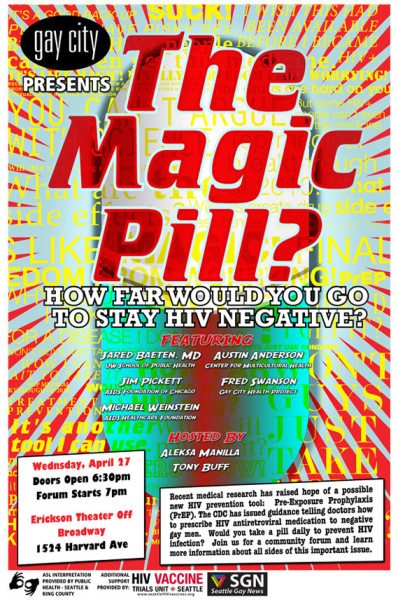
FORUM: The Magic Pill - How far would you go to stay HIV negative?

If you are in Seattle, please make it a point to attend this forum Wednesday, April 27 on the potential promises, and possible perils, of using HIV meds for prevention...


[If an item is not written by an IRMA member, it should not be construed that IRMA has taken a position on the article's content, whether in support or in opposition.]

Tuesday, April 5, 2011

C. Everett Koop: The Early Days of AIDS, As I Remember Them

via Forum for Collaborative HIV Research, by C. Everett Koop

In early 1981, when I was designated as surgeon general, I had never heard about AIDS. No one had heard about AIDS, and the handful of scientists who knew about immunodeficiency didn't even know what to call it, much less what it really was. AIDS entered the consciousness of the public health service quietly, gradually, and without fanfare.

Read the rest.


[If an item is not written by an IRMA member, it should not be construed that IRMA has taken a position on the article's content, whether in support or in opposition.]

Bringing Up The Rear


Via salon.com, by Tracy Clark-Flory

It's no secret that more Americans are having anal sex than ever before: A study published last year in the Journal of Sexual Medicine found that more than 45 percent of women in their late 20s had tried anal sex.

On the flip side, women rarely get the opportunity to be penetrators. Virginia Vitzthum exquisitely described the appeal of taking on the male role in a piece for Salon back in 1999 -- before we even called it "pegging"
"In a way I'd never understood those words before, he was mine. The knowledge I could really hurt this person by being less than careful made me feel responsible, protective. The vulnerability appalled me at the same time; it was vaguely disgusting that he would let someone do this to him. Mixed in with the disgust was possessiveness. The thought of anyone else penetrating him seemed revolting. These observations clicked into place in quick succession; I felt like a projector being loaded with slides of maleness, of male seeing."
But, taboos change, and so do the cultural meanings of particular sexual acts. Just as the gay community has long debated the politics of being a top or a bottom, the hetero world is slowly catching up -or, um, bringing up the rear. As Pulley puts it, "We only have so many orifices. You'd think we'd all be itching to take advantage of them all, right?"

Read the rest

[If an item is not written by an IRMA member, it should not be construed that IRMA has taken a position on the article's content, whether in support or in opposition.]

Monday, April 4, 2011

More Teen Virgins? Not So Fast

Via RHrealitycheck.org, by Martha Kempner

In 2006–2008, 29 percent of females and 27 percent of males ages 15 to 24 reported that they had never had sexual contact with another person. This was a small but statistically significant change from 2002 when it was 22 percent for both males and females.

Many teens are making responsible decisions when it comes to their sexual behavior; they delay sex, have fewer partners, and use contraception. And yet, we adults give them so little credit for behaving, in many ways, better than us.

AND THE SURVEY SAYS…

Traditionally, when thinking about sex and surveying individuals about their behavior, we have concentrated on penile-vaginal intercourse. This focus makes some sense from a public health perspective as it is the only behavior that can lead to both pregnancy and STDs. That said, other behaviors certainly carry a risk of STDs, and, the focus on vaginal sex by nature excludes all same-sex behavior. Still, I sense that the primary reason for this focus is something different—a societal understanding (however, inaccurate, incomplete, and exclusionary) that only penile-vaginal sex is sex.

There are lots of different theories about why the percentages of young people who had vaginal intercourse dropped during those years. Some argue that this is when teens started becoming highly aware of the risk of HIV and that a life-threatening STD was a game changer for teenagers.

Others credit sexuality education while still others undoubtedly credit abstinence-only-until-marriage programs. One mother of a teenager jokingly argued it was all because of video games, "if teens are really logging 30 hours a week of screen time, when would they possibly have time to have sex?" We may never really know but it is worth trying to understand as the numbers seem to have leveled out in recent years.


Read the full story
 
[If an item is not written by an IRMA member, it should not be construed that IRMA has taken a position on the article's content, whether in support or in opposition.]

Fearing No Evil

Via Poz, by Regan Hofmann with Oriol R. Gutierrez Jr.

David Kuria works for the Gay and Lesbian Coalition of Kenya where he risks his life daily to provide safe sanctuary and advocacy for the rights of lesbian, gay, bisexual and transgender people in Africa and around the world.

Now, he is running for Kenya’s Senate. A basic tenet of his work is showing that a global push for gay rights helps bolster the fight against HIV. His dream? A day when no LGBT person has to choose between being openly gay—or being killed.

In October 2009, David Bahati, a member of Uganda’s parliament, proposed an “Anti-Homosexuality Bill” (a.k.a. the “kill the gays bill”). It was an attempt to legalize a phenomenon spreading around the world: hate crimes against gay people.

Homosexuality is currently illegal in Uganda (and can result in up to a 14-year jail sentence); Bahati’s proposed bill intensifies the criminalization of homosexuality by introducing the death penalty for people who have previous convictions, are HIV positive, or engage in same-sex acts with people younger than 18. The bill also includes provisions for Ugandans who engage in same-sex relations outside the country—people can be sent back to Uganda for punishment.

Not that there are many safe places to go; laws against same-sex relations exist in nearly 80 countries. Finally, the bill outlines penalties for individuals, companies, media organizations or nongovernmental organizations that support LGBT rights. (As in, if you know your neighbor’s gay and don’t say so, you can get into huge trouble yourself.) It engenders nothing short of a witch hunt.

Read the rest

[If an item is not written by an IRMA member, it should not be construed that IRMA has taken a position on the article's content, whether in support or in opposition.]

Is being an HIV Gay a punishment from God?

Via bulawayo24.com, by Yngve Sjolund

In 2000, an ex-partner accused Adam of infecting him with HIV. He went to Adam’s employers and told them that he had infected him with HIV. Adam was forced to go for an HIV test by his employers which came back showing that he was HIV positive.

Adam remembers: “I felt kind of betrayed that my employers were falling for the blackmail. I had broken up with this person – and so he said I infected him with HIV because he wanted me to give him money and food, because I had a job. He wanted support from me.”

Today Adam (38), living in Soweto, considers himself as a self-identified black gay man and explains: “I always believed that when a person is born they are born for a reason, and they are born with different sexual orientations. There are straight people and there are gay people. Especially amongst the gay population in the black community people will say it is a foreign thing to be gay. They will say it is a white man’s disease, and as our Zimbabwean President will say, they are ‘worse than pigs and dogs’.

Adam is determined to make a change and sees a way forward for his peers: “I think people should embrace who they are. I personally feel that their conscience should guide them. If we look at culture, culture has its own imbalances, and as a gay and a Christian man I believe God created everybody differently, for a purpose. God did not make a mistake creating me as a gay person. And I don’t believe it is the work of the devil that somebody sleeps with the same sex. God created it that way. And he made me that – he is the one that created me as a man and gave me the feelings to be gay and have feelings for other men.”

Many people today still believe that being gay and contracting HIV is a “punishment from God”, but Adam explains that it is actually more a case of being lucky or unlucky. “I personally believe HIV has exposed me to so many things – I was lucky to get HIV. And because I have had bad publicity about me which I would not like to discuss. You get HIV for a variety of reasons. It is not a punishment.

It is just like another disease, like you can get cancer. Some people don’t even go around saying ‘I want cancer’ or ‘I want sugar diabetes.’ It is unfortunate that HIV is stigmatised to sex and people will think that a person has to be a pervert to have sex to get HIV. But it is just unfortunate.”

Read the rest

[If an item is not written by an IRMA member, it should not be construed that IRMA has taken a position on the article's content, whether in support or in opposition.]

African Girls Getting World Bank Cash Deters Sex With 'Sugar Daddies'


Via Bloomberg, by Simon Clark

Young women in sub-Saharan Africa have HIV infection rates up to three times higher than their male peers, largely because of relationships with older "sugar daddies" who give them money in exchange for sex.

The phenomenon contributes significantly to HIV's spread, said Ester Etkin of loveLife, South Africa's largest anti-AIDS group.

A World Bank study in Malawi examined cash incentives among approximately 3,800 females ages 13-22. One group received roughly $10 a month and payment for school fees if they regularly attended class, while the control received no incentives. HIV infection rates at 18-month follow-up were 60 percent lower among girls who were given cash: 1.2 percent, compared with 3 percent. The study also showed a delay in the start of sexual activity among beneficiaries and a decline in the number of partners among those who were sexually active.

Though the study's results are being assessed by a peer-reviewed journal, plans are underway to repeat the experiment elsewhere in Africa, said Mayra Buvinic, director of gender and development at the World Bank. "The potential could be huge to reduce HIV rates in teenage girls," she said.

But some experts question whether cash payouts are an appropriate strategy. "We could end up creating an environment of dependency that cannot be sustained," warned Peter Lamptey, a Family Health International physician practicing in Ghana. "Paying people to influence their sexual behavior won't solve the wider problems of abuse, esteem, neglect and inequality that cause them to get HIV," said Sophie Harman, a senior lecturer at London's City University who has studied World Bank AIDS policies.

Read the rest
 
[If an item is not written by an IRMA member, it should not be construed that IRMA has taken a position on the article's content, whether in support or in opposition.]

PrEP: A Possible Approval Like No Other

Via Poz, by Tim Horn

The AIDS Healthcare Foundation began a paid advertisement campaign urging Gilead Sciences to refrain from seeking approval from the U.S. Food and Drug Administration for Truvada for use of the combination tablet as HIV prevention, in an approach known as pre-exposure prophylaxis, or PrEP.

The ads were met by an outcry from the community. One prominent organization, the HIV Prevention Justice Alliance, issued a sign-on letter , dated March 16, urging the FDA "to examine the study results of PrEP rather than playing to speculation and fear."

While I agree that PrEP should be considered as an option in the HIV prevention toolkit and would ultimately support an effort by Gilead to expand Truvada's labeling to include PrEP--should the company petition the FDA for approval--I am also of the mind that a green light from the FDA should not be met with the rush-to-treatment that typically follows approval of a drug.

Given how little we know about the safe application of PrEP in a real-world setting--read: outside of a clinical trial--not to mention the expense of a comprehensive prevention program that includes PrEP, I think more feasibility studies need to take place before we consider a widespread HIV prevention program involving PrEP.

Here's what we do know: PrEP is effective in one population of at-risk individuals: men who have sex with men (MSM). The iPrEx clinical trial, sponsored by the National Institute of Allergy and Infection Diseases (NIAID) of the U.S. National Institutes of Health (NIH) and co-funded by the Bill & Melinda Gates Foundation, involved a large sample size (approximately 2,500) of MSMs. The study, which had sound design and statistical analysis, proved Truvada use resulted in significantly fewer infections compared with those using a placebo.

Read the rest

[If an item is not written by an IRMA member, it should not be construed that IRMA has taken a position on the article's content, whether in support or in opposition.]

Saturday, April 2, 2011

New recommendations to reach 2015 goals for AIDS response

Via unaids.org

Thirty years into the AIDS epidemic, investments in the AIDS response are yielding results, according to a new report released today by United Nations Secretary-General Ban Ki-moon.

Titled Uniting for universal access: towards zero new HIV infections, zero discrimination and zero AIDS-related deaths, the report highlights that the global rate of new HIV infections is declining, treatment access is expanding and the world has made significant strides in reducing HIV transmission from mother to child.

Between 2001 and 2009, the rate of new HIV infections in 33 countries—including 22 in sub-Saharan Africa—fell by at least 25%. By the end of 2010, more than 6 million people were on antiretroviral treatment in low- and middle-income countries. And for the first time, in 2009, global coverage of services to prevent mother-to-child transmission of HIV exceeded 50%.
 
“World leaders have a unique opportunity at this critical moment to evaluate achievements and gaps in the global AIDS response,” said Secretary-General Ban Ki-moon at the press briefing in the Kenyan capital. “We must take bold decisions that will dramatically transform the AIDS response and help us move towards an HIV-free generation.”  
 
“Thirty years into the epidemic, it is imperative for us to re-energise the response today for success in the years ahead,” said UNAIDS Executive Director Michel Sidibé, who joined Mr Ban for the launch of the report. “Gains in HIV prevention and antiretroviral treatment are significant, but we need to do more to stop people from becoming infected—an HIV prevention revolution is needed now more than ever.”

Mobilizing for impact  In the report there are five recommendations made by the UN Secretary-General to strengthen the AIDS response:
  • Harness the energy of young people for an HIV prevention revolution;
  • Revitalize the push towards achieving universal access to HIV prevention, treatment, care and support by 2015; 
  • Work with countries to make HIV programmes more cost effective, efficient and sustainable;
  • Promote the health, human rights and dignity of women and girls; and Ensure mutual accountability in the AIDS response to translate commitments into action.

Read the full report

[If an item is not written by an IRMA member, it should not be construed that IRMA has taken a position on the article's content, whether in support or in opposition.]

Related Posts Plugin for WordPress, Blogger...