Via PlusNews
The Ugandan government will begin a nationwide male circumcision programme in July as part of its HIV prevention strategy, a senior government official has said.
"We now have a national vision on how to move forward, and a government policy and communication strategy will be launched in July," said Dr Alex Opio, assistant commissioner for health services in the Ministry of Health.
For more click here.
Wednesday, June 30, 2010
The Impact of HIV and High-risk Behaviours on the Wives of Married Men Who Have Sex with Men and Injection Drug Users
Via Journal of the International AIDS Society, by Sunil S Solomon1, Shruti H Mehta, Amanda Latimore, Aylur K Srikrishnan and David D Celentano
Background
HIV/AIDS in India disproportionately affects women, not by their own risks, but by those of their partners, generally their spouses. We address two marginalized populations at elevated risk of acquiring HIV: women who are married to men who also have sex with men (MSM) and wives of injection drug users (IDUs).
Methods
We used a combination of focus groups (qualitative) and structured surveys (quantitative) to identify the risks that high-risk men pose to their low-risk wives and/or sexual partners. Married MSM were identified using respondent-driven recruitment in Tamil Nadu, India, and were interviewed by trainer assessors. A sample of wives of injection drug users in Chennai were recruited from men enrolled in a cohort study of the epidemiology of drug use among IDUs in Chennai, and completed a face-to-face survey. Focus groups were held with all groups of study participants, and the outcomes transcribed and analyzed for major themes on family, HIV and issues related to stigma, discrimination and disclosure.
Results
Using mixed-methods research, married MSM are shown to not disclose their sexual practices to their wives, whether due to internalized homophobia, fear of stigma and discrimination, personal embarrassment or changing sexual mores. Married MSM in India largely follow the prevailing norm of marriage to the opposite sex and having a child to satisfy social pressures. Male IDUs cannot hide their drug use as easily as married MSM, but they also avoid disclosure. The majority of their wives learn of their drug-using behaviour only after they are married, making them generally helpless to protect themselves. Fear of poverty and negative influences on children were the major impacts associated with continuing drug use.
Conclusions
We propose a research and prevention agenda to address the HIV risks encountered by families of high-risk men in the Indian and other low- and middle-income country contexts.
For the full study click here.
Background
HIV/AIDS in India disproportionately affects women, not by their own risks, but by those of their partners, generally their spouses. We address two marginalized populations at elevated risk of acquiring HIV: women who are married to men who also have sex with men (MSM) and wives of injection drug users (IDUs).
Methods
We used a combination of focus groups (qualitative) and structured surveys (quantitative) to identify the risks that high-risk men pose to their low-risk wives and/or sexual partners. Married MSM were identified using respondent-driven recruitment in Tamil Nadu, India, and were interviewed by trainer assessors. A sample of wives of injection drug users in Chennai were recruited from men enrolled in a cohort study of the epidemiology of drug use among IDUs in Chennai, and completed a face-to-face survey. Focus groups were held with all groups of study participants, and the outcomes transcribed and analyzed for major themes on family, HIV and issues related to stigma, discrimination and disclosure.
Results
Using mixed-methods research, married MSM are shown to not disclose their sexual practices to their wives, whether due to internalized homophobia, fear of stigma and discrimination, personal embarrassment or changing sexual mores. Married MSM in India largely follow the prevailing norm of marriage to the opposite sex and having a child to satisfy social pressures. Male IDUs cannot hide their drug use as easily as married MSM, but they also avoid disclosure. The majority of their wives learn of their drug-using behaviour only after they are married, making them generally helpless to protect themselves. Fear of poverty and negative influences on children were the major impacts associated with continuing drug use.
Conclusions
We propose a research and prevention agenda to address the HIV risks encountered by families of high-risk men in the Indian and other low- and middle-income country contexts.
For the full study click here.
Labels:
HIV transmission,
HIV/AIDS,
India,
injection drug use,
MSM,
women
Tuesday, June 29, 2010
IRMA — They just rock the rump
A sweet little ditty for ole IRMA
Anne Davis (pictured at right), featured as a Friendly Rectal Microbicide Advocate in 2008, felt IRMA deserved a gift at the Microbicides 2010 conference, a ditty to capture our collective intentions, hope and energy. A sound studio, Imagine Audio Media which she’s worked with for years kindly produced the music to accompany her lyrics as their gift to IRMA. On recording day, when they didn’t have the singer they thought they would, she also did the vocals (first time ever). “Susan Boyle I am not," said Anne, "but I am so appreciative of the work IRMA does, I figured I would try my best.”
The song was featured at the conference reception where IRMA's new report - "From Promise to Product: Advancing Rectal Microbicide Research and Advocacy" - was launched. You can listen to it here.
The lyrics are:
IRMA — They just rock the rump.
IRMA — They’ve got the jump.
IRMA — From a crow’s nest perch.
IRMA — Advocating research!
IRMA — They’ve got the jump.
IRMA — From a crow’s nest perch.
IRMA — Advocating research!
For more pictures from the reception, and the rest of the M2010 conference, click here.
Monday, June 28, 2010
HIV transmission risk during anal sex 18 times higher than during vaginal sex
via Aidsmap, by Roger Pebody
The risk of HIV transmission during anal intercourse may be around 18 times greater than during vaginal intercourse, according to the results of a meta-analysis published online ahead of print in the International Journal of Epidemiology.
Moreover, as well as this empirical work the researchers from Imperial College and the London School of Hygiene and Tropical Medicine carried out a modelling exercise to estimate the impact that HIV treatment has on infectiousness during anal intercourse. They estimate that the risk of transmission from a man with suppressed viral load may be reduced by as much as 99.9%.
Anal intercourse drives the HIV epidemic amongst gay and bisexual men. Moreover a substantial proportion of heterosexuals have anal sex but tend to use condoms less frequently than for vaginal sex, and this may contribute to heterosexual epidemics in sub-Saharan Africa and elsewhere.
Rebecca Baggaley and colleagues conducted a systematic review and meta-analysis (an analysis of all the medical research that meets predefined requirements) of the risk of HIV transmission during unprotected anal intercourse. The same authors have already conducted similar reviews of the transmission risk during vaginal sex and oral sex.
Despite the importance of the topic, only 16 studies were judged to be relevant enough to include in the review. While 12 were conducted with gay or bisexual men, others collected data on heterosexuals who frequently had anal intercourse. All studies were from Europe or North America.
Read the rest.
The risk of HIV transmission during anal intercourse may be around 18 times greater than during vaginal intercourse, according to the results of a meta-analysis published online ahead of print in the International Journal of Epidemiology.
Moreover, as well as this empirical work the researchers from Imperial College and the London School of Hygiene and Tropical Medicine carried out a modelling exercise to estimate the impact that HIV treatment has on infectiousness during anal intercourse. They estimate that the risk of transmission from a man with suppressed viral load may be reduced by as much as 99.9%.
Anal intercourse drives the HIV epidemic amongst gay and bisexual men. Moreover a substantial proportion of heterosexuals have anal sex but tend to use condoms less frequently than for vaginal sex, and this may contribute to heterosexual epidemics in sub-Saharan Africa and elsewhere.
Rebecca Baggaley and colleagues conducted a systematic review and meta-analysis (an analysis of all the medical research that meets predefined requirements) of the risk of HIV transmission during unprotected anal intercourse. The same authors have already conducted similar reviews of the transmission risk during vaginal sex and oral sex.
Despite the importance of the topic, only 16 studies were judged to be relevant enough to include in the review. While 12 were conducted with gay or bisexual men, others collected data on heterosexuals who frequently had anal intercourse. All studies were from Europe or North America.
Read the rest.
Labels:
anal sex,
gay men,
heterosexual epidemic,
HIV transmission
Kenya: Fresh Challenges in HIV Battle
via The Latest Kenyan News
Jimmy is 40 years old and has been married for four years. He has three children.
To the outside world his is the average Kenyan family. But he has a secret that threatens the very core of his family’s existence.
He is gay.
“I love my wife but I have sexual relations with men. I have had three boyfriends since I got married but my wife doesn’t know anything about that. I currently have a boyfriend with whom I’m in a serious relationship. We meet in his house, hotels or any other place away from prying eyes,” he says.

Jimmy tells me that he has always had a liking for men as opposed to women. I ask why he got married. Did he do it to please his family or perhaps hide his sexual orientation?
“I did it because I love this woman. I have known her since childhood. We lived in the same neighbourhood, schooled together and yeah… I love her although at times I have sex with men,” he repeats softly.
Read the rest.
I love my wife but I have sexual relations with men.
Jimmy is 40 years old and has been married for four years. He has three children.
To the outside world his is the average Kenyan family. But he has a secret that threatens the very core of his family’s existence.
He is gay.
“I love my wife but I have sexual relations with men. I have had three boyfriends since I got married but my wife doesn’t know anything about that. I currently have a boyfriend with whom I’m in a serious relationship. We meet in his house, hotels or any other place away from prying eyes,” he says.
Jimmy tells me that he has always had a liking for men as opposed to women. I ask why he got married. Did he do it to please his family or perhaps hide his sexual orientation?
“I did it because I love this woman. I have known her since childhood. We lived in the same neighbourhood, schooled together and yeah… I love her although at times I have sex with men,” he repeats softly.
Read the rest.
Labels:
Africa,
gay men,
homophobia,
homosexuality,
Kenya,
MSM,
sex work,
stigma
Saturday, June 26, 2010
Silence Still Equals Death
DO ASK. DO TELL.
via Huffington Post, by Jim Pickett
As a gay man living with HIV, I am feeling really conflicted during this month of LGBT Pride. I know I am supposed to be awash in warm, fuzzy feelings of pride and joy, and that I should have lots of parties and the big parade on my agenda.
But you know what? Not so much.
While curmudgeon is becoming more and more an apt description of yours truly, and while I applaud the community's herculean efforts around important issues such as marriage equality and repealing "Don't Ask, Don't Tell," I have noticed over the last several years that one issue in particular gets a collective "ho, hum, been there, done that." And that issue is HIV.
You only have to say the letters H-I-V or A-I-D-S and you get a yawn and an eye roll -- all of a sudden you are standing alone at the vegetable dip. The epidemic has been with us for 29 years now -- it isn't hard to see why people are just plain over it and want to move on. But you know what? That is a luxury none of us can afford, sorry.
Read the rest.
via Huffington Post, by Jim Pickett
As a gay man living with HIV, I am feeling really conflicted during this month of LGBT Pride. I know I am supposed to be awash in warm, fuzzy feelings of pride and joy, and that I should have lots of parties and the big parade on my agenda.
But you know what? Not so much.
While curmudgeon is becoming more and more an apt description of yours truly, and while I applaud the community's herculean efforts around important issues such as marriage equality and repealing "Don't Ask, Don't Tell," I have noticed over the last several years that one issue in particular gets a collective "ho, hum, been there, done that." And that issue is HIV.
You only have to say the letters H-I-V or A-I-D-S and you get a yawn and an eye roll -- all of a sudden you are standing alone at the vegetable dip. The epidemic has been with us for 29 years now -- it isn't hard to see why people are just plain over it and want to move on. But you know what? That is a luxury none of us can afford, sorry.
Read the rest.
Zimbabwe - No room for gay rights in new constitution
via Radio VOP
Didymus Mutasa, a powerful figure in President Robert Mugabe’s Zanu PF political party, said his party will see to it that homosexuality is outlawed in the new constitution and that stiff penalties will be put in place for those who engage in the practice.
Read the rest.
Didymus Mutasa, a powerful figure in President Robert Mugabe’s Zanu PF political party, said his party will see to it that homosexuality is outlawed in the new constitution and that stiff penalties will be put in place for those who engage in the practice.
Read the rest.
Labels:
Africa,
criminalization,
homophobia,
homosexuality,
human rights,
LGBT rights,
Zimbabwe
Friday, June 25, 2010
Reducing Numbers of Sex Partners
via AIDS and Behavior
Multiple and overlapping sexual relationships, commonly referred to as sexual concurrency, are believed by some to account for the rapid spread of HIV infection in sub-Saharan Africa. Research shows that concurrent sex partners are prevalent in several populations hit hardest by AIDS including gay communities, commercial sex workers, and some countries of sub-Saharan Africa. Recent research shows sexual concurrency may be playing a role in resurgent HIV infections among gay and bisexual men in North America and emerging HIV epidemics among men who have sex with men in Asia. In addition to epidemiological trends, the potential impact of concurrent sex partners on the spread of HIV transmission is biologically grounded. Sexual concurrency is thought to afford the rapid turnover of HIV when multiple partners are exposed to the virus during the brief and highly infectious period of acute infection. Mathematical models suggest that concurrent sex partners during acute HIV infection may be a driving force in heterosexually transmitted HIV epidemics of southern Africa. Other known and unknown co-factors for HIV transmission also interact with sexual concurrency to propel HIV epidemics. While stimulating great interest, the existing empirical research on the role of sexual concurrency in HIV epidemics is not definitive. In the February 2010 issue of AIDS and Behavior (volume 14, Number 1) Lurie and Rosenthal pointed out that sexual concurrency has not yet been empirically shown to increase HIV transmission beyond what would be expected from multiple sex partnerships that do not overlap in time.
For the full article click here.
Multiple and overlapping sexual relationships, commonly referred to as sexual concurrency, are believed by some to account for the rapid spread of HIV infection in sub-Saharan Africa. Research shows that concurrent sex partners are prevalent in several populations hit hardest by AIDS including gay communities, commercial sex workers, and some countries of sub-Saharan Africa. Recent research shows sexual concurrency may be playing a role in resurgent HIV infections among gay and bisexual men in North America and emerging HIV epidemics among men who have sex with men in Asia. In addition to epidemiological trends, the potential impact of concurrent sex partners on the spread of HIV transmission is biologically grounded. Sexual concurrency is thought to afford the rapid turnover of HIV when multiple partners are exposed to the virus during the brief and highly infectious period of acute infection. Mathematical models suggest that concurrent sex partners during acute HIV infection may be a driving force in heterosexually transmitted HIV epidemics of southern Africa. Other known and unknown co-factors for HIV transmission also interact with sexual concurrency to propel HIV epidemics. While stimulating great interest, the existing empirical research on the role of sexual concurrency in HIV epidemics is not definitive. In the February 2010 issue of AIDS and Behavior (volume 14, Number 1) Lurie and Rosenthal pointed out that sexual concurrency has not yet been empirically shown to increase HIV transmission beyond what would be expected from multiple sex partnerships that do not overlap in time.
For the full article click here.
Thursday, June 24, 2010
Clinical Trials Investigate Potential Of Therapeutic Vaccines For People With HIV
via The AIDS Beacon
Clinical trials for several types of therapeutic HIV vaccines are currently ongoing or recruiting participants. Therapeutic HIV vaccines work by enhancing the body's natural immune response, helping to control HIV in people already infected with the virus. This is in contrast to preventative vaccines, which are used in HIV-negative individuals to prevent infection. Researchers hope therapeutic vaccines will decrease dependence on antiretroviral drugs, which must be taken for life and often have serious side effects.
"A vaccine that enhanced the body's ability to control HIV and delayed or decreased the dependence on anti-HIV drugs would be a major breakthrough for HIV treatment," said Dr. Melanie Thompson, a lead investigator of one of the HIV vaccine trials.
For more click here.
Clinical trials for several types of therapeutic HIV vaccines are currently ongoing or recruiting participants. Therapeutic HIV vaccines work by enhancing the body's natural immune response, helping to control HIV in people already infected with the virus. This is in contrast to preventative vaccines, which are used in HIV-negative individuals to prevent infection. Researchers hope therapeutic vaccines will decrease dependence on antiretroviral drugs, which must be taken for life and often have serious side effects.
"A vaccine that enhanced the body's ability to control HIV and delayed or decreased the dependence on anti-HIV drugs would be a major breakthrough for HIV treatment," said Dr. Melanie Thompson, a lead investigator of one of the HIV vaccine trials.
For more click here.
Gay Blood Ban Controversy: IRMA Chair Weighs In - FOX News Chicago
[The U.S. Department of Health and Human Services has decided to continue the controversial policy of banning gay men from donating blood. We talked live with Jim Pickett of the AIDS Foundation of Chicago.]
Wednesday, June 23, 2010
Over 200 Circumcised in Bid to Fight HIV-Aids
via The Sowetan
More than 200 men and boys had themselves circumcised in the first government-supported circumcision camp at Eshowe, northern KwaZulu-Natal, at the weekend.
The provincial department of health and several non- governmental organisations - the Reproductive Health Research Unit, Mother Adolescent and Child Health and John Hopkins University supported by the United States Government's Presidential Emergency Plan for Aids Relief - held the first male circumcision camp at Eshowe's FET College.
For more click here.
More than 200 men and boys had themselves circumcised in the first government-supported circumcision camp at Eshowe, northern KwaZulu-Natal, at the weekend.
The provincial department of health and several non- governmental organisations - the Reproductive Health Research Unit, Mother Adolescent and Child Health and John Hopkins University supported by the United States Government's Presidential Emergency Plan for Aids Relief - held the first male circumcision camp at Eshowe's FET College.
For more click here.
Kenya Holds Major HIV/ AIDS Forum
via All Voices
The Fourth International Conference on Peer Education, Sexuality, HIV and Aids opens at the Kenya capital city of Nairobi from this Wednesday at a time when the country is making significant progress in providing healthcare for all.
The meeting, which will be attended by Peer Educators, trainers , Health Workers, NGOs and Facilitators will be held under the theme: HIV Prevention : Covering New Grounds is organized by national Organization of Peer Educators (NOPE). The meeting comes at time when NOPE is celebrating its tenth anniversary and enjoying the international mandate which was effected in July 2007. The organization develops and market wide array of professional and technical services aimed at addressing health and social needs.
For the full story click here.
The Fourth International Conference on Peer Education, Sexuality, HIV and Aids opens at the Kenya capital city of Nairobi from this Wednesday at a time when the country is making significant progress in providing healthcare for all.
The meeting, which will be attended by Peer Educators, trainers , Health Workers, NGOs and Facilitators will be held under the theme: HIV Prevention : Covering New Grounds is organized by national Organization of Peer Educators (NOPE). The meeting comes at time when NOPE is celebrating its tenth anniversary and enjoying the international mandate which was effected in July 2007. The organization develops and market wide array of professional and technical services aimed at addressing health and social needs.
For the full story click here.
Is this the Start of a Backlash Against Circumcision?
via The New Zealand Herald
The Dutch have always had liberal views on sex. They led the world in developing open and frank sex education and were rewarded with one of the lowest rates of teenage pregnancy. But their tolerant nature has now hit the brick wall of religious conviction.
The Royal Dutch Medical Association has officially adopted the view that the circumcision of underage boys is medically unnecessary and violates their human rights.
For the full story click here.
The Dutch have always had liberal views on sex. They led the world in developing open and frank sex education and were rewarded with one of the lowest rates of teenage pregnancy. But their tolerant nature has now hit the brick wall of religious conviction.
The Royal Dutch Medical Association has officially adopted the view that the circumcision of underage boys is medically unnecessary and violates their human rights.
For the full story click here.
Tuesday, June 22, 2010
Why Rectal Douches May Be Acceptable Rectal-Microbicide Delivery Vehicles for Men Who Have Sex with Men
via CDC
A study by IRMA Steering Committee members Alex Carballo-Dieguez, Ken Mayer and colleagues:
"Why Rectal Douches May Be Acceptable Rectal-Microbicide Delivery Vehicles for Men Who Have Sex with Men" Sexually Transmitted Diseases (04..10):: Alex Carballo-Diéguez; José Bauermeister; Ana Ventuneac; Curtis Dolezal; Kenneth Mayer
The authors undertook the current study to explore the age of onset of rectal douching among men who have sex with men (MSM) and the reasons for continuing to douche, as well as to consider whether rectal douches containing microbial agents would be acceptable for men at risk of HIV infection. In stage one of the research, the team used qualitative methods to assess douching behavior in a sample of 20 MSM. The researchers then developed a structured questionnaire that was administered to 105 MSM in stage two.
Despite being advised not to do so, more than half of the participants who completed stage one douched during the trial. Of the 105 HIV-negative MSM in stage two, 51 percent reported rectal douching in the previous six months; 47 percent reported douching before anal intercourse; and 25 percent reporting doing so after anal sex. Most participants reported douching frequently or always. Men reported douching on average about two hours before anal intercourse or one hour after. Average age of beginning to douche was late 20s. Most respondents said they douched because they wanted to be clean, or because their partners encouraged them to do so. In addition, some men thought post-intercourse douching could prevent STDs.
"Rectal douching appears to be a popular behavior among men who have receptive anal intercourse," the authors concluded. "It is necessary to identify harmless douches. If [HIV] or [STD] preventive douches can be developed, rectal douching before or following sexual intercourse could become an important additional prevention tool. To reshape an existing behavior to which some men strongly adhere, like douching, by suggesting use of one type douche over another may be more successful than trying to convince MSM to engage in behaviors they never practiced before or those they resist (e.g., condom use)."
Original abstract:
Carballo-Diéguez A, Bauermeister J, Ventuneac A, Dolezal C, Mayer K. “Why Rectal Douches May Be Acceptable Rectal-Microbicide Delivery Vehicles for Men Who Have Sex With Men,” Sexually Transmitted Diseases: April 2010 - Volume 37 - Issue 4 - pp 228-233.
Rationale: To explore age of onset of rectal douching among men who have sex with men (MSM) and reasons leading to and maintaining douching behavior; and to consider whether rectal douches containing microbicidal agents might be acceptable for men at HIV risk.
Methods: In stage 1, we used qualitative methods to explore douching behavior in a sample of 20 MSM. Subsequently, we developed a structured questionnaire that was administered in stage 2 to 105 MSM.
Results: More than half of participants who completed stage 1 douched during the trial despite having been advised not to do so. Of the 105 human immunodeficiency virus uninfected participants in stage 2, 51% reported using rectal douches in the prior 6 months; 47% douched before and 25% after anal intercourse. Most participants reported douching frequently or always. On average, men reported douching about 2 hours before or 1 hour following intercourse. Average age of onset was late 20s. Most men who douched wanted to be clean or were encouraged to douche by their partners. Some men thought douching after sex could prevent sexually transmitted infections.
Conclusion: Rectal douching appears to be a popular behavior among men who have receptive anal intercourse. It is necessary to identify harmless douches. If human immunodeficiency virus or sexually transmitted infections preventive douches can be developed, rectal douching before or following sexual intercourse could become an important additional prevention tool. To reshape an existing behavior to which some men strongly adhere, like douching, by suggesting use of 1 type of douche over another may be more successful than trying to convince MSM to engage in behaviors they never practiced before or those they resist (e.g., condom use).
For the full study click here.
A study by IRMA Steering Committee members Alex Carballo-Dieguez, Ken Mayer and colleagues:
"Why Rectal Douches May Be Acceptable Rectal-Microbicide Delivery Vehicles for Men Who Have Sex with Men" Sexually Transmitted Diseases (04..10):: Alex Carballo-Diéguez; José Bauermeister; Ana Ventuneac; Curtis Dolezal; Kenneth Mayer
The authors undertook the current study to explore the age of onset of rectal douching among men who have sex with men (MSM) and the reasons for continuing to douche, as well as to consider whether rectal douches containing microbial agents would be acceptable for men at risk of HIV infection. In stage one of the research, the team used qualitative methods to assess douching behavior in a sample of 20 MSM. The researchers then developed a structured questionnaire that was administered to 105 MSM in stage two.
Despite being advised not to do so, more than half of the participants who completed stage one douched during the trial. Of the 105 HIV-negative MSM in stage two, 51 percent reported rectal douching in the previous six months; 47 percent reported douching before anal intercourse; and 25 percent reporting doing so after anal sex. Most participants reported douching frequently or always. Men reported douching on average about two hours before anal intercourse or one hour after. Average age of beginning to douche was late 20s. Most respondents said they douched because they wanted to be clean, or because their partners encouraged them to do so. In addition, some men thought post-intercourse douching could prevent STDs.
"Rectal douching appears to be a popular behavior among men who have receptive anal intercourse," the authors concluded. "It is necessary to identify harmless douches. If [HIV] or [STD] preventive douches can be developed, rectal douching before or following sexual intercourse could become an important additional prevention tool. To reshape an existing behavior to which some men strongly adhere, like douching, by suggesting use of one type douche over another may be more successful than trying to convince MSM to engage in behaviors they never practiced before or those they resist (e.g., condom use)."
Original abstract:
Carballo-Diéguez A, Bauermeister J, Ventuneac A, Dolezal C, Mayer K. “Why Rectal Douches May Be Acceptable Rectal-Microbicide Delivery Vehicles for Men Who Have Sex With Men,” Sexually Transmitted Diseases: April 2010 - Volume 37 - Issue 4 - pp 228-233.
Rationale: To explore age of onset of rectal douching among men who have sex with men (MSM) and reasons leading to and maintaining douching behavior; and to consider whether rectal douches containing microbicidal agents might be acceptable for men at HIV risk.
Methods: In stage 1, we used qualitative methods to explore douching behavior in a sample of 20 MSM. Subsequently, we developed a structured questionnaire that was administered in stage 2 to 105 MSM.
Results: More than half of participants who completed stage 1 douched during the trial despite having been advised not to do so. Of the 105 human immunodeficiency virus uninfected participants in stage 2, 51% reported using rectal douches in the prior 6 months; 47% douched before and 25% after anal intercourse. Most participants reported douching frequently or always. On average, men reported douching about 2 hours before or 1 hour following intercourse. Average age of onset was late 20s. Most men who douched wanted to be clean or were encouraged to douche by their partners. Some men thought douching after sex could prevent sexually transmitted infections.
Conclusion: Rectal douching appears to be a popular behavior among men who have receptive anal intercourse. It is necessary to identify harmless douches. If human immunodeficiency virus or sexually transmitted infections preventive douches can be developed, rectal douching before or following sexual intercourse could become an important additional prevention tool. To reshape an existing behavior to which some men strongly adhere, like douching, by suggesting use of 1 type of douche over another may be more successful than trying to convince MSM to engage in behaviors they never practiced before or those they resist (e.g., condom use).
For the full study click here.
Condom Shortage in Uganda Worries Health Experts
via The New Vision
The low government investment in reproductive health commodities in Uganda has resulted in an acute condom shortage. Contraceptives used in controlling unwanted pregnancies include condoms, injectables, pills, interuterine devices and surgical contraception equipment.
But condoms remain the most popular and cheapest means used to check STDs/ HIV and unwanted pregnancies in Uganda. According to Dr. Moses Muwonge, a reproductive health consultant, Uganda had a stock of 12 million condoms in May. The Government imports about 20 million condoms every month. About 10 million are dispatched by the health ministry every month.
While the previous minimum stock level was six months with 12 months being the maximum, it has since been revised to four and six months, respectively because of the bulkiness of condoms. The shelf-life of condoms is three to five years. The problem, though, is that after manufacturing, condoms are not shipped immediately.
The low government investment in reproductive health commodities in Uganda has resulted in an acute condom shortage. Contraceptives used in controlling unwanted pregnancies include condoms, injectables, pills, interuterine devices and surgical contraception equipment.
But condoms remain the most popular and cheapest means used to check STDs/ HIV and unwanted pregnancies in Uganda. According to Dr. Moses Muwonge, a reproductive health consultant, Uganda had a stock of 12 million condoms in May. The Government imports about 20 million condoms every month. About 10 million are dispatched by the health ministry every month.
While the previous minimum stock level was six months with 12 months being the maximum, it has since been revised to four and six months, respectively because of the bulkiness of condoms. The shelf-life of condoms is three to five years. The problem, though, is that after manufacturing, condoms are not shipped immediately.
South Africa's HIV/AIDS Epidemic May Finally Be Slowing
via PlusNews
South Africa’s HIV/AIDS epidemic may finally be slowing, according to a new study which found a 35 percent decline in the rate of new HIV infections between 2002 and 2008.
Using prevalence data from national HIV surveys conducted in 2002, 2005 and 2008, researchers from South Africa’s Human Sciences Research Council (HSRC) and Imperial College London applied a mathematical method to estimate HIV incidence (rate of new infections).
They found that 1.3 percent of South Africans in the 15-49 age group were newly infected annually between 2005 and 2008, compared to 2 percent in the years 2002-2005. The decline was mostly due to a 60 percent reduction in incidence among young women, aged 15-24.
South Africa’s HIV/AIDS epidemic may finally be slowing, according to a new study which found a 35 percent decline in the rate of new HIV infections between 2002 and 2008.
Using prevalence data from national HIV surveys conducted in 2002, 2005 and 2008, researchers from South Africa’s Human Sciences Research Council (HSRC) and Imperial College London applied a mathematical method to estimate HIV incidence (rate of new infections).
They found that 1.3 percent of South Africans in the 15-49 age group were newly infected annually between 2005 and 2008, compared to 2 percent in the years 2002-2005. The decline was mostly due to a 60 percent reduction in incidence among young women, aged 15-24.
Labels:
HIV transmission,
HIV/AIDS,
prevalence,
South Africa
Unprotected Anal Intercourse and Sexually Transmitted Diseases in High-Risk Heterosexual Women
via American Journal of Public Health
Objectives. We examined the association between unprotected anal intercourse and sexually transmitted diseases (STDs) among heterosexual women.
Methods. In 2006 through 2007, women were recruited from high-risk areas in New York City through respondent-driven sampling as part of the National HIV Behavioral Surveillance study. We used multiple logistic regression to determine the relationship between unprotected anal intercourse and HIV infection and past-year STD diagnosis.
Results. Of the 436 women studied, 38% had unprotected anal intercourse in the past year. Unprotected anal intercourse was more likely among those who were aged 30 to 39 years, were homeless, were frequent drug or binge alcohol users, had an incarcerated sexual partner, had sexual partners with whom they exchanged sex for money or drugs, or had more than 5 sexual partners in the past year. In the logistic regression, women who had unprotected anal intercourse were 2.6 times as likely as women who had only unprotected vaginal intercourse and 4.2 times as likely as women who had neither unprotected anal nor unprotected vaginal intercourse to report an STD diagnosis. We found no significant association between unprotected anal intercourse andHIV infection.
Conclusions. Increased screening for history of unprotected anal intercourse and, for those who report recent unprotected anal intercourse, counseling and testing for HIV and STDs would likely reduce STD infections.
For the full study click here.
Labels:
HIV/AIDS,
Infections,
sexual health,
Women's Health
Lankan Gays Want Rights
via Daily Mirror
Sri Lanka’s gay community today demanded equal rights and urged the authorities to emulate India which had last year lifted restrictions on the gay community in New Delhi.
Executive Director of Equal Grounds, Rozanne Flemar Caldera, speaking at a fashion show in Colombo this evening organized by Sri Lanka’s gay community said that people must be treated equally be they gay or straight. Equal Grounds represents the gay community in Sri Lanka and the fashion show held at the Galadari hotel saw both gay and straight people taking to the stage to portray equality. Several prominent personalities, diplomats and others attended the event.
For more clich here.
Sri Lanka’s gay community today demanded equal rights and urged the authorities to emulate India which had last year lifted restrictions on the gay community in New Delhi.
Executive Director of Equal Grounds, Rozanne Flemar Caldera, speaking at a fashion show in Colombo this evening organized by Sri Lanka’s gay community said that people must be treated equally be they gay or straight. Equal Grounds represents the gay community in Sri Lanka and the fashion show held at the Galadari hotel saw both gay and straight people taking to the stage to portray equality. Several prominent personalities, diplomats and others attended the event.
For more clich here.
Dieffenbach - Future Priorities for NIAID’s HIV Prevention Research
via blog.AIDS.gov, by Carl W. Dieffenbach, Ph.D., Director of NIAID's Division of AIDS
[Check out his June 9, 2010 presentation: Restructuring the HIV/AIDS Clinical Trials Networks]
As we begin to discuss the restructuring of NIAID's clinical trials networks, let us first focus on the Institute's HIV prevention research agenda. Developing new biomedical tools that can safely and effectively prevent HIV acquisition and transmission is critical to addressing the global HIV/AIDS pandemic. Currently, we are exploring several promising HIV prevention strategies that, if proven successful, could have a significant impact on reducing the incidence of new infections. These strategies include microbicides — gels, foams, creams, and other formulations designed to prevent sexual transmission of HIV — and pre-exposure prophylaxis (PrEP), attempting to block HIV infection by providing antiretroviral medicines to people who are not infected with HIV but who are at high risk for infection. HIV vaccines are also a major focus of our prevention research efforts, but we will discuss that area specifically in an upcoming blog post.
Vaginally or rectally applied microbicides could potentially provide women and men with a means of protecting themselves against sexually transmitted HIV infection. Non-human primate studies have shown that antiretroviral -based microbicides protect against HIV infection, and these types of products are now being tested in people. Nearly a dozen clinical studies are currently evaluating different microbicide candidates and delivery methods, such as the VOICE trial, which is comparing oral antiretroviral medicines to an antiretroviral-based topical gel for HIV prevention. That study is being conducted by the NIAID-supported Microbicide Trials Network. Future microbicide research efforts will focus on evaluating new products, formulations and routes of administration with the goal of finding a safe and effective microbicide that is reliably used by its intended population.
Read the rest.
And leave comments! Dr. Dieffenbach is asking for input into NIAID's research agenda.
[Check out his June 9, 2010 presentation: Restructuring the HIV/AIDS Clinical Trials Networks]
As we begin to discuss the restructuring of NIAID's clinical trials networks, let us first focus on the Institute's HIV prevention research agenda. Developing new biomedical tools that can safely and effectively prevent HIV acquisition and transmission is critical to addressing the global HIV/AIDS pandemic. Currently, we are exploring several promising HIV prevention strategies that, if proven successful, could have a significant impact on reducing the incidence of new infections. These strategies include microbicides — gels, foams, creams, and other formulations designed to prevent sexual transmission of HIV — and pre-exposure prophylaxis (PrEP), attempting to block HIV infection by providing antiretroviral medicines to people who are not infected with HIV but who are at high risk for infection. HIV vaccines are also a major focus of our prevention research efforts, but we will discuss that area specifically in an upcoming blog post.
Vaginally or rectally applied microbicides could potentially provide women and men with a means of protecting themselves against sexually transmitted HIV infection. Non-human primate studies have shown that antiretroviral -based microbicides protect against HIV infection, and these types of products are now being tested in people. Nearly a dozen clinical studies are currently evaluating different microbicide candidates and delivery methods, such as the VOICE trial, which is comparing oral antiretroviral medicines to an antiretroviral-based topical gel for HIV prevention. That study is being conducted by the NIAID-supported Microbicide Trials Network. Future microbicide research efforts will focus on evaluating new products, formulations and routes of administration with the goal of finding a safe and effective microbicide that is reliably used by its intended population.
Read the rest.
And leave comments! Dr. Dieffenbach is asking for input into NIAID's research agenda.
Saturday, June 19, 2010
Friday, June 18, 2010
Quarter of Swiss gay men using serosorting, strategic position or withdrawal to reduce their HIV risk
Via Aidsmap
Almost two-thirds of gay and bisexual men consistently use condoms with casual partners as a means of HIV prevention, Swiss investigators report in the online edition of the Journal of Acquired Immune Deficiency Syndromes.
However, their research showed that 25% of men used strategies such as serosorting, strategic positioning, and withdrawal before ejaculation to try to reduce the risk of HIV transmission when having unprotected anal intercourse with casual partners.
For the full article click here.
Almost two-thirds of gay and bisexual men consistently use condoms with casual partners as a means of HIV prevention, Swiss investigators report in the online edition of the Journal of Acquired Immune Deficiency Syndromes.
However, their research showed that 25% of men used strategies such as serosorting, strategic positioning, and withdrawal before ejaculation to try to reduce the risk of HIV transmission when having unprotected anal intercourse with casual partners.
For the full article click here.
Activists Demand End to Funding Cuts in Africa
Via PlusNews
AIDS activists are to march on the US Consulate in Johannesburg on 17 June to protest against the deaths they say will result from President Barack Obama's "anti-treatment policies".
The US President's Emergency Plan for AIDS Relief (PEPFAR) has been a major source of funds for AIDS treatment programmes in South Africa and elsewhere on the continent, but began flat-lining its contributions from 2009 and shifting responsibility for the delivery of anti-retroviral treatment (ART) to individual countries.
For the full story click here.
AIDS activists are to march on the US Consulate in Johannesburg on 17 June to protest against the deaths they say will result from President Barack Obama's "anti-treatment policies".
The US President's Emergency Plan for AIDS Relief (PEPFAR) has been a major source of funds for AIDS treatment programmes in South Africa and elsewhere on the continent, but began flat-lining its contributions from 2009 and shifting responsibility for the delivery of anti-retroviral treatment (ART) to individual countries.
For the full story click here.
Thursday, June 17, 2010
Launch of the Global Commission on HIV and the Law
The Global Commission on HIV and the Law launch will take the format of brief statements from participants followed by a moderated Q & A with members of the press.
Venue: Palais des Nations, Press Room 3, Geneva
Date and Time: Thursday, June 24th 2010, 1:45 p.m. – 2:30 p.m.
Participants:
Ms Helen Clark, Administrator, UNDP
Mr Michel Sidibe, Executive Director, UNAIDS
Professor Miriam Were (Kenya), Commissioner, Global Commission on HIV and the Law
Ms Claudia Ahumada (Chile) Coordinator of Women’s Campaign, World AIDS Campaign
Moderator: Dr Mandeep Dhaliwal, UNDP
For more information contact:
Adam Rogers
Geneva
Senior Strategic Communications Advisor
tel. +41 22 917 85 41
adam.rogers@undp.org
Natalie Amar
New York
Secretariat, Global Commission on HIV and the Law
tel. +1 212 906 6168
natalie.amar@undp.org
African Women Begin Test of Vaginal Ring Intended to Kill HIV Virus
via Washington Post by David Brown
The first test of a long-acting vaginal ring loaded with an HIV-preventing drug has begun enrolling women in southern Africa. The new study is the 15th undertaken by the International Partnership for Microbicides, a nonprofit group in Silver Spring that has helped lead the search for a discreet, woman-controlled means of protection.
For the full article click here.
The first test of a long-acting vaginal ring loaded with an HIV-preventing drug has begun enrolling women in southern Africa. The new study is the 15th undertaken by the International Partnership for Microbicides, a nonprofit group in Silver Spring that has helped lead the search for a discreet, woman-controlled means of protection. "This is the one that is most likely to work," Zeda Rosenberg, the head of the organization, said last week at Women Deliver 2010, an international conference on maternal and child health held in Washington.
For the full article click here.
Somali Keeps Her AIDS Secret Despite Wedding Plans
Via WeNews by Fatuma Noor
A Somali woman in Kenya faces an arranged wedding knowing she could infect her husband with HIV-AIDS. She contracted the disease through unsafe anal sex to preserve her virginity. When Sophia confronted her boyfriend about her diagnosis he confessed that he tested positive three months before they became sexually involved.
"I cannot tell anyone about it, not even the closest of my friends," Sophia said, since she is not married and premarital sex goes against her Muslim culture. "My mother would have a heart attack if she knew I was positive."
Sophia (not her real name) is a 20-year-old Somali woman who, though recently having a boyfriend, has been betrothed for most of her life to a Muslim man from another country whom she has never met. The wedding, she thinks, will be in September.
She contracted HIV-AIDS by engaging in anal sex. Like many of her friends, she thought having that type of sex would preserve her virginity for her husband.
For the full article click here.
A Somali woman in Kenya faces an arranged wedding knowing she could infect her husband with HIV-AIDS. She contracted the disease through unsafe anal sex to preserve her virginity. When Sophia confronted her boyfriend about her diagnosis he confessed that he tested positive three months before they became sexually involved.
"I cannot tell anyone about it, not even the closest of my friends," Sophia said, since she is not married and premarital sex goes against her Muslim culture. "My mother would have a heart attack if she knew I was positive."
Sophia (not her real name) is a 20-year-old Somali woman who, though recently having a boyfriend, has been betrothed for most of her life to a Muslim man from another country whom she has never met. The wedding, she thinks, will be in September.
She contracted HIV-AIDS by engaging in anal sex. Like many of her friends, she thought having that type of sex would preserve her virginity for her husband.
For the full article click here.
Wednesday, June 16, 2010
South Africa: Pants Down for Safer Sex
Cape Town men irrespective of their sexual orientation will be baring it all in front of a camera at the: Taking a Risk for Safer Sex exhibition, organized by Health4Men, a non-profit organisation that provides free health care to men, including access to ARV treatment at the Ivan Toms Centre for Men’s Health in Woodstock. The event is a follow-up of last year successful exhibition which rose over R40 000 from auctioning the photographs which were taken. Glenn de Swardt, Psychosocial Director for health4men said that, “the exhibition was so successful that it was decided that it becomes an annual event.”
For more information about the event click here.
Anti-Gay March Could Hamper HIV Interventions in Ghana
via Behind the Mask
A recent march by over a thousand Ghanian Muslims against “the growing activities of gays and lesbians” in this West-African country, could hamper initiatives that target Men having sex with Men (MSM), such as HIV and AIDs interventions, activists have warned.
Mac-Darling Cobbinahof the Centre for Popular Education and Human Rights Ghana, an organisation that also caters for the MSM community said, following a march that went through principal streets of the Metropolis against homosexuality, after an alleged report that close to 60 gays and lesbians from eastern, Ashanti and Central regions of that country were attending a get-together held in Tanokrom.
For the full article click here.
A recent march by over a thousand Ghanian Muslims against “the growing activities of gays and lesbians” in this West-African country, could hamper initiatives that target Men having sex with Men (MSM), such as HIV and AIDs interventions, activists have warned.
Mac-Darling Cobbinahof the Centre for Popular Education and Human Rights Ghana, an organisation that also caters for the MSM community said, following a march that went through principal streets of the Metropolis against homosexuality, after an alleged report that close to 60 gays and lesbians from eastern, Ashanti and Central regions of that country were attending a get-together held in Tanokrom.
For the full article click here.
Pre-cancerous cell changes sometimes 'hidden' in anal warts of gay men
via Aidsmap, by Michael Carter
Cancerous or “high-grade” pre-cancerous cells changes were detected in a high proportion of anal warts surgically removed from gay men, US investigators report in the July 1st edition of Clinical Infectious Diseases.
The investigators believe that their findings could have implications for the management of anal warts.
Read the rest.
Cancerous or “high-grade” pre-cancerous cells changes were detected in a high proportion of anal warts surgically removed from gay men, US investigators report in the July 1st edition of Clinical Infectious Diseases.
The investigators believe that their findings could have implications for the management of anal warts.
Read the rest.
Tuesday, June 15, 2010
Malawi Couple Split Under Homophobic Pressure
via PeterTatchell.net
“The couple had been subjected to many death threats and the government had threatened to re-arrest them if they got back together,” said London-based human rights campaigner, Peter Tatchell, spokesperson for the LGBT rights group OutRage! He supported the couple in prison and campaigned, along with many other people, for their release.
For the full article click here.
“The couple had been subjected to many death threats and the government had threatened to re-arrest them if they got back together,” said London-based human rights campaigner, Peter Tatchell, spokesperson for the LGBT rights group OutRage! He supported the couple in prison and campaigned, along with many other people, for their release.
For the full article click here.
Labels:
Africa,
criminalization,
gay men,
homophobia,
Malawi,
MSM
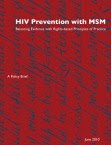
HIV Prevention with MSM: Balancing Evidence with Rights-based Principles of Practice
Check out this new policy brief - HIV Prevention with MSM: Balancing Evidence with Rights-based Principles of Practice - from the Global Forum on MSM and HIV.
The document details the current context for the development and implementation of HIV prevention efforts targeting MSM, provides an overview of current MSM-specific HIV prevention strategies, and offers a look at recent recommendations of global health institutions. Recommendations emphasize the importance of respecting the role of MSM in efforts to determine research, policy, and program priorities, as well as other core principles of practice that are often overlooked in policy discussions.
Labels:
Global Forum on MSM and HIV,
HIV/AIDS policy,
MSM
Monday, June 14, 2010
Freshly updated: ILGA's "State-Sponsored Homophobia"
Via the International Lesbian, Gay, Bisexual, Transgendered and Intersex AssociationState-Sponsored Homophobia is world survey of laws prohibiting same sex activity between consenting adults. The research, by Daniel Ottosson, Södertörn University, Stockholm, Sweden was updated in May 2010. The document is available in Spanish, French and Portuguese in addition to English. Click here for the English version. Click here for the others.
There is also a map.
.
Labels:
homophobia,
homosexuality,
human rights,
LGBT rights
Friday, June 11, 2010
South Africa and the 2010 World Cup: Pushing Women’s Rights Further to the Fringe…
via SANGONeT pulse, by Tian Johnson
Excerpt:
Read the whole item.
Excerpt:
Now, with the Soccer World Cup a few days away we wonder how far we as women’s rights activists need to go to ensure that this critical life saving (and sexy!) disease prevention tool remains on the agenda - free of profiteering, corruption and power games that strip away yet another option that women have to ensure a healthy, productive life, not only for themselves but for their children, partners and communities as a whole.
Read the whole item.
NYT: Youth League Fights AIDS With Soccer
via New York Times, by Jeré Longman
MAWEWE, South Africa — Far from the World Cup, in this poor, rural village where there are no paved roads, no nets on the goals and no shoes for many of the players, Clement Nkala, 17, sat in a chair in his soccer uniform and held out his finger to be pricked for an H.I.V. test.
In a country where 5.7 million people are infected with the virus that causes AIDS — the most in the world — the problem is particularly acute here in the Nkomazi district of Mpumalanga Province, near South Africa’s eastern border with Swaziland and Mozambique.
Medical workers estimate that 65 percent of people between the ages of 18 and 34 in this area, slightly smaller in size than Rhode Island, carry H.I.V. and that 5,000 to 8,000 children under the age of 5 have been orphaned.
“I am thinking of my future,” Nkala said Saturday afternoon. “It is important to know your status.”
Read the rest.
MAWEWE, South Africa — Far from the World Cup, in this poor, rural village where there are no paved roads, no nets on the goals and no shoes for many of the players, Clement Nkala, 17, sat in a chair in his soccer uniform and held out his finger to be pricked for an H.I.V. test.
In a country where 5.7 million people are infected with the virus that causes AIDS — the most in the world — the problem is particularly acute here in the Nkomazi district of Mpumalanga Province, near South Africa’s eastern border with Swaziland and Mozambique.
Medical workers estimate that 65 percent of people between the ages of 18 and 34 in this area, slightly smaller in size than Rhode Island, carry H.I.V. and that 5,000 to 8,000 children under the age of 5 have been orphaned.
“I am thinking of my future,” Nkala said Saturday afternoon. “It is important to know your status.”
Read the rest.
Thursday, June 10, 2010
Study in The Lancet: Antiretroviral Therapy Associated with 92% Decreased Risk of HIV Transmission among HIV-1 Discordant Couples in a Large Multinational Study
via University of Washington International Clinical Research Center, by The Lancet
"HIV-positive individuals who used antiretroviral therapy (ART) reduced the risk of transmitting HIV to their uninfected partners by 92 percent." - The Lancet Journal
During the study, 349 HIV-infected partners initiated ART at an average CD4 count of 198. Of the 103 HIV infections that occurred in these couples, there was only one HIV transmission after ART initiation. In that single event, the HIV-infected partner had started ART about three months prior to HIV infection being first detected in her partner.
Antiretroviral therapy decreases the concentration of HIV in blood plasma to very low levels, the authors explained, likely making the individual less infectious to others. Viral suppression to very low levels was achieved in 70 percent of individuals in this study, at an average of seven months after starting ART.
Labels:
Africa,
HIV strain,
HIV transmission,
safer sex,
UNAIDS
BONELA calls for more same-sex information in AIDS campaigns (Botswana)
via Mmegi Online
Botswana Network on Ethics, Law and HIV/AIDS (BONELA) has requested that more HIV information about same sex relationships be incorporated in the general HIV interventions. Coordinator of BONELA Prevention Research and Initiative for Sexual Minorities (PRISM).
Felistus Motimedi (pictured) told the National AIDS Council last week that during a study BONELA conducted in 2008, it was discovered that there are men who are not necessarily gay, but have sex with other men. The study was meant to improve the understanding of HIV prevention, sexual behaviour and uptake of prevention services. Motimedi said that for some men, having sex with other men is not sexual orientation but a new behaviour pattern. Hence the need for new interventions on the prevention and treatment of HIV and related illnesses.
Motimedi said that they conducted a study in Gaborone, with a population of only 200 as a result of financial constraints. They found information which is at least a starting point and identifies an issue which calls for further studies. "These were men who had identified themselves as men who have had sex with other men," she said.
Motimedi said that during the study, 90.6% reported having received information on how to prevent getting HIV from a woman, while only 50.4% indicated having received information on how to prevent getting the virus from other men. "This is proof that there are not enough messages on same sex prevention campaigns hence we call for immediate interventions," she said.
Motimedi stated that it is important that lubrication be incorporated in campaigns together with condoms since anal sex does not have enough bodily secretion that could enhance safe sex. "They said that they use petroleum jelly or vaseline, body creams or fatty creams, water based lubricants and saliva as lubricants during sex and we all know these are not safe to use," she said. Motimedi called for promotion of condom use and lubrication and education for men who have sex with other men. She urged various stakeholders to take note of emerging needs and issues of men who have sex with other men.
Motimedi said that during the study, it was revealed that a majority of men having sex with other men are in the 20-29 age group and HIV prevalence is highest in the 25-29 age group.
"Therefore we are saying that young males need focused interventions and sex education to avoid HIV infections through intergenerational sex," she said.
Botswana Network on Ethics, Law and HIV/AIDS (BONELA) has requested that more HIV information about same sex relationships be incorporated in the general HIV interventions. Coordinator of BONELA Prevention Research and Initiative for Sexual Minorities (PRISM).
Felistus Motimedi (pictured) told the National AIDS Council last week that during a study BONELA conducted in 2008, it was discovered that there are men who are not necessarily gay, but have sex with other men. The study was meant to improve the understanding of HIV prevention, sexual behaviour and uptake of prevention services. Motimedi said that for some men, having sex with other men is not sexual orientation but a new behaviour pattern. Hence the need for new interventions on the prevention and treatment of HIV and related illnesses.
Motimedi said that they conducted a study in Gaborone, with a population of only 200 as a result of financial constraints. They found information which is at least a starting point and identifies an issue which calls for further studies. "These were men who had identified themselves as men who have had sex with other men," she said.
Motimedi said that during the study, 90.6% reported having received information on how to prevent getting HIV from a woman, while only 50.4% indicated having received information on how to prevent getting the virus from other men. "This is proof that there are not enough messages on same sex prevention campaigns hence we call for immediate interventions," she said.
Motimedi stated that it is important that lubrication be incorporated in campaigns together with condoms since anal sex does not have enough bodily secretion that could enhance safe sex. "They said that they use petroleum jelly or vaseline, body creams or fatty creams, water based lubricants and saliva as lubricants during sex and we all know these are not safe to use," she said. Motimedi called for promotion of condom use and lubrication and education for men who have sex with other men. She urged various stakeholders to take note of emerging needs and issues of men who have sex with other men.
Motimedi said that during the study, it was revealed that a majority of men having sex with other men are in the 20-29 age group and HIV prevalence is highest in the 25-29 age group.
"Therefore we are saying that young males need focused interventions and sex education to avoid HIV infections through intergenerational sex," she said.
Tuesday, June 8, 2010
Prevalence and Correlates of Heterosexual Anal Intercourse Among Clients Attending Public Sexually Transmitted Disease Clinics in Los Angeles County
via Sexually Transmitted Diseases
June 2010 - Volume 37 - Issue 6 - pp 369-376
Methods:
We conducted a cross-sectional study of clients attending 13 public STD clinics in Los Angeles County, CA. Data collected included information on demographics, types of sexual contact, substance use, other risk behaviors, and STI results.
Results:
Overall, 10% of heterosexual men (n = 1,978) and 10% of women (n = 1,364) reported AI with an opposite sex partner in the 90 days preceding their clinic visit. Women who engaged in AI were more likely to report exchange of drugs or money for sex (adjusted odds ratio [AOR] = 2.80; 95% confidence interval [CI]: 1.95–4.02], substance use (AOR = 1.35; 95% CI: 1.17–1.55), and less likely to be African American (AOR = 0.53; 95% CI: 0.43–0.65). Among men, African American men were less likely to report heterosexual AI (AOR = 0.70; 95% CI: 0.60–0.82), while Hispanic men (AOR = 1.50; 95% CI: 1.29–1.76) were more likely to report heterosexual AI when compared to white men. Other factors associated with AI among men included exchange of drugs/money for sex, anonymous sex, and sex with an injection drug user. Among both men and women factors associated with AI varied by race/ethnicity.
Conclusions:
Recent heterosexual AI was reported by a nontrivial proportion of clients seen at public STD clinics. Those who reported AI were also more likely to report risk behaviors that place them at high-risk for transmitting or acquiring STIs/HIV.
June 2010 - Volume 37 - Issue 6 - pp 369-376
doi: 10.1097/OLQ.0b013e3181cbf77d
Javanbakht, Marjan PhD; Guerry, Sarah MD; Gorbach, Pamina M. DrPH; Stirland, Ali MBChB; Chien, Michael PhD(c); Anton, Peter MD; Kerndt, Peter R. MD
Objective:
To identify demographic and behavioral correlates of heterosexual anal intercourse (AI), as well as associations with sexually transmitted infections (STI) among clients attending public sexually transmitted disease (STD) clinics.
Methods:
We conducted a cross-sectional study of clients attending 13 public STD clinics in Los Angeles County, CA. Data collected included information on demographics, types of sexual contact, substance use, other risk behaviors, and STI results.
Results:
Overall, 10% of heterosexual men (n = 1,978) and 10% of women (n = 1,364) reported AI with an opposite sex partner in the 90 days preceding their clinic visit. Women who engaged in AI were more likely to report exchange of drugs or money for sex (adjusted odds ratio [AOR] = 2.80; 95% confidence interval [CI]: 1.95–4.02], substance use (AOR = 1.35; 95% CI: 1.17–1.55), and less likely to be African American (AOR = 0.53; 95% CI: 0.43–0.65). Among men, African American men were less likely to report heterosexual AI (AOR = 0.70; 95% CI: 0.60–0.82), while Hispanic men (AOR = 1.50; 95% CI: 1.29–1.76) were more likely to report heterosexual AI when compared to white men. Other factors associated with AI among men included exchange of drugs/money for sex, anonymous sex, and sex with an injection drug user. Among both men and women factors associated with AI varied by race/ethnicity.
Conclusions:
Recent heterosexual AI was reported by a nontrivial proportion of clients seen at public STD clinics. Those who reported AI were also more likely to report risk behaviors that place them at high-risk for transmitting or acquiring STIs/HIV.
Monday, June 7, 2010
Microbicides: Ways Forward
Highly recommended!
The fourth in a series of strategy documents produced by the Alliance for Microbicide Development - this is an excellent resource and advocacy tool, emphasizing obstacles to microbicide research and how to overcome them.
In 2009, the Alliance surveyed a number of microbicides experts and key stakeholders in the field in an effort to identify areas of progress, obstacles that remain and priorities for the field. These conversations and insights inform much of the new report, which concludes with nine key recommendations for moving the microbicide field forward. The Alliance officially closed at the end of 2009, and this report is one of many key Alliance resources that are being integrated into AVAC's continually expanding education, outreach, advocacy and policy work.
Visit www.avac.org/orderpublications to request a printed copy.
Click here to download.
The fourth in a series of strategy documents produced by the Alliance for Microbicide Development - this is an excellent resource and advocacy tool, emphasizing obstacles to microbicide research and how to overcome them.
In 2009, the Alliance surveyed a number of microbicides experts and key stakeholders in the field in an effort to identify areas of progress, obstacles that remain and priorities for the field. These conversations and insights inform much of the new report, which concludes with nine key recommendations for moving the microbicide field forward. The Alliance officially closed at the end of 2009, and this report is one of many key Alliance resources that are being integrated into AVAC's continually expanding education, outreach, advocacy and policy work.
Visit www.avac.org/orderpublications to request a printed copy.
Click here to download.
By making this report short and limiting the number of recommendations, its authors meant it to be USED -- as a frame of reference for action over the coming months and tracking how much action is actually taking place. Whatever the results from the CAPRISA trial, the microbicide pipeline still needs to be broadened, deepened, and moved, and decisions made about how best to do that most effectively.
- Polly Harrison
Co-Author
Relationship Characteristics Associated With Anal Sex Among Female Drug Users
via Sexually Transmitted Diseases
Source.
June 2010 - Volume 37 - Issue 6 - pp 346-351
doi: 10.1097/OLQ.0b013e3181c71d61
Mackesy-Amiti, Mary Ellen PHD; McKirnan, David J. PHD; Ouellet, Lawrence J. PHDBackground:
Anal sex is an important yet little studied HIV risk behavior for women.
Methods:
Using information collected on recent sexual encounters, we examined the influence of sex partner and relationship characteristics on the likelihood of engaging in anal sex among women with a high risk of HIV infection.
Results:
Anal sex was nearly 3 times more common among actively bisexual women (OR = 2.96, 95% CI: 2.17–4.03). Women were more likely to have anal sex with partners who injected drugs (OR = 2.32, 95% CI: 1.44–3.75), were not heterosexual (OR = 1.85, 95% CI: 1.18–2.90), and with whom they exchanged money or drugs for sex (OR = 1.79, 95% CI: 1.10–2.90). The likelihood of anal sex also increased with the number of nights sleeping together (OR = 1.15, 95% CI: 1.06–1.24). In contrast, emotional closeness and social closeness were not associated with anal sex. Condom use during anal sex was uncommon, and did not vary according to partner or relationship characteristics.
Conclusions:
Our findings support the need for HIV prevention interventions that target anal sex among heterosexuals, particularly in drug-using populations residing in neighborhoods with elevated levels of HIV prevalence.
Source.
Labels:
anal sex,
behavioral research,
sexual behavior,
women
Sunday, June 6, 2010
Heterosexual Anal Intercourse Has the Potential to Cause a Significant Loss of Power in Vaginal Microbicide Effectiveness Studies
via Sexually Transmitted Diseases
June 2010 - Volume 37 - Issue 6 - pp 361-364
doi: 10.1097/OLQ.0b013e3181cd70c2
McGowan, Ian MD, PHD; Taylor, Douglas J. PHD
Background:
Vaginal microbicides are topical products being studied for their potential to reduce the risk of penile-vaginal human immunodeficiency virus (HIV) transmission. Because the sexual acts that lead to infection in effectiveness trials are unobserved, identification of an effective vaginal product may be unwittingly circumvented if adherence to product is poor or if participants acquire infection through nonvaginal routes of exposure.
Purpose:
To model the impact of receptive anal intercourse (RAI) on the measured effectiveness of vaginal microbicides and the power of clinical trials.
Methods:
A mathematical model is proposed for assessing effectiveness and power as a function of microbicide efficacy, the probability that the microbicide is used for vaginal acts of intercourse with exposure to HIV, the probability that an act of intercourse with exposure to HIV is rectal, and the ratio of transmission probabilities for rectal versus vaginal intercourse.
Results:
The model demonstrated that a moderate frequency of RAI among vaginal microbicide trial participants is expected to substantially reduce study power; if 1 in 50 acts are rectal, and if the rectal transmission probability is 20-fold greater than that of vaginal intercourse, then power to detect an otherwise 40% effective product with a 160 endpoint trial is reduced from 90% to 56%. If 1 in 25 acts are rectal then power is only 34%.
Limitations:
Accurate reports of adherence and rates of RAI are difficult to obtain, and precise HIV transmission probabilities are unknown. Hence the true impact of unprotected RAI on vaginal microbicide trials cannot be quantified with certainty.
Conclusions:
Counseling against RAI should be provided to all vaginal microbicide trial participants irrespective of sexual history. Collection of accurate behavioral data on RAI during trials is essential to understand whether failure to demonstrate an effect might be attributed to RAI.
Saturday, June 5, 2010
Picking up the pieces in Malawi
via Huffington Post, by Mark Canavera
Before the outsized international human rights outcry. Before the world had even heard of Steven Monjeza and Tiwonge Chimbalanga. Before their chinkhoswe ceremony - akin to an engagement ceremony although more complex - landed these two in prison, then convicted for "indecent practices between males," and finally sentenced to 14 years of hard labor. Before the President of Malawi reluctantly pardoned the convicted parties. Before all of this, activists were acting up in Malawi.
"Our organization was born out of the need to fill major gaps in HIV service delivery," explains Gift Trapence, the director of the Lilongwe-based Centre for the Development of People (CEDEP), a human rights organization working on behalf of at-risk minority groups, including people in same-sex relationships, sex workers, and prisoners. When Monjeza and Chimbalanga were arrested in December, this relatively young organization, founded only in late 2005, was propelled to the forefront of a movement whose butterfly wing flaps would create maelstroms around the world. "Steven and Tiwonge's case has brought a lot of attention," modestly admits Trapence, whose organization has been balancing the pressures of high-level international advocacy with their need to ensure ongoing services to its target populations of marginalized individuals.
Read the rest.
Before the outsized international human rights outcry. Before the world had even heard of Steven Monjeza and Tiwonge Chimbalanga. Before their chinkhoswe ceremony - akin to an engagement ceremony although more complex - landed these two in prison, then convicted for "indecent practices between males," and finally sentenced to 14 years of hard labor. Before the President of Malawi reluctantly pardoned the convicted parties. Before all of this, activists were acting up in Malawi."Our organization was born out of the need to fill major gaps in HIV service delivery," explains Gift Trapence, the director of the Lilongwe-based Centre for the Development of People (CEDEP), a human rights organization working on behalf of at-risk minority groups, including people in same-sex relationships, sex workers, and prisoners. When Monjeza and Chimbalanga were arrested in December, this relatively young organization, founded only in late 2005, was propelled to the forefront of a movement whose butterfly wing flaps would create maelstroms around the world. "Steven and Tiwonge's case has brought a lot of attention," modestly admits Trapence, whose organization has been balancing the pressures of high-level international advocacy with their need to ensure ongoing services to its target populations of marginalized individuals.
Read the rest.
Labels:
criminalization,
gay men,
HIV transmission,
homophobia,
human rights,
LGBT rights,
Malawi,
MSM
Friday, June 4, 2010
Even More, More, More Microbicides 2010 Pics a la IRMA
Above pic a collage - courtesy of Katie West from the Global Campaign for Microbicides - documenting some of the activities at the Advocates Corner'.
Click here for more pics a la IRMA.
Or you can watch the slide show on the left hand side of this blog.
Thursday, June 3, 2010
Six existing drug classes now being tested as microbicides
via Aidsmap, by Gus Cairns
Maraviroc had previously shown only modest anti-HIV activity as a microbicide. The current studies confirmed that its potency in preventing infection of cervical and penile tissue was relatively modest, unless the cells are already in an inflammatory state. The fact that, despite this, it protected monkeys from vaginal viral challenge suggests in might be a very potent rectal microbicide.
Read the rest.
"Rectal cells are more easily infected by HIV, a microbicide can make the most obvious difference to their vulnerability; it offers the most protection to the most easily-infected tissue cells, but makes less difference to less easily-infected tissue."
A number of presentations at the 2010 International Microbicides Conference in Pittsburgh concerned microbicide research using established classes of HIV drugs that have not been used as microbicides before.
Maraviroc had previously shown only modest anti-HIV activity as a microbicide. The current studies confirmed that its potency in preventing infection of cervical and penile tissue was relatively modest, unless the cells are already in an inflammatory state. The fact that, despite this, it protected monkeys from vaginal viral challenge suggests in might be a very potent rectal microbicide.
Read the rest.
Treatment and PrEP could be on a ‘collision course’, warns resistance expert
via Aidsmap, by Gus Cairns
The world needs to prepare for a resurgence of HIV drug resistance if pre-exposure prophylaxis is widely adopted, a veteran HIV researcher warned the Microbicides 2010 Conference last week.
Dr John Mellors of the University of Pittsburgh has studied the dynamics of viral suppression and how drug resistance arises since the beginning of HIV therapy.
He admitted that, so far, “there are highly divergent opinions on whether PrEP will spread resistance." There is only one person in a PrEP trial with documented seroconversion while taking PrEP whose drug resistance was measured and this person turned out to have non-resistant ‘wild type’ virus.
However four PrEP trials are due to produce results by the end of this year – of drug users in Thailand, gay men in the USA, heterosexuals in Botswana and the multi-country iPrEX trial in gay men - and if one produces a significant result there will be pressure to roll out national programmes. Adopting these without careful monitoring could spread resistance to tenofovir and emtricitabine (FTC), currently the only drugs under study as PrEP.
Read the rest.
I’ve explained the importance of resistance at major think-tanks and people just don’t get it.
The world needs to prepare for a resurgence of HIV drug resistance if pre-exposure prophylaxis is widely adopted, a veteran HIV researcher warned the Microbicides 2010 Conference last week.
Dr John Mellors of the University of Pittsburgh has studied the dynamics of viral suppression and how drug resistance arises since the beginning of HIV therapy.
He admitted that, so far, “there are highly divergent opinions on whether PrEP will spread resistance." There is only one person in a PrEP trial with documented seroconversion while taking PrEP whose drug resistance was measured and this person turned out to have non-resistant ‘wild type’ virus.
However four PrEP trials are due to produce results by the end of this year – of drug users in Thailand, gay men in the USA, heterosexuals in Botswana and the multi-country iPrEX trial in gay men - and if one produces a significant result there will be pressure to roll out national programmes. Adopting these without careful monitoring could spread resistance to tenofovir and emtricitabine (FTC), currently the only drugs under study as PrEP.
Read the rest.
Labels:
HIV transmission,
M2010,
new prevention technologies,
PrEP,
resistance
To Eat Da Poo Poo - Uganda's Rev. Martin Ssempa, Remixed
Thanks to Joe.My.God for this.
Uganda's Rev. Martin Ssempa, who wants the death penalty for homosexuality, has been showing extreme fetish porn to horrified audiences as proof that all gay men need to put to death. And as things goes in YouTube-land, Ssempa has been remixed. Some will find this hilarious, some definitely will not. NSFW! SRSLY!
Anal human papillomavirus infection is associated with HIV acquisition in men who have sex with men
AIDS: 1 June 2009 - Volume 23 - Issue 9 - p 1135-1
Chin-Hong, Peter V; Husnik, Marla; Cranston, Ross D; Colfax, Grant; Buchbinder, Susan; Da Costa, Maria; Darragh, Teresa; Jones, Dana; Judson, Franklyn; Koblin, Beryl; Mayer, Kenneth H; Palefsky, Joel M
Objective:
Human papillomavirus (HPV) is a common sexually transmitted agent that causes anogenital cancer and precancer lesions that have an inflammatory infiltrate, may be friable and bleed. Our aim was to determine the association between anal HPV infection and HIV acquisition.
Design:
A prospective cohort study.
Methods:
We recruited 1409 HIV-negative men who have sex with men from a community-based setting in Boston, Denver, New York and San Francisco. We used Cox proportional hazards regression modeling and assessed the independent association of HPV infection with the rate of acquisition of HIV infection.
Results:
Of 1409 participants contributing 4375 person-years of follow-up, 51 HIV-seroconverted. The median number of HPV types in HPV-infected HIV-seroconverters was 2 (interquartile range 1-3) at the time of HIV seroconversion. After adjustment for sexual activity, substance use, occurrence of other sexually transmitted infections and demographic variables, there was evidence (P = 0.002) for the effect of infection with at least two HPV types (hazard ratio 3.5, 95% confidence interval 1.2-10.6) in HIV seroconversion.
Conclusion:
Anal HPV infection is independently associated with HIV acquisition. Studies that incorporate high-resolution anoscopy to more accurately identify HPV-associated disease are needed to determine the relationship between HPV-associated disease and HIV seroconversion.
Read the whole paper.
Chin-Hong, Peter V; Husnik, Marla; Cranston, Ross D; Colfax, Grant; Buchbinder, Susan; Da Costa, Maria; Darragh, Teresa; Jones, Dana; Judson, Franklyn; Koblin, Beryl; Mayer, Kenneth H; Palefsky, Joel M
Abstract
Objective:
Human papillomavirus (HPV) is a common sexually transmitted agent that causes anogenital cancer and precancer lesions that have an inflammatory infiltrate, may be friable and bleed. Our aim was to determine the association between anal HPV infection and HIV acquisition.
Design:
A prospective cohort study.
Methods:
We recruited 1409 HIV-negative men who have sex with men from a community-based setting in Boston, Denver, New York and San Francisco. We used Cox proportional hazards regression modeling and assessed the independent association of HPV infection with the rate of acquisition of HIV infection.
Results:
Of 1409 participants contributing 4375 person-years of follow-up, 51 HIV-seroconverted. The median number of HPV types in HPV-infected HIV-seroconverters was 2 (interquartile range 1-3) at the time of HIV seroconversion. After adjustment for sexual activity, substance use, occurrence of other sexually transmitted infections and demographic variables, there was evidence (P = 0.002) for the effect of infection with at least two HPV types (hazard ratio 3.5, 95% confidence interval 1.2-10.6) in HIV seroconversion.
Conclusion:
Anal HPV infection is independently associated with HIV acquisition. Studies that incorporate high-resolution anoscopy to more accurately identify HPV-associated disease are needed to determine the relationship between HPV-associated disease and HIV seroconversion.
Read the whole paper.
Labels:
anal health,
gay men,
HIV transmission,
HPV,
MSM
Wednesday, June 2, 2010
Microbicides: the quest for user-friendly formulations
"Finally, a team have developed a vaginal microbicide as a film smaller than a stick of gum and as thin as a sheet of paper."
A large number of presentations at the Microbicides 2010 Conference in Pittsburgh documented the development of microbicides very different from gels or creams. Vaginal rings, quick-dissolve pills and thin films are all being tested. Vaginal ring drug delivery
Vaginal/rectal tablets
The tablet is ‘bioadhesive’ – this means the voluminous gel gets the drug delivered to all the mucous surfaces needed and then dissolves away. It also binds the drug to the mucous membranes, concentrating it at the surfaces needed and guaranteeing a consistent level of drug over 8-12 hours.
Quick-dissolve film
The film is made of a thin polyvinyl alcohol polymer, a water-soluble synthetic plastic used in multiple consumer and biomedical products, including contraceptive films, contact lens solutions and mouthwash strips.
Read the rest.
Subscribe to:
Posts (Atom)