Do you use rectal douches? Or don't you?

Do you use rectal douches? Or don't you?
Take it whether you douche, or not! Click for survey in English, Español, French, Portuguese, Thai, Chinese or Russian.

Friday, May 28, 2010

Does Africa Need a Rectal Microbicide? The answer - YES!

A rectal microbicide as a new HIV prevention technology is urgently needed in Africa for the large number of people practicing anal sex.

Current HIV prevention efforts are unable to contain or reduce the spread of HIV infection through anal sex.


One of the highlights of Microbicides 2010 was the presentation Does Africa need a rectal microbicide?  by Salim S. Abdool Karim (Slim), Pro Vice-Chancellor (Research): University of KwaZulu-Natal, Director: CAPRISA, Professor in Clinical Epidemiology, Columbia University and Adjunct Professor of Medicine, Cornell University.

The information Slim presented painted a deadly serious picture of neglect, denial, and criminalization with regard to the prevalence of anal sex among both men and women, as well as the near invisibility of gay men and other men who have sex with men in Africa despite harrowing rates of HIV. However, it was heartening and inspiring to have some serious. long-awaited attention paid to these issues - made all the better coming from one of the world's top researchers in the field.

Click here for his slides.


What follows is an excellent summary of the presentation by Henry Neondo via African Science News

Africa ripe for rectal microbicides

Africa needs microbicides for both vaginal and rectal use in prevention of mucosal infection of HIV, a mini-symposium at the ongoing International Microbicides Conference in Pittsburgh, Pennsylvania, US was told. The symposium heard that the contribution to HIV flame in Africa by the anal route is still under-reported and that time to unpack the myth was long overdue.

According to Dr Salim S. Abdool Karim, Pro Vice-Chancellor (Research), Univesity of KwaZulu Natal and Director of the Center for the AIDS Programme of Research in South Africa, CAPRISA, Africa needs to take a leap from the assumptions that HIV is spread only through the penile route.

“But a rectal microbicide as a new HIV prevention technology is urgently needed in Africa for the large number of people practicing anal sex---namely the men who have sex with men, bisexual men and women”, he said.

Dr Karim said although data on anal sex is as rare as data on the true situation of HIV in men who have sex with men throughout Africa, anonymous surveys in various parts of Africa show interesting pictures.

In Cape Town, South Africa, a survey of 2593 men and 1818 women showed that 14% of men and 10% of women had anal intercourse in the past three months.

In KwaZulu Natal, South Africa, 40.8% of the surveyed reported practicing anal intercourse. Worse, 30% of these reported never or rarely using condom during an intercourse.

Dr Karim said consistent use of condom in anal sex was lower that peno-vaginal intercourse.

The same scenario is reflected in Kenya and Nigeria, which report that 12% of public secondary schools students practice anal sex.

In all these countries, people who do not have knowledge of any HIV infected persons, a poor knowledge of increased HIV risks and distant HIV test often tended to have unprotected anal intercourse.

Recent studies on MSM sex workers indicate widespread existence of MSM groups in Africa. The study showed at least 739 MSM sex workers in Mombasa, Kenya and 496 in Johannesburg, South Africa. Further, it is reported that HIV prevalence among MSMS in Egypt is 6.2% and 14% in South Africa, 21%  in Senegal and 33% in Zambia.

But no one can tell of the true picture. The situation, said Dr Karim is not helped by the whole challenges surrounding men who have sex with men in Africa.

Through out Africa, MSM and their needs are largely ignored in HIV prevention and treatment efforts.

“Current HIV prevention efforts are unable to contain or reduce the spread of HIV infection through anal sex”, he said.

This is largely enforced by partly legislation, socio-cultures and out right infringement on human rights.

He said same sex relations are criminalized in 37 out of 54 African countries and are punishable by death in four of these.

For example in countries such as Malawi, where 21.4% men who have sex with men live with the virus that causes AIDS, a court jailed two men for 14 years for what it termed gross indecency and unnatural acts.

In Uganda, a Bill is still pending in the Parliament that could provide for a death sentence for anyone practicing homosexuality.

Most AIDS prevention messages are targeted at the heterosexual men and women emphasizing the risks of transmission through peno-vaginal sex and not through anal intercourse.

Dr Karim said the needs of the many women who are unable to get men to use condoms in anal sex are ignored.

Thursday, May 27, 2010

The whirlwind of anal lubricant news - let's get a grip!

There has been a TON of press in the last day stemming from the Microbicides 2010 conference regarding two new studies on the safety of lubricants used for anal sex.

Below is IRMA's press release, an audio recording of the press conference where this information was presented to the media, and a number of good, non-hyperbolic stories.

Following that is a note from Marc-André LeBlanc:
IRMA Steering Committee Member and Chief Lubricant Safety Expert

Next is a synopsis from our new report regarding IRMA priorities and activities regarding lube safety, and finally, a selection of the media coverage on this topic.


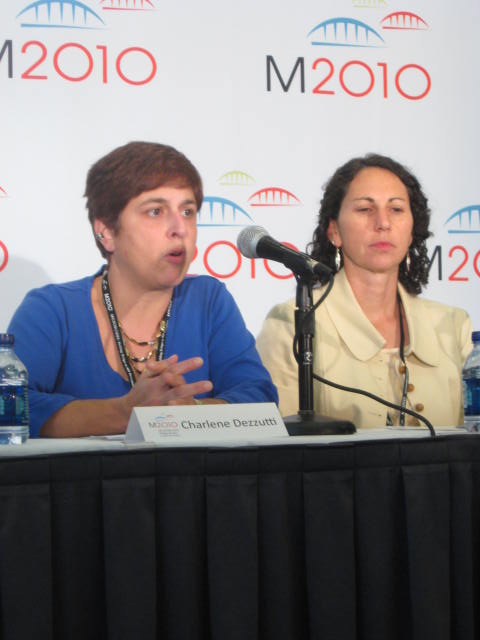
Researchers Charlene Dezzutti and Pamina Gorbach at M2010 the press conference


IRMA Press Release - Research on lubricant safety very past due

M2010 press conference on lubricants and rectal sex - audio recording courtesy of Bobby Ramakant

  1. Rectal lubricants may enhance the risk of STIs - Aidsmap,by Gus Cairns
  2. Some Sexual Lubricants Linked to Increased Risk for Chlamydia, Gonorrhea, by Bob Roehr on Medscape  
  3. Lubricants' use may put individuals at higher risk of HIV - by Bobby Ramakant for Citizen News Service 
  4. Understanding New Research on Lubricant Use During Anal Intercourse, by Cory Silverberg for About.com

Dear IRMA members,

Imagine our excitement to see such an explosion of interest in lube safety!

As many of you know, this has been a core objective of IRMA's work for 5 years, and one of the reasons we formed at all. The whole idea behind the huge survey we launched in 2007 was to obtain data that would allow the field of lube safety research to move forward. We published the results of the survey -- to our knowledge the world's largest survey on anal sex and lubes with nearly 9,000 partiicpants in over 100 countries -- in our 2008 report Less Silence, More Science. And we are thrilled to report that the results have just been accepted for publication in a peer reviewed journal and should be available very soon. Watch this space!

We will send out a notice for an IRMA call very soon, where we will provide an overview of the studies announced at M2010 this week, provide background on research done so far, and discuss plan for future research. This will also provide all of us with an opportunity to discuss messaging in relation to rectal safety of lubes.

In the meantime, we will continue to share information as it becomes available. For instance, you can check IRMA's lovely new report From Promise to Product for some background information -- including section 2.11 for some background information on testing of lubes, and section 4.4 for a description of IRMA's work in this area. The two sections are copied below for your reference.

It is truly wonderful to be poised for true progress on this critical issue and we welcome everyone's thoughts and efforts!

Sincerely,

Marc-André LeBlanc
IRMA Steering Committee Member and Chief Lubricant Safety Expert


Excerpts from report

What do we know about the rectal safety of sexual lubricants?


In addition to the studies released at M2010, a few others have assessed the relative safety of sexual lubricants, though not always looking at rectal safety specifically. These studies looked at:

    * Using in vitro and mouse assays to determine cellular toxicity, increased risk of HSV-2 infection, and epithelial sloughing caused by lubricants
    * Testing the osmolarity of lubricants
    * Using slug mucosal irritation assays to evaluate mucosal irritation caused by lubricants

The question remains: what do all of these studies tell us? We’re not sure. We still don’t know what assays should be used to determine the rectal safety of lubricants. Furthermore, even when studies find a wide range of values for their safety markers, we still don’t know to what extent—if any—some of these markers might indicate a higher risk of HIV transmission.

Relatively high levels of cellular toxicity, mucosal irritation, cell damage caused by hyperosmolar or hypo-osmolar products, inflammation, or epithelial sloughing could in theory increase the risk of HIV infection. However, this remains to be proven.


It is important to keep in mind that:

    * Some level of inflammation and irritation occurs naturally in rectal mucosa, even among healthy individuals;
    * Anal intercourse itself, as well as enemas and douching, causes some transient damage; and
    * Rectal epithelium regenerates quickly after minor damage or sloughing.

We must be able to compare normal levels of inflammation, irritation, cell damage and epithelial sloughing that occur among healthy individuals and those that are a result of AI. The question then becomes: does AI with lubes cause increased levels, similar levels, or lower levels of these markers compared to AI without lubes? Even if we were to find that some lubes cause higher levels of disruption, we would still need to investigate whether this translates into a higher risk for HIV transmission.

These questions remain to be answered, and we are still left with little data that can be translated into useful information that the public can use to make choices about lubricants. One thing to consider: if lubricants increase the use of condoms, that is probably a more important factor in preventing HIV transmission than any potential risk from lubes. For the moment, the use of lubes compatible with condoms is still considered to be an important risk-reduction tool for rectal transmission of HIV, and is likely to remain so. One day we may have valuable information on the relative safety of different lubricants, allowing users to make better informed decisions about which products they use.

IRMA’s advocacy on the safety of lubricants used for anal sex

Many men and women use sexual lubricants during AI, yet we know very little about the relative safety of these lubes. Obtaining safety data on products used as sexual lubricants for anal sex would be valuable for public health reasons.

Accordingly, IRMA prioritises advocacy for data collection on the rectal safety of lubricants. Wholly absent in current HIV prevention activities, a translation of this type of data into useful information for users, funders, programme directors, and policy makers would be of significant benefit to the field. Lessons learned in this undertaking will also provide valuable insights into message development on the safety and efficacy of vaginal and rectal microbicides, when these products become available.

Due to the paucity of this type of information, IRMA launched a global web-based survey in 2007 (see an overview of the results from this survey in IRMA’s previous report: Less Silence, More Science: Advocacy to Make Rectal Microbicides a Reality). The survey provided valuable information on lube use, preferences, and acceptability among nearly 9,000 men and women from over 100 countries, establishing a prioritised list of the most widely-used lubes to test for rectal safety.

A working group comprised of advocates and researchers was convened by IRMA to discuss the feasibility of testing sexual lubricants for rectal safety. While the working group identified significant scientific challenges that remain unaddressed to this day, there has been some progress.

IRMA’s action on lubricant safety includes the following activities:

    * Encouraging researchers to test lubes for rectal safety and to share their findings;
    * Facilitating dialogue among leading researchers and advocates within the working group on rectal safety of lubricants;
    * Compiling articles and studies related to lube safety, particularly for rectal use, and maintaining an updated background document on this issue;
    * Making IRMA’s list of most widely-used lubes available to anyone interested in testing lubes; and
    * Keeping IRMA membership updated on developments in this area.


Here is just a SAMPLE of some of the news stories 
generated on this issue -last updated July 5, 2010. Most recent coverage is at the bottom of the list.

  1. Use of lubricants with anal sex could increase risk of HIV - Physorg.com
  2. Lubricant Use May Raise HIV Infection Risk During Anal Sex - MSN
  3. Risk of sexually transmitted disease three times higher when lubricant used with anal sex - Times LIVe Blog (South Africa)
  4. Use of lubricants with anal sex could increase risk of HIV - Armenian Medical Network
  5. Use of lubricants with anal sex could increase risk of HIV - Science Blog
  6. Unprotected anal sex ups HIV risk 20-fold - Thaindian News
  7. So Now Anal Lube Increases Your Risk of Getting HIV? - Queerty
  8. Lubricants for Anal Sex May Increase Risk of HIV, STIs - POZ
  9. Lubricant Use May Raise HIV Infection Risk During Anal Sex - U.S. News and World Report
  10. Lubricant Use May Raise HIV Infection Risk During Anal Sex - Bloomberg Business Week
  11. Unprotected anal sex ups HIV risk 20-fold - Sify News
  12. Currently Available Lubricants Used For Anal Sex May Actually Make It Easier For HIV To Be Transmitted - Medical News Today
  13. Lubricants may increase disease risk of anal sex, studies show - Los Angeles Times
  14. Lube May Make Anal Sex More Risky - Gawker
  15. Use of lubricants with anal sex could increase risk of HIV - HIV Atlas
  16. Use of Lubricants With Anal Sex Could Increase Risk of HIV - Science Daily
  17. IRMA: Research on lubricant safety very past due - Physorg.com
  18. Lubricant Use May Raise HIV Infection Risk During Anal Sex - Yahoo News
  19. Use of lubricants with anal sex could increase risk of HIV - e!Science News
  20. Lubricant Use May Raise HIV Infection Risk During Anal Sex - MedicineNet.com
  21. Why it is important to give that lubricant a second look - Africa Science News Service
  22. Anal sex studies from Microbicides conference show increased HIV transmission risk with some lubes  - Examiner.com
  23. Lubricant use with anal sex may raise HIV risk - DNA India
  24. Some Lubricants May Increase Risk for HIV Infection - Bilerico Project 
  25. Pelumas Berpotensi Tularkan HIV (Indonesia) - Media Indonesia.com (link is translated into English) - And here it is in Indonesian.
  26. Lubricants' use may put individuals at higher risk of HIV - Modern Ghana
  27. New Research Finds Using Lube During Anal Sex Can Increase HIV, STD Transmission - QueerSighted
  28. Some Lube Safer For Anal Play - Center for Sexual Pleasure and Health
  29. Unprotected anal sex ups HIV risk 20-fold - Mangalorean.com (India)
  30. International Rectal Microbicide Advocates tries to clear the air on Microbicides studies - GLBTQ Jamaica Blog Watch
  31. AstroGlide - Found to be the Most Toxic Personal Lubricant Tested - Condom Depot
  32. The Slippery Slope of Reporting Sex Research: Anal Sex & Lubricants - Good Vibrations Magazine
  33. Research into lubes has worrisome findings - Bay Area Reporter 
  34. Facts, HIV, STI and Lube - La Porte Des Etoiles (Melbourne, Australia)
  35. Lube Alarm - Metro Weekly 
  36. Study: 4 of the 6 most widely used lubes are toxic - 365 Gay


      IRMA oughta be in pictures - Microbicides 2010 paparazzi


      Check out more pics on our Flickr page Microbicides 2010 a la IRMA - including lots from the wonderful launch party of our new report - From Promise to Product: Advancing Rectal Microbicide Research and Advocacy.

      Wednesday, May 26, 2010

      Nigeria: HIV - Stakeholders Want Prevention to Take Centre Stage

      via VANGUARD, by Chinyere Amalu

      "If we don't have correct information to prevent the spread of the virus, there is no way the nation could move forward in tackling the scourge. If we do not do something urgent about taking messages of prevention to the rural communities, we are wasting our time", -Prof. John Idoko

      The 4-day conference, which was organized by Network for HIV & AIDS Research in Nigeria (NARN) in partnership with the National Agency for the Control of AIDS (NACA), with support from the United Nations system, the US Government, other developmental partners and civil society organisations believed that if prevention is prioritised, the spread of HIV would be controlled to the barest minimum.

      According to Prof. Dennis Ityavyar, "Cultural practices have a fundamental role to play in HIV prevention, Prevention of Mother-to-Child Transmission (PMTCT) and male involvement in reproductive health services. A number of commonly observed traditional practices are now recognized as being directly responsible for the spread of HIV & AIDS".
       

      Tuesday, May 25, 2010

      Initial surveys of MSM in Nigeria show high levels of bisexual behaviour and low condom and lube use

      via Aidsmap, by Gus Cairns 

      Two surveys of men who have sex with men in Nigeria who are attending local HIV support organisations show that between a third and half of men who are attracted to other men define as bisexual and as many have had vaginal sex with a women as anal sex with a man.

      The ‘snapshot’ survey adds another country to the list of African countries that have documented a hitherto invisible MSM culture – see recent report - and adds to evidence presented elsewhere at the Microbicides Conference that even in supposedly heterosexually-driven epidemics, anal sex may play a much larger role than previously thought. 

      Read the rest.

      Microbicides 2010 Headline News

      Lot's of interesting stuff at the Microbicides 2010 conference. Below are some headlines worth clicking. IRMA will be sharing as many slide sets as she can get her hands on from this exciting meeting which had lots and lot of rectal microbicide content - stay tuned for that - and will be posting lots and lots of pictures and other goodies from these 5 glorious days in Pittsburgh. Pictures would have gone up sooner had IRMA not left a critical cord  for transferring the photos from camera to computer at home in Chicago.... Patience!

      In the meantime - click and learn...


      via Gus Cairns, Aidsmap


      Crunch time for microbicides, says top researcher

      Pregnancy poses HIV risk for men

      Six existing drug classes now being tested as microbicides


      Via Citizens News Service

      Not just a handmaiden: Critical role of social science in HIV Prevention Research

      Using ARVs to Prevent HIV Could Result in Drug Resistance

      Microbicides that do more than gel

      Monday, May 24, 2010

      Robin Shattock opens Microbicides 2010 with the State of the ART of Microbicides

      via Citizen News Service

      The microbicides field has undoubtedly moved and shifted a lot in the past decade. Now, with first generation microbicides candidate products up and gone, antiretroviral treatment (ART)-drug based microbicides in spotlight, and only three major microbicides efficacy studies remaining, the need to lobby for increased funding of microbicides research and development, was never so compelling.

      The need to bolster HIV prevention has certainly not dimmed - and so has the need to up HIV treatment, care and support which is becoming acute on daily basis. The International Microbicides Conference (M2010) opened with the plenary that cited UNAIDS data, from New York Times news (At Front Lines, AIDS War Is Falling Apart), "For every 100 people put on antiretroviral treatment (ART), 250 people are getting newly infected with HIV."

      "People were already questioning that whether universal access to treatment is achievable without significantly reducing the number of new infections" said Professor (Dr) Robin Shattock, who is a Professor of Cellular and Molecular Infection in the Department of Cellular and Molecular Medicine at St George's University of London, UK.

      "Donors were questioning too whether it is sustainable to continue the roll out of treatment across the globe" said Prof Shattock.

      Read more.

      Listen to the audio podcast of Prof Robin Shattock, courtesy of IRMA pal Bobby Ramakant.

      Thursday, May 20, 2010

      Rights groups criticise Uganda's new AIDS bill

      via AFP, by AFP Staff

      "What are we going to do with all these people we forcibly test? We don't have the resources to support them. People could run away from their doctors, or their homes. You could have suicides."-  Robert Ochai

      The new bill, tabled in Uganda's parliament on Wednesday, makes testing mandatory for pregnant women and their sexual partners, as well as perpetrators and victims of sexual assault.

      "If you make testing compulsory, the individual doesn't buy into the result. For them to take action, like getting treatment for example, they have to accept to outcome of the test," Ochai said.
       

      Wednesday, May 19, 2010

      Eradication of smallpox may have set the stage for HIV pandemic, study says

      via Los Angeles Times, by Thomas H. Maugh II

      "While these results are very interesting and hopefully may lead to a new weapon against the HIV pandemic, they are very preliminary and it is far too soon to recommend the general use of vaccinia immunization for fighting HIV," Weinstein said in a statement. Given the great difficulties researchers have encountered in trying to develop an HIV vaccine, the ironic fact is that we may once have had a vaccine that is more effective against the virus than anything that has since been developed, and we threw it away.


      Laboratory tests suggest that immunity to smallpox triggered by the vaccinia (smallpox) vaccine can inhibit the replication of the AIDS virus. Such vaccination could have kept HIV transmission partially under control in the early days of the outbreak, but withdrawal of the smallpox vaccine in the 1950s would have freed it to spread unfettered, the researchers said.

      Discrimination hurts fight against HIV in homosexual men in Asia-Pacific - UN

      Original posted by UN News May 18

      More than 90 per cent of men having sex with men in the Asia-Pacific region, a group in which HIV prevalence has reached alarming levels, do not have access to prevention and care services due to an adverse legal and social environment, a United Nations-backed forum was told today.

      Read the rest.

      Tuesday, May 18, 2010

      International Rectal Microbicide Advocates Release Update on New HIV Prevention Technology

      New Report Outlines the Growing Field of 
      Rectal Microbicide Research and Development


      Chicago -- International Rectal Microbicide Advocates (IRMA) will officially release its third landmark report -- "From Promise to Product: Advancing Rectal Microbicide Research and Advocacy" -- at the 2010 International Microbicides Conference in Pittsburgh, PA taking place May 22-25, 2010. The ambitious, comprehensive document reports on the growing scientific activity in the rectal microbicide field, capturing the optimism among researchers and advocates alike as the field sets its sights on the development of safe and effective rectal-specific products that will provide protection against HIV during anal intercourse.

      Additionally, IRMA continues to call for a Global Rectal Microbicide Development plan by which stakeholders can coordinate efforts across the full range of scientific activities, developing strategies and setting priorities. Such a plan does not yet exist.

      Dr. Ian McGowan, Scientific Vice-Chair on the IRMA Steering Committee and co-Principal Investigator of the Microbicide Trials Network says, "A detailed map such as a Global Rectal Microbicide Development Plan is absolutely necessary if we are going to make the best use of each and every research dollar in this time of global recession and constricted resources."

      An updated resource tracking of funds specifically allocated to rectal microbicide research and development -- the only such exercise -- is followed by a call for escalating funding over the next 10 years and for increased diversity in the funding portfolio as well. The United States National Institutes of Health currently provides over 90% of global resources devoted to rectal microbicide activities, and nations of the European Union and global philanthropic organizations need to support this critical work as well.

      "Increased funding is also needed for IRMA. We maintain an enormous global footprint and are the only advocacy group focused on rectal microbicides in the world -- and we achieve this with inadequate resources," says IRMA Chair and Director of Advocacy for the AIDS Foundation of Chicago Jim Pickett. "Our work must be valued and supported if we are to continue uniting AIDS advocates, scientists, and policy makers around the globe to bring safe and effective rectal microbicides to market as well as to confront the homophobia, gender inequities, human rights, stigma, and denial that must be addressed to make sure such products will be used."

      The full report is available online in both English and Spanish.
      [Also of note to IRMA members and allies - there are two new valuable resources online. A brand new Rectal Microbicides 101 fact sheet, and Rectal Microbicides: The Basics, IRMA's adaptable PowerPoint presentation that can be downloaded and utilized in a variety of contexts. All IRMA materials of this sort, such as our new report, can be found here.]

      Malawi: Judge convicts gay couple

      via Associated Press, by Raphael Tenthani

      BLANTYRE, Malawi — A judge convicted a gay couple in Malawi Tuesday of unnatural acts and gross indecency after a trial that drew worldwide condemnation of this southern African country's colonial-era laws on homosexuality.

      The verdict is "extremely disturbing," said Michaela Clayton of the Namibia-based AIDS & Rights Alliance for Southern Africa, saying it could encourage anti-gay sentiment in the region as well as set back the fight against AIDS. Gay people forced underground in Africa are unlikely to seek counseling and treatment for AIDS, she and other activists said.
       
      Read the rest.

      The HIV Vaccine Renaissance - Reflections on World AIDS Vaccine Day

      WORLD AIDS VACCINE DAY 
      18th May 2010 
      by Arwa Meijer
      International AIDS Vaccine Initiative


      Today, 18th May is World AIDS Vaccine Day, marks the day, 13 years ago, when U.S. President Bill Clinton challenged the world to develop an AIDS vaccine within a decade.

      We now know that this time frame was overly optimistic, but in 1997, most of us could not have conceived how difficult the task would prove to be. Still, World AIDS Vaccine Day on 18 May will live on until we have found an AIDS vaccine. On this day we want to inform people that AIDS is still a major health crisis and that we need to do much more to prevent people becoming infected. Every day, there are 7400 people who become infected with HIV. Most of them live in Sub-Saharan Africa, and many are young people in the prime of their lives. AIDS is an important barrier to pulling developing countries out of their poverty. We therefore must end AIDS.


      To achieve that, we need a comprehensive response to fight this pandemic. What this means is continued commitment to expanding access to ARVs and current methods of prevention. And it means ongoing research to develop additional intervention options, including preventive vaccines and microbicides. Learning more about the drivers of the AIDS epidemic and successful prevention methods will be critical to help to reduce the number of new HIV infections and to develop new culturally-relevant preventive tools.

      In the 27 years since HIV was discovered, scientists have learned a great deal about the virus and how it causes AIDS. Making a vaccine to prevent or control infection, however, has proved a greater challenge than anyone could have imagined, and the field has seen its fair share of setbacks. It is therefore particularly encouraging that on this World AIDS Vaccine Day we can reflect on important progress in research.

      In late September 2009, a large-scale study (known as RV144 or the Thai trial) testing a combination of two vaccines in Thailand showed that it was able to prevent HIV infection in one out of every three people. That is not enough to bring this vaccine to market, but it was the first time that an HIV vaccine candidate had showed a benefit in people. The next step is for researchers to develop a vaccine that is considerably more effective.

      A few weeks prior to that, researchers at and affiliated with the International AIDS Vaccine Initiative (IAVI) announced the discovery of two new antibodies capable of neutralizing a broad range of HIV variants. These were the first potent and broadly neutralizing antibodies to be identified in more than a decade and the first to come from a donor in the developing world. Also, these antibodies recognize a site on the outside of HIV that is a useful target for vaccine design. These efforts are valuable to researchers working to design a vaccine that would produce such powerful antibodies in people in order to help to block HIV from establishing an infection.

      The AIDS vaccine field did see significant scientific progress over the past year, essentially experiencing a renaissance. But we have a long road ahead. There is a lot more important research to do in the coming years. Success in that endeavor will depend on the continued support of researchers, donors, policymakers, and advocates.

      Sunday, May 16, 2010

      Preference and practices relating to lubricant use during anal intercourse: implications for rectal microbicides

      [Note: IRMA's Marc-André LeBlanc and Jim Pickett are co-authors on this. Please send an email to rectalmicro@gmail.com if you are interested in reading the full article.]


      Javanbakht M, Murphy R, Gorbach P, LeBlanc M, Pickett J. Preference and practices relating to lubricant use during anal intercourse: implications for rectal microbicides Sexual Health 2010; 7: 193–198. doi:10.1071/SH09062 

      Source

      Abstract

      Background: The importance of the acceptability of rectal microbicides for HIV and sexually transmissible infections (STIs) prevention is widely recognised. Given relatively consistent use of lubricants for anal intercourse (AI) and the potential for lubricant-like rectal microbicides, understanding barriers to lubricant use may help inform hurdles likely to be encountered once a rectal microbicide becomes available.

      Methods: We conducted an internet-based survey using a 25-item questionnaire to assess AI and lubricant use, including lubricant preferences and barriers to use.

      Results: The majority of the 6124 respondents who reported AI were male (93%), 25 years or older (80%) and from North America (70%). Consistent condom use during AI was reported by a minority (35%) and consistent lubricant use was reported by over half of respondents. Reasons for non-use differed by age and region. Among men, those <25 years were more likely to report barriers around cost compared with those 45 and older (odds ratio (OR) = 6.64; 95% confidence interval (CI) 3.14–14.03). European men (OR = 1.92; 95% CI 1.50–2.45), Latin American women (OR = 3.69; 95% CI 1.27–10.75) and Asian women (OR = 4.04; 95% CI 1.39–11.78) were more likely to report sexual preference as a reason for non-use.

      Conclusions: Rectal lubricants are widely used, but barriers to use vary by age and region for dry sex. A lubricant-like rectal microbicide would potentially be acceptable and such a product may be useful as a method of HIV prevention. However, targeted marketing and educational approaches may be needed to enhance use and acceptability of such a product.

      Friday, May 14, 2010

      Genital Wart Virus may be on the rise in men/The HPV Vaccine solution

      Genital Wart Virus May Raise Men's Risk of HIV

      via The Body

      After controlling for numerous factors -- subsequent circumcision, baseline herpes simplex virus type 2 serostatus, and sexual and demographic risk factors -- the HPV-infected men were still 80 percent more likely to acquire HIV than the men without HPV.

      Read the rest.


      HPV vaccine now targeted at boys
      The controversial Gardasil shot is now 
      recommended for males 9-26 years old

      via WGNTV.com, by Celeste Ball

      Supporters and advocates believe it's now equally as important that boys and men get vaccinated so they can protect their female partners from the virus.

      Human papillomavirus, or HPV, HPV is the most prevalent sexually transmitted infection nationwide. It is recommend that the Gardasil shot be administered before males or females become sexually active because the vaccine is less effective once someone has already been infected with HPV.
       
      Read the rest.

      Canada judge: Insertive unprotected anal sex does not create 'significant risk of serious bodily harm'

      via Aidsmap, by Edwin J. Bernard

      A Canadian judge has ruled for the first time that an HIV-negative person is not placed at 'a significant risk of serious bodily harm' if they are the insertive partner in unprotected anal intercourse with an HIV-positive man.

      According to a statement from the Canadian HIV/AIDS Legal Network this "reinforces the basic point that not every risk of transmission will be considered 'significant', and illustrates the importance of ensuring that courts consider carefully the scientific evidence before them in determining when there is a 'significant risk' of harm, rather than simply criminalising non-disclosure in all circumstances."

      Read the rest.

      Thursday, May 13, 2010

      Notorious U.S. Hate Site Gets Kenyan Look-Alike

      via womensenews.org, by Zoe Alsop

      ProjectSEE, an acronym for Project Stop Exporting Evil, claims the United States and Europe brought homosexuality and abortion to Africa.

      For gays and lesbians, though, the implications of exposure on the ProjectSEE Web site are more serious because sexual minorities are particularly vulnerable in East Africa.

      Neighboring Uganda's parliament is considering a bill that calls for death sentences for "repeat offenders" of homosexuality and anyone who knows they are HIV-positive and continue to engage in homosexual activity, among others. Stiff sentences are proposed for doctors, family members and others who failed to report homosexuality.

      Read the rest.

      Here's a thing I found right here! Should I put it up my rear?

      Good Butt Toys, Bad Butt Toys


      I want to put stuff up my butt
      Because it will feel good
      I want to put stuff up my butt
      I don't know if I should

      Here's a thing I found right here!
      Should I put it up my rear?
      It is long and thin, filled with vitamin B
      Carrots are so good for me!

      No! Do not put a carrot up your butt
      It might get lost in there!
      Do not put a carrot up your butt
      No produce in your derriere

      Here's a thing that has a string!
      And a handle for extra zing!
      This can not get lost you see
      Because I can pull it out of me

      No! Do not put a jump rope up your butt.
      Strings have places for germs to hide.
      Do not put a jump rope up your butt.
      Only non-porous things should go inside!

      Well what is this? A toy you say?
      Non-porous, smooth, made for anal play?
      No pointy parts that will make me tear
      And a flared base so it won't get lost up there

      Yes!  Put that sex toy up your butt!
      Push it in slowly giving time to adjust.
      Put that sex toy up your butt!
      If it hits your prostate, that's a plus!

      Wednesday, May 12, 2010

      Attention IRMA shoppers...

      Next time you're in Copenhagen, make sure to swing by the nearest Irma for all your grocery needs - whether it's a loaf of bread, a bag of prunes, or just an enema or two. Unload some of those Danish krones and give our sister Irma some love.


      Thanks to one of IRMA's global operatives for sending in these photos.

      Theory Explains Why Some With HIV Survive Longer


      A group of researchers in Boston announced a new theory this week that may help to explain a longstanding mystery in AIDS research: why some people with HIV survive for decades without ever developing AIDS.

      About one out of every 200 people who catch HIV are considered "long-term non-progressors" or "elite controllers" because they can live for many years with the virus without developing AIDS. Even the most sensitive tests often cannot detect the virus in their bloodstream.

      Read the rest.

      The asspects of anal sex

      via UWM Post, by Jon Tingley


      Anal penetration used to be a taboo topic. In fact, for some of you, it might still be. What used to be relegated to men playing in bathhouses and Bally’s locker rooms is now a widespread form of sexual intercourse enjoyed by all different sexual orientations and genders.

      Many people decide not to participate in anal penetration with their sexual partner or even on their own because of the pain associated. This kind of sexual pleasure actually doesn’t have to be a pillow-biting experience when done correctly. I’m often surprised by my sexually active gay male friends who are still experiencing extreme pain during sexual intercourse even though they have experience. It just goes to show you that even those with apparent sexual know-how can have it wrong sometimes

      There are a few things to remember when considering taking it up the butt:

      Monday, May 10, 2010

      NYT: At Front Lines, AIDS War Is Falling Apart

      via New York Times, by Donald G. McNeil Jr.

      On the grounds of Uganda’s biggest AIDS clinic, Dinavance Kamukama sits under a tree and weeps.


      Her disease is probably quite advanced: her kidneys are failing and she is so weak she can barely walk. Leaving her young daughter with family, she rode a bus four hours to the hospital where her cousin Allen Bamurekye, born infected, both works and gets the drugs that keep her alive.

      But there are no drugs for Ms. Kamukama. As is happening in other clinics in Kampala, all new patients go on a waiting list. A slot opens when a patient dies.

      “So many people are being supported by America,” Ms. Kamukama, 28, says mournfully. “Can they not help me as well?”

      The answer increasingly is no. Uganda is the first and most obvious example of how the war on global AIDS is falling apart.

      The last decade has been what some doctors call a “golden window” for treatment. Drugs that once cost $12,000 a year fell to less than $100, and the world was willing to pay.

      In Uganda, where fewer than 10,000 were on drugs a decade ago, nearly 200,000 now are, largely as a result of American generosity. But the golden window is closing.

      Uganda is the first country where major clinics routinely turn people away, but it will not be the last. In Kenya next door, grants to keep 200,000 on drugs will expire soon. An American-run program in Mozambique has been told to stop opening clinics. There have been drug shortages in Nigeria and Swaziland. Tanzania and Botswana are trimming treatment slots, according to a report by the medical charity Doctors Without Borders.

      The collapse was set off by the global recession’s effect on donors, and by a growing sense that more lives would be saved by fighting other, cheaper diseases. Even as the number of people infected by AIDS grows by a million a year, money for treatment has stopped growing.

      Other forces made failure almost inevitable.

      Science has produced no magic bullet — no cure, no vaccine, no widely accepted female condom. Every proposal for controlling the epidemic with current tools — like circumcising every man in the third world, giving a daily prophylactic pill to everyone contemplating sex or testing billions of people and treating all the estimated 33 million who would test positive — is wildly impractical.

      And, most devastating of all, old-fashioned prevention has flopped. Too few people, particularly in Africa, are using the “ABC” approach pioneered here in Uganda: abstain, be faithful, use condoms.

      Read the rest.

      Friday, May 7, 2010

      Men With HPV at Higher Risk for HIV, Study Finds

      via Bloomberb Business Week, by Robert Preidt

      Preventing human papillomavirus (HPV) infection may be one way to slow the HIV/AIDS epidemic, according to a new study that found that HPV-positive men are at greater risk for HIV infection than those not infected with HPV.

      "Developing a vaccine to prevent HIV is the greatest hope for curbing the world's AIDS pandemic, but so far there is no such vaccine. However, there is a vaccine to prevent specific types of HPV infection, and vaccinating young men before they become sexually active could potentially help prevent the spread of HIV." - Jennifer S. Smith

      Read the rest.

      Thursday, May 6, 2010

      Catholics and Condoms: Why What the Pope Says Matters

      via The Body, by Jon O'Brien

      During his 2009 trip to Cameroon, a country with an HIV prevalence rate of over 5%, Pope Benedict XVI made a shocking assertion on condom use to prevent HIV. He told reporters, "You can't resolve it with the distribution of condoms. On the contrary, it increases the problem."

      Read the rest.

      START Wars - Are we back to hitting hard, hitting early, or not?

      via POZ.com, by Tim Horn


      HIV experts are at odds regarding an uptick in public policy and advocacy efforts to promote early HIV treatment, in light of the unknowns surrounding its potential benefits and risks. A clinical trial—the 4,000-patient START study—is now under way to explore some of the most pressing questions. But should activists and advocacy groups be waiting for answers?

      In December 2009, a panel of government officials, academic researchers and HIV/AIDS activists revised the U.S. Department of Health and Human Services (DHHS) official recommendations for when to start HIV treatment. The new Guidelines for the Use of Antiretroviral Agents in HIV-1-Infected Adults and Adolescents strongly encourage treatment for all people living with HIV with CD4 counts between 350 and 500. Previously, treatment was only advised for patients with CD4 counts of 350 or lower—as remains the recommendation in most other developed nations.

      A patchwork of data suggests that starting treatment earlier can benefit the health and longevity of people living with HIV, as it may better defend the immune system, lower the risk of non-AIDS diseases and further reduce the risk of death. It is this research that has sparked tremendous interest in the personal benefits of early antiretroviral (ARV) therapy.

      Early treatment may also benefit the greater good of the public health. Some research suggests that undetectable viral loads in a large swath of the HIV population can potentially slow the spread of the virus. In turn, public health officials are considering whether widespread, immediate ARV therapy could be an effective HIV prevention tactic.

      Few experts and activists argue that the research supporting early treatment is anything less than encouraging. Where there is less agreement, however, is whether enough sound, scientific research has been conducted to spell out the benefits and risks—the increased (or decreased) likelihood of short- and long-term side effects, adherence challenges and the development of drug resistance, for example—of early treatment and to warrant major changes to public policy. In fact, some of the most experienced and trusted sources of HIV prevention and treatment policy are struggling to make the right call.

      Read the rest.

      Wednesday, May 5, 2010

      Global Prevention of HIV Infection for Neglected Populations: Men Who Have Sex with Men

      via Clinical Infectious Diseases

      by Chris Beyrer, Department of Epidemiology, Johns Hopkins Bloomberg School of Public Health, Baltimore, Maryland

      Summary:

      The global epidemiology of human immunodeficiency virus (HIV) infection among men who have sex with men (MSM) suggests both reemergent spread among men in resource‐sufficient countries since 2000 and emerging epidemics among MSM in resource‐limited countries. Both epidemic contexts are evidence of the current limits of prevention of HIV infection in MSM. A range of evidence‐based preventive interventions exist, but few new interventions have shown efficacy among MSM. Circumcision has not been investigated for MSM. New interventions are needed. Trials of preexposure prophylaxis are pending and may markedly alter the prevention landscape. For MSM in developing countries, basic services for prevention of HIV infection have yet to reach the large majority of men. Homophobia and discrimination limit access of MSM to prevention services and markedly increase vulnerability, as does criminalization of same‐sex behavior. Decriminalization of same‐sex behavior is a structural intervention for prevention of HIV infection and has recently been embraced by a nonbinding statement from the United Nations.

      Read the full article.

      HIV is not a gay disease

      via guardian.co.uk, by Chris Ward

      The gay community is very aware of HIV. Indeed, the infection used to go by the name of gay-related immune deficiency (Grid) before it was discovered to have been transmitted through other non-sexual means such as intravenous drug use. It seems that history can leave quite a mark, not just in the perceptions of individual members of society, but within the guidelines of public organisations too. It is still the case, although hopefully not for much longer, that once a man has had sex with another man, even with a condom, they are banned from giving blood for life.

      In every year since 1999, most new diagnoses of HIV have been through heterosexual contact. Although many point out that a good chunk of these infections are believed to have been contracted abroad, statistically meaning that in the UK you are still less likely to be infected if you engage in heterosexual activities, the numbers are still very chilling. It proves convincingly that many heterosexuals do not consider HIV to be an infection likely to affect them. The myth of the gay disease may have heightened awareness of HIV among gays, but it has also sent a wave of complacency across the heterosexual community.

      Tuesday, May 4, 2010

      Study Finds That HIV Breaks Mucosal Barriers During Transmission

      via The AIDS Beacon, by Shruti Kalra

      A recent study published in the journal PLoS Pathogens finds that HIV can damage the mucous membranes of genital and intestinal cells, allowing HIV and bacteria to enter the body.

      Cells in the intestines and the genitals (such as inside the vagina) are normally surrounded by a protective layer of mucous membranes. It was previously thought that HIV entered the bloodstream through small tears in this membrane that can occur during sexual intercourse.

      Although this is still a possible mechanism of transmission, this study indicates that tears might not be needed for HIV to get inside the body.

      Read the rest.

      HIV Research Catalyst Forum Presentations NOW AVAILABLE

      The HIV Research Catalyst Forum: Treatment, Prevention, Advocacy (Formerly North American Treatment Action Forum—NATAF) took place April 20 - 23, 2010 and  focused on community advocacy in HIV treatment and prevention research.

      From identifying research priorities to overcoming research barriers, HIV advocates have driven ground-breaking discoveries that have changed the course of this relentless epidemic. But with no cure or preventive vaccines in sight, rising new infection rates, and the continuing death toll, our work is far from over.

      The Catalyst Forum aimed to revitalize the community response to the domestic and global AIDS epidemic by amplifying the voices of community advocates in HIV treatment and prevention research.

      The conference provided a rare opportunity for new advocates to gain knowledge, build capacity, and sharpen skills; for experienced advocates to exchange ideas, craft strategies, and tackle new challenges; and for advocacy networks to recruit new participants and collaborators to strengthen planned or ongoing research advocacy campaigns.

      Symposium webcasts, power point slides from skills building workshops, are now online.

      IRMA pal Elizabeth Pisani guest stars on Feast of Fun


      IRMA galpal Elizabeth Pisani was in Chicago for a month-long gig at DePaul University - and we were delighted to introduce her to the Feast of Fun podcast boys when we ran into them at Ping Pong - one of our fav restaurants. They demanded Elizabeth come on their show STAT to chat up her book "The Wisdom of Whores." So she did, and threw in plenty of her trademark unvarnished analysis of HIV prevention and AIDS Inc. - and so much more.

      Listen up.

      Monday, May 3, 2010

      BBC: How to stop HIV spreading in Zambia's prisons

      via BBC, by Jo Fidgen

      Bright spent two years in Zambia's Lusaka Central Prison for selling cannabis but fears he now faces a life sentence.

      "I did it because of hunger," says Bright softly.

      "There's not much food in prison. Sex has become the way of payment."

      "Conditions were bad," he remembers. "We had nshima [maize meal] and beans two times a day. I never felt full."

      One day, the cell "captain" gave Bright extra food, then asked him for sex.

      "I had never had sex with a man, but I did it. The first time it was painful, but I joined a group of maybe 20 men who did that.

      "Mainly they were people who were condemned, or who had been jailed for 25 years. They hadn't seen women for a long time."

      Read the rest.
      Related Posts Plugin for WordPress, Blogger...