Do you use rectal douches? Or don't you?

Do you use rectal douches? Or don't you?
Take it whether you douche, or not! Click for survey in English, Español, French, Portuguese, Thai, Chinese or Russian.

Friday, January 29, 2010

Long-Lasting HIV Nucleoside Analogue in Development


via AIDSDmeds

A research team from the University of Missouri at Columbia is developing a novel nucleoside reverse transcriptase inhibitor (NRTI) that remains active against HIV for days after a single dose, according to a report published online by ScienceDaily. Stefan Sarafianos, PhD, who heads to the MU team, said the compound is more potent and longer-lasting than current NRTIs and may find use not only as a component of antiretroviral (ARV) therapy but also as a preventive microbicide.

“This new compound, EFdA, is 60,000 times more potent than any other drug that is currently being used to treat HIV,” said Sarafianos, assistant professor of microbiology and immunology in the MU School of Medicine and an investigator in the Christopher Bond Life Sciences Center. “This compound has a different chemical makeup than other approved therapies and creates an exceptional amount of antiviral activity. EFdA is activated very quickly and stays long in the body to fight the virus and protect from infection.”

The U.S. Food and Drug Administration has approved eight NRTIs, but the meds can protect cells for only short periods of time. With EFdA, Sarafianos said, patients could be protected for two days instead of few hours and would not need to take the drug as often.

In addition to EFdA’s potential as a therapeutic agent, Sarafianos hopes the experimental NRTI can double as a preventive agent in the form of a gel or cream, providing additional protection during vaginal and anal sex.


Puritanism is Deadly Policy: US Fed Homophobia in Uganda Must Stop

I realized that most doctors never asked questions about anal sex. 

We assumed all our patients were straight.

via Huffington Post, by Dr. Paul Semugoma


It was early evening when he slouched into my office. Medium height, thin, brown, he had lost some weight recently. There was a nervousness to his eye, a lack of comfort intimating the visit was not to his liking.
Slight hesitation, then the plunge. He had been advised to take the HIV test. It had come back positive. The unvoiced fright in his face was palpable. HIV was a death diagnosis at the time. Drugs had just been discovered, but ours was one of the few clinics prescribing them. He would never be able to afford them.
But I was his doctor. We talked, for a long while, trying to ease his fear. We talked prevention, diet, exercise. We talked doctors, medicines. Then he dropped the bombshell.
He was gay. How would he protect his boyfriends?
His being homosexual didn't faze me. But, I didn't know the answer. What was safer sex for a gay man?

Wednesday, January 27, 2010

HIV Prevalence, Risks for HIV Infection, and Human Rights among Men Who Have Sex with Men (MSM) in Malawi, Namibia, and Botswana

This is the first study to investigate HIV status and risks for HIV infection among MSM in Namibia, Botswana, and Malawi. It is also the first attempt, to our knowledge, to evaluate the human rights contexts among MSM and to link individual level rights abrogation to HIV biological outcomes in the African context.


Authors: Stefan Baral1, Gift Trapence, Felistus Motimedi, Eric Umar, Scholastika Iipinge, Friedel Dausab, Chris Beyrer


via PLoS ONE (open access)

Excerpt:


One conclusion of this research perhaps bears stating openly: MSM exist in Malawi, Namibia, and Botswana, and are at high risk for HIV infection and human rights abuses. Piot et al. recently published a call to action for HIV prevention indicating that each country should appropriate HIV prevention expenditures in an evidence-based manner. To date, there have been no dedicated government expenditures funding evidence-based and targeted HIV prevention programs for MSM in these three countries. To comprehensively address the HIV epidemic, African national AIDS strategies should allocate funds based on evidence such as presented here, ensuring that the right to health care is respected for all. Community partners willing and able to do this challenging work also exist, and supporting these partners and including them in HIV/AIDS fora in country and internationally is likely critical to the success of prevention, treatment, and care programs in these countries.
Read the entire article. 


[Co-authorChris Beyrer presented on this information on an IRMA Global Teleconference - held January 27, 2010. Check out his slides (and soon, an audio recording of the call) here - on IRMA's website.]


Tuesday, January 26, 2010

Meanwhile, in Senegal

The global outcry against Uganda's "Anti-Homosexuality Bill" could not be more deafening.
  
via Metro Weekly, by Cary Alan Johnson and Ryan Thoreson


Excerpt:
Take Senegal, for instance, where homosexuality has been illegal since 1965. The last two years have seen a dramatic escalation in homophobic persecution and violence, largely unnoticed by the international community and the world media. The country has experienced waves of arrests, detentions, and attacks on individuals by anti-gay mobs, fueled by media sensationalism and a harsh brand of religious fundamentalism. Police have rounded up men and women on charges of homosexuality, detained them under inhumane conditions, and sentenced them with or without proof of having committed any offense. Families and communities have turned on those suspected of being gay or lesbian. In cities throughout the county, the corpses of men presumed to have been gay have been disinterred and unceremoniously abandoned. As the international community has laudably warned Uganda on the progress of its nonsensical law, arrests on charges related to homosexuality in Senegal -- five men in Darou Mousty in June, a man in Touba in November, and 24 men celebrating at a party in Saly Niax Niaxal on Christmas Eve -- continue largely unnoticed.
Read the full article.

Monday, January 25, 2010

FRESH BATCH - Meet (some new) Friendly Rectal Microbicide Advocates

Check out the fresh batch of bios featuring six Friendly Rectal Microbicide Advocates - now on the IRMA website.


Abdullrahman Orosanya Mohammed-Saheedi
Lagos, Nigeria


Adebisi A Alimi
London, England


Charlene Dezzutti
Pittsburgh, Pennsylvania


Carolina Herrera
London, England


Sharon Hillier
Pittsburgh, Pennsylvania


Charles Stephens
Atlanta, Georgia

Friday, January 22, 2010

Video - "In the Pipeline - What You Should Know About Rectal Microbicides"

Booty Butter!

Produced by our friends at UCLA in 2006 for a research study, this video is a fantastic (sexy, fun) introduction to rectal microbicides directed towards gay men. While the science has certainly progressed from that time - it is still relevant and a great thing to share with your colleagues, networks, friends, partners, etc....


Report: How Ideology Trumped Science: Why PEPFAR Has Failed to Meet Its Potential


via PinkPaper.com, by Rex Wockner

The Council for Global Equality and the Center for American Progress issued a report earlier this week criticising numerous practices of the President's Emergency Plan for AIDS Relief (PEPFAR).

The U.S. government program operates in Botswana, Cambodia, Côte d'Ivoire, Ethiopia, Guyana, Haiti, India, Kenya, Malawi, Mozambique, Namibia, Nigeria, Russia, Rwanda, South Africa, Tanzania, Uganda, Vietnam, Zambia and Zimbabwe.

The report, "How Ideology Trumped Science: Why PEPFAR Has Failed to Meet Its Potential," outlines multiple ways in which conservative ideology allegedly has distorted PEPFAR's reach and impact.

"These include inadequate attention to the needs of men who have sex with men, failure to address laws that have impeded outreach to underserved LGBT communities, exclusion of programs targeting commercial sex workers and injecting drug users, and inadequate attention to sex education, particularly the correct usage of condoms," the organizations said.

"These and other shortfalls detailed in the report have undermined the science-based approach needed to win the fight against HIV and AIDS," they said.

The report, available at globalequality.org, was authored by Scott Evertz, who was director of the Office of National AIDS Policy during U.S. President George W. Bush's first term.

"Mr. Evertz' observations of what went wrong with PEPFAR are firsthand," said CGE senior advisor Michael Guest, the openly gay former U.S. ambassador to Romania. "His specific recommendations to improve the program reflect both an expert's knowledge of HIV/AIDS problems facing LGBT communities abroad as well as the political shoals on which a science-based approach to HIV/AIDS prevention has foundered."

The Council for Global Equality is an alliance of 18 prominent U.S. LGBT and human rights organizations working to increase U.S. government efforts to secure fair treatment and equal rights for LGBT people at home and abroad.

The Danish PEP Registry Experience with PEP


The Danish PEP Registry: Experience with the Use of Postexposure Prophylaxis (PEP) Following Sexual Exposure to HIV from 1998 to 2006
Sexually Transmitted Diseases Vol. 37; No. 1: P. 49-52  
Source

Research indicates that postexposure prophylaxis (PEP) with antiretroviral drugs after sexual exposure reduces considerably the risk of HIV infection. Since 1998, Denmark has made PEP available within 24 hours of sexual exposure; however, it can be prescribed only at clinical centers by HIV treatment specialists. The current study sought to describe the use of PEP after sexual exposure from 1998 to 2006.

Using a structured questionnaire, the Danish PEP registry collects data on all cases of PEP use in Denmark. During the study period, there were 374 cases in which PEP was used after sexual exposure to HIV. These cases increased from five in 1997 to 87 in 2006. In 40 percent of cases, the patients were heterosexuals; in 57 percent, the patients were men who have sex with men. In 41 percent of cases, the HIV status of the source individual was unknown; in 90 percent of these cases, the source was a member of a high-risk group. Receptive anal intercourse was involved in 63 percent of cases. The median time to treatment initiation was 11.0 hours (range: 0.5-60.0), and in 95 percent of cases PEP was administered within 24 hours (N=225). Sixty-five percent of patients completed the treatment course.

"This nationwide study showed a steady but moderate increase in the use of PEP after sexual HIV exposure from 1998 to 2006," the authors concluded. "Time to initiation of PEP was low and the PEP prescription practice was targeted toward high-risk exposures."

Thursday, January 21, 2010

University of North Carolina: PrEP treatment prevented (rectal) HIV transmission in humanized mice

Source
It is painfully clear that treatment alone will not put a dent in the progression of the AIDS epidemic.


Systemic pre-exposure administration of antiretroviral drugs provides protection against intravenous and rectal transmission of HIV in mice with human immune systems, according to a new study published January 21, 2010 in the online journal PLoS ONE.

“These results provide evidence that a universal approach to prevent all forms of HIV transmission in all settings might be possible,” said J. Victor Garcia-Martinez, Ph.D., professor in the department of medicine at the University of North Carolina at Chapel Hill School of Medicine and senior author of the study (pictured).  “This could greatly facilitate the implementation of a single program capable of targeting virtually all groups of people at high risk of HIV infection.”

According to data from the national Centers for Disease Control and Prevention, HIV diagnoses increased by a staggering 15 percent between 2004 and 2007.  Rectal exposure is the leading cause of HIV transmission among men who have sex with men, and since the beginning of the epidemic, more than 500,000 have been diagnosed with HIV in the United States alone and more than 300,000 have died.

These latest findings are welcome news after the recent announcements that an AIDS vaccine trial in Thailand showed only marginal success and a large international trial of a vaginal microbicide found no evidence that it reduces the risk of HIV infection.

Read the rest (and check out the video).


Read the paper.

Wednesday, January 20, 2010

AFRICA: Crackdowns on gays make the closet safer

[NOTE - The closet is also an enormous barrier in terms of delivering HIV prevention and care services, rendering invisible a highly impacted population.]


via PlusNews

More than two-thirds of African countries have laws criminalizing homosexual acts, and despite accounting for a significant percentage of new infections in many countries, men who have sex with men tend to be left out of the HIV response.

"[They] are going underground; they are hiding themselves and continuing to fuel the epidemic," UNAIDS executive director Michél Sidibé told IRIN/PlusNews recently. "We need to make sure these vulnerable groups have the same rights everyone enjoys: access to information, care and prevention for them and their families."

IRIN/PlusNews has compiled a short list of human rights violations against gay Africans.

Malawi - On 28 December 2009, soon after a traditional engagement ceremony, Steven Monjeza and Tiwonge Chimbalanga (pictured above) were arrested and charged with "unnatural offenses", which carries a maximum prison term of 14 years, and "indecent practices between males", which carries five years.

The men deny that they have had sexual relations, but the state prosecutor has applied for them to be sent to hospital to prove they have had sex, which rights activists and their lawyers say would violate their constitutional right to dignity. The trial has been postponed until 25 January 2010.


Debate on circumcision heightened as CDC evaluates surgery

Critics question the relevance of the African studies, saying that most of the HIV transmission in the United States occurs among drug addicts and gay men, whose risk would be unaffected by whether they were circumcised. They also worry that it will give circumcised men a false sense of security. And they say it permanently diminishes the sexual experience.

via Washington Post, by Rob Stein


Circumcision, long one of the most emotionally charged surgical procedures performed in the United States, has become the focus of yet another intense debate as leading health authorities are about to issue major new evaluations of the potential health benefits of the operation.

The war of words over the procedure has been sparked by a decision by the federal Centers for Disease Control and Prevention to issue recommendations for the first time about whether newborn boys and possibly even adult men should undergo the common surgical procedure, just as the American Academy of Pediatrics is poised to revise its position of not recommending the operation.

Read the rest.

Saturday, January 16, 2010

Please show your support for HIV vaccine research!

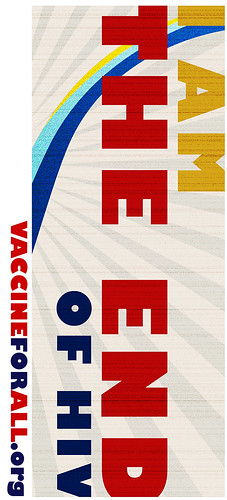
The HIV Vaccine Trials Network is launching a social media campaign to coincide with Martin Luther King’s Day and to publicize the Legacy Project’s new website, www.vaccineforall.org.

Will you help them out? It only takes a few minutes.


1. Go to this link and print out the sign, "I am the end of HIV":

2. Take a photo of yourself holding the sign. (Smiling encouraged.) Here’s a chance to put a face on HIV vaccine research in a fun way.

3. Post the photo on your Facebook or MySpace page. Use it as a profile picture at least through Martin Luther King’s Day (Jan 18).

Another option is to take any of the linked poster images and use it as your FB profile picture

4. Update your status (on FB, Twitter, etc) so that it says something like:

“I am the End of HIV” or
“If we want an HIV vaccine to work for us, we have to work for it” or
“I’ve changed my profile picture to help everyone become aware of the need for support of HIV vaccine research. Please go to http://vaccineforall.org to learn more.”

5. Share your picture on our HVTN Facebook page(You first need to become a fan and then you can post the picture onto our wall or in the designated photo album.)


Thursday, January 14, 2010

Microbicides 2010 - January 22 is DEADLINE DAY

Deadline for submission of 
scholarship applications and abstracts is
January 22, 2010 at 6pm EST 

EARLY REGISTRATION has been extended to February 15
SAVE on your conference registration fee! Register for the conference and submit your payment by January 22, 2010, to save over USD$50. Registration fees increase after 6:00 p.m. (eastern time) on January 22, 2010.


Other key dates

February 12, 2010 at 6pm EST
    * Notification of scholarship awards and abstract acceptances

April 15, 2010 at 6pm EST
    * Deadline for submission of late breaker abstracts
    * Conference registration and housing deadline


Hope you will join many IRMA members (and over 1,500  other scientists, advocates, policy makers and funders) at this important, exciting conference on microbicides and other new prevention technologies - May 22 -25, 2010 in Pittsburgh, Pennsylvania.


Visit the M2010 website and submit your abstract, apply for a scholarship, and register -  don't delay - January 22 is right around the corner.


Asian gay men’s sex survey reports high levels of sex without condoms


via Aidsmap, by Gus Cairns

The world’s second-largest gay men’s sex survey, focusing mainly on men in East and Southeast Asia, has found that 46% of men who have sex with men who answered the online survey reported inconsistent condom use during anal intercourse with casual partners, and higher levels of unprotected sex with regular partners.

The survey has produced findings across a wide range of indicators that are remarkably similar to the world’s largest survey of gay men's sexual behaviour, the UK's annual Gay Men’s Sex Survey (GMSS) conducted by Sigma Research.

The success of the English-language survey, hosted by the gay Asian website www.fridae.com, has led to a larger 2010 survey in nine languages ranging from Hindi to Japanese – see below.

The 2009 survey was answered by nearly 8000 gay men. Twenty per cent of respondents were from the three non-Asian countries of the USA, Australia and the UK, and this may have influenced some results such as the HIV testing figures.


Wednesday, January 13, 2010

$17 million grant to help Pitt researcher develop anti-HIV gel

Monday, January 11, 2010

Pitt Receives Grants Totaling $17.5 million for Two HIV Prevention Projects: Multicenter Studies Will Develop Rectal Microbicides and Assess Their Acceptance


via Erie Gay News

A multicenter research team led by the University of Pittsburgh is developing microbicides specifically designed to prevent rectal transmission of HIV, with the further aim of assessing their safety and efficacy in lab and early clinical studies.

Funded by an $11 million, five-year grant from the National Institutes of Health, the Combination HIV Antiretroviral Rectal Microbicide (CHARM) program includes a project that will reformulate existing antiretroviral drugs into topical preparations that can be applied to the rectum, said principal investigator Ian McGowan, M.D., Ph.D., a professor of medicine and of obstetrics, gynecology and reproductive sciences at the University of Pittsburgh School of Medicine and an investigator at the Magee-Womens Research Institute.

“Unprotected receptive anal intercourse is the highest-risk sexual activity for HIV transmission,” Dr. McGowan noted. “Vaginal microbicides already are being extensively studied, and a similar approach might be a very effective way of preventing rectal HIV transmission. It will be critical to determine whether vaginal microbicides are safe and effective when used in the rectum, and also to develop rectal-specific products.”


Thursday, January 7, 2010

Uganda's bill to imprison gays for life is an outrage that should be rejected


Editorial via Washington Post

THE ANTI-HOMOSEXUALITY Bill of 2009 is an ugly and ignorant piece of legislation being considered in Uganda. If it is approved, the gay people of that nation would be subject to life in prison. This retreat from the death sentence originally proposed should neither be celebrated nor considered a concession by the government in response to pressure from the United States and other nations. The proposal is barbaric. That it is even being considered puts Uganda beyond the pale of civilized nations.

The nine-page bill, which says that "homosexual behavior and related practices" are a "threat to the traditional family," is an offense from beginning to end. The framers say it is needed to "protect" the country from those "seeking to impose their values of sexual promiscuity on the people of Uganda." They say the bill is also needed because children and youth "are made vulnerable to sexual abuse and deviation. . . ." Among the corrupting influences are "uncensored technologies" and "increasing attempts by homosexuals to raise children. . . ."

The law would apply to citizens or permanent residents of Uganda, and would cover behavior both in and outside that country. The measure would turn neighbor against neighbor by requiring those with knowledge of a gay person to report them to police within 24 hours or risk three years in prison. A seven-year jail term awaits the Ugandan who "aids, abets, [or] counsels" homosexuals. And anyone convicted of "aggravated homosexuality," which could mean someone who is HIV-positive and is intimate with another person of the same sex, could "suffer death."

The legislation talks about the "cherished culture" of Uganda and its "legal, religious, and traditional family values." We respect a nation's right to defend its culture and values. But sentencing men and women to life imprisonment because of their sexual orientation is an atrocity. Gays and lesbians would be punished by their own government for who they are. Contrary to the backward thinking of the Ugandan government, being gay is not a choice. But pushing homophobic laws that foment hate is.

The United States and other nations have urged officials to shelve the bill. So far, their entreaties have fallen on deaf ears. Perhaps at the Commonwealth Heads of Government summit opening Friday in Trinidad and Tobago, Ugandan President Yoweri Museveni [pictured], who will chair the gathering, can be persuaded to listen to the growing international outrage. If Uganda approves the anti-homosexuality bill, it risks making itself a pariah among nations.


Wednesday, January 6, 2010

A Blind Spot in HIV Prevention - Female Anal Sex


via International HIV/AIDS Alliance in India

Dear All,

Alliance India works with local community groups and other Non-Government Organisations (NGOs) to take action on AIDS. We support them with technical expertise, policy work, and fundraising. The Alliance works across Andhra Pradesh, Tamil Nadu, Manipur, Maharashtra and Delhi. Our interventions seek to address the issues of the most vulnerable and marginalised communities key to the epidemic.

As you all know, the National AIDS Control Programme, phase three (NACP-III) places high priority on preventive efforts. Sex workers constitute a sub-population where it targets such efforts. The HIV epidemic in India is largely due to unsafe interactions between sex workers and clients. About 86 percent HIV incidence in the country is from unprotected sex. Despite recognition of other unsafe sex worker-client interactions in India, the focus has largely remained on vaginal sex.

Specifically, the role of anal sex in HIV transmission has not received due attention. Hence, there is limited understanding about this important area of HIV prevention work.

We are making an attempt to supplement the existing data on anal sex among Female Sex Workers (FSW) in India through two stages of Operational Research. In the first stage, we collected data through Focus Group Discussions (FGDs) and one-to-one interviews from 100 FSW in the city of Hyderabad, and two rural sites in Andhra Pradesh. In the second stage, we are now conducting a survey of 500 FSW in 10 districts of Andhra Pradesh.

Summarising the findings from our first stage of research, we have brought out an Issue Brief titled “A Blind Spot in HIV Prevention – Female Anal Sex”

IRMA encourages you to download this excellent report.


AVAC's Px Wire Features News on Big Rectal Microbicide Funding Increases


Dear Advocates,

We are pleased to announce the release of this year’s first issue of Px Wire, AVAC’s quarterly update on HIV prevention research—a one-stop source for information on biomedical HIV prevention research worldwide.

Click here to download the current issue in PDF.

Highlights in this issue of Px Wire include updates on:

The results from MDP 301, a trial of the microbicide PRO 2000, which lay to rest its prospect as a viable microbicide;

CDC’s newly modified PrEP trial (TDF2 in Botswana), which changed its status as an efficacy trial to a safety and behavioral study;

The evolving effort to understand the Thai prime-boost AIDS vaccine results;

Recent NIH grants that nearly double global spending on rectal microbicides; and

Timeline of 2010 trial milestones—what trial results are expected and what new studies are scheduled to commence?

As usual, this issue includes a center poster with a comprehensive map of ongoing biomedical HIV prevention research and an efficacy trials timeline.

Additional resources including the Px Wire archive can be found at www.pxwire.org. To order free printed copies of Px or any AVAC publication, please visit www.avac.org/order_publications.


Hope Against HIV: Microbicide Trials in Your Community


Hope Against HIV: Microbicide Trials in Your Community from IPMglobal on Vimeo.

This video teaser via the International Partnership for Microbicides helps people understand more about developing discreet protection from HIV infection specifically for women in developing countries.

Shot in South Africa, by actors, to protect the privacy of communities participating in clinical trials of microbicides, the video answers basic questions about clinical trials of microbicides in a community setting.


The full length video will be viewable in 2010 in five languages: English, French, Swahili, isiXhosa and isiZulu.

The video was produced by the Population Council and Paw Print Productions, with support from IPM and USAID. Director/Producer: Fiona Summers. Executive Producer: Barbara Friedland.

Monday, January 4, 2010

Uganda's Extreme Homophobia - The American "Christian" Connection


Americans’ Role Seen in Uganda Anti-Gay Push

“Homosexuals can forget about human rights.”


via New York Times, by Jeffrey Gettleman


Last March, three American evangelical Christians, whose teachings about “curing” homosexuals have been widely discredited in the United States, arrived here in Uganda’s capital to give a series of talks.

The theme of the event, according to Stephen Langa, its Ugandan organizer, was “the gay agenda — that whole hidden and dark agenda” — and the threat homosexuals posed to Bible-based values and the traditional African family.

For three days, according to participants and audio recordings, thousands of Ugandans, including police officers, teachers and national politicians, listened raptly to the Americans, who were presented as experts on homosexuality. The visitors discussed how to make gay people straight, how gay men often sodomized teenage boys and how “the gay movement is an evil institution” whose goal is “to defeat the marriage-based society and replace it with a culture of sexual promiscuity.”


Read the rest.

Denial of Risk Behavior Does Not Exclude Asymptomatic Anorectal Sexually Transmitted Infection in HIV-Infected Men


via PLoS ONE, by Edward R. Cachay, Amy Sitapati, Joseph Caperna, Kellie Freeborn, Joseph T. Lonergan, Edward Jocson, William C. Mathews, for the Owen Clinic Study Group


Background:

The Centers for Disease Control recommend screening for asymptomatic sexually transmitted infection (STI) among HIV-infected men when there is self-report of unprotected anal-receptive exposure. The study goals were: (1) to estimate the validity and usefulness for screening policies of self-reported unprotected anal-receptive exposure as a risk indicator for asymptomatic anorectal infection with Neisseria gonorrhoeae (GC) and/or Chlamydia trachomatis (CT). (2) to estimate the number of infections that would be missed if anal diagnostic assays were not performed among patients who denied unprotected anorectal exposure in the preceding month.


Read the entire article.

HIV/AIDS Travel Ban Lifted - OFFICIALLY


via Advocate.com

The United States on Monday lifted the 22-year-old ban that prevented anyone with HIV or AIDS from entering the country.

President Barack Obama announced the change in October, calling the ban incompatible with the American goal to be a leader in the fight against HIV/AIDS. The country is scheduled to host a biannual global HIV/AIDS summit for the first time in 2012, according to the BBC.

“The ban was imposed at the height of a global panic about the disease at the end of the 1980s,” reports the BBC. “It put the U.S. in a group of just 12 countries, also including Libya and Saudi Arabia, that excluded anyone suffering from HIV/AIDS.”

Source


Related Posts Plugin for WordPress, Blogger...